Wednesday, April 9, 2014

CreativiTEA


When he was only twenty years old, Arsen Avakian left his home country of Armenia to find new possibilities in America. He arrived in Chicago with only a couple hundred dollars and a dream to create a successful business. Now, eighteen years after founding Argo Tea, his business’ success is astounding. 

When Argo Tea opened in the summer of 2003, coffee was unquestionably the drink of choice in America. In a business profile with Time, Avakian said, “I realized that I see a lot of Americans drinking coffee, but nobody in this country is drinking tea. A nasty Lipton tea bag is all Americans knew about tea.” Unlike the existing tea stores, which specialized in dry tea that could be purchased by the pound and brewed at home, Avakian modeled Argo after his biggest competition and one of the most successful beverage companies – Starbucks. In fact, the first Argo location, a tiny 900 square foot café in Lincoln Park, opened directly across the street from a Starbucks in hopes of turning a few coffee drinkers into devoted tea lovers. Priced around four dollars a cup, Argo’s luxury tea concoctions proved to be on a completely different level than the grocery store tea bags people were used to. Soon, one store turned into dozens, and Whole Foods began selling bottled Argo Tea beverages in their grocery stores. Avakian hopes the business will continue to grow and expand beyond the Midwest.

Although Argo Tea’s business model relies more on adapting existing ideas rather than innovation, Avakian’s original drink recipes are truly one of a kind. Lipton tea will never be found on the menu. Instead, the names of his original concoctions, such as Earl Grey vanilla crème, Teapuccinos, Tea Sparkle, Red Velvet, Ginger Twist, and Carolina Honey, sound just as luxurious as a Starbuck’s Frappuccino. Sangria Tea and Bubble Tea are also fan favorites.

It is interesting to look at Avakian’s success story from both the American and Middle Eastern perspectives of creativity. According to Todd I. Lubart’s work Creativity Across Cultures, the western world defines creative work as something new and useful. However, middle eastern countries, such as Avakian’s home Armenia, believe creativity has less to do with novelty. Instead, they place a greater emphasis on reinterpreting traditional ideas. According to this Eastern definition, tweaking the Starbuck’s business plan to carry out his goal of introducing tea to America was a sign of pure creative genius. It could also be argued that Avakian’s real creativity is knowing where to change the existing business model. He examined Starbuck’s to see what was working and what he could improve. For example, he realized that Starbuck’s was making a lot of profit through selling bottled drinks. Therefore, Avakian decided to also produce bottled beverages in an effort to create an awareness of Argo Tea in states lacking an actual Argo Tea location. Then, when Argo Tea expands, consumers will already have some awareness of the brand from seeing products in their local Whole Foods.

Although his creativity and innovation might not be at the level of Steve Jobs, Avakian believes elevating American’s perception of tea was no small feat. He even goes as far to say Argo is the “Apple compared to the Starbuck’s PC.” He believes his business is a groundbreaking contender in the highly competitive beverage industry. Although Argo’s revenue is pocket change compared to the billions of dollars the coffee behemoth makes every year, Avakian’s business savvy and creative problem solving cannot be denied.


You can read the Time’s Argo Tea profile here:

http://business.time.com/2011/10/06/argo-tea-business-profile/

Wireless Electricity

Can you imagine a world where all of your electronics are fully functional without any cords or batteries? Apparently this world may not be too far away. WiTricity Corp. is a company that was created to commercialize the new technology of wireless electricity that was developed at MIT by a group of physicists.  Marin Soljačić and the rest of his team developed this new version of wireless energy transfer. The basics of how it works is that coils are attached to both the power source and the object to be powered. The electricity from the power source resonates at a particular frequency that matches the resonance of the object that needs the electricity. Through this process, the magnetic fields of each combine to create one where the power can travel from the source to the object. Put simply, the electricity is able to be transported magnetically to the object.


This concept brings up a bit of controversy among professionals. While overall, the idea of wireless electricity has been well-received by other professionals in the field, some are concerned about its safety. Duane Bucheger is one such professional who is not against the development of wireless electricity technology, but is worried about the possible risk of cancer that can come from using too strong of a magnetic field. WiTricity claims that, at least at this point, the magnetic fields being used are not at all dangerous.

This innovative creation would be extremely convenient. Imagine never having to plug your phone in to charge it. Or hanging a TV wherever you want without having a cord sticking out or needing an extension cord to reach an outlet. Or even a medical patient with a device helping to keep him alive that never needed to be replaced. The uses for wireless electricity contain infinite possibilities, not to mention the environmental benefits. Use of batteries would decrease enough to make a significant positive impact on the environment.


One of the interesting things about this technological advancement is the way it was developed. Frequently, on the WiTricity website and in articles about the technology, the developers are referred to as "Marin Soljačić and a team of physicists" which makes me wonder why he is the one mentioned by name, who the other developers are, and what their roles were. It seems that Soljačić is most prominently named because he began developing the technology after being woken up by his wife's cell phone when it was beeping because of a low battery and having a desire to charge it wirelessly. Andre Kurs, Aristeidis Karalis, John D. Joannopoulos, and Peter Fisher appear to be the other members of the team.

As Brian Uzzi and Jarrett Spiro suggest, creation and innovation can be significantly strengthened when a group works together as a cohesive unit. While the details of how this particular group of MIT physicists collaborated to develop their technology are difficult to find, what is known is that they were all colleagues at MIT together working in similar fields. Most of the team members were involved in the areas of physics and engineering. Because of this, they could have shared classes, professors, and friends. Their similarities could have made them an even stronger group and helped them to come up with such strong and creative ideas. If this powerful group continues to work together, I can only imagine what they will come up with next.

More info:

http://www.witricity.com/pages/technology.html

http://www.columbiachronicle.com/health_and_tech/article_cff02884-bc6e-11e3-9ad6-001a4bcf6878.html

aMAZING creativity


Members of the Richardson family in front of their observation tower (richardsonadventurefarm.com)
In today's world farming has become a very difficult business to survive in.  Many longtime farms have gone out of business due to price changes, mass processing, and various other reasons.  This leaves a huge problem for families like the Richardson family, whose entire lives have been devoted to maintaining and working on their farm for multiple generations.  In 1982 the family thought the farm was close to closing, their way of life suddenly would be turned upside down.  Rather than sell their land like many other farms around the area had already done, the family decided to get CREATIVE.

A child zip-lining toward the Christmas
 trees that are growing at Richardson Farm
 (www.richardsonadventurefarm.com)
In 1982, unwilling to give up like so many other creatives and knowing something had to change, the Richardson family started a "cut-your-own Christmas tree business" that allowed their farm to stay alive and increase their business (Starks, 2001).  This new business idea for the farm was just the beginning of what would become a very successful and profitable "new" Richardson farm.
An example of how the designing and "sculpting"
of a corn maze may go. (www.avtankski.net)

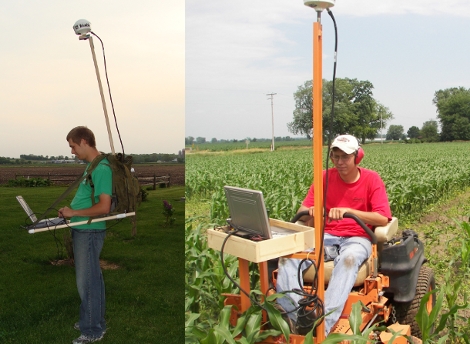
After the cut-your-own Christmas tree business the Richardson's remained stable for a long period of time.  However, they knew that more could be done with the farm to not only make it a more profitable place, but a more enjoyable place for everybody.  So in 1998, when Robert Richardson attended a seminar that promoted a "40-acre corn maze near Janesville as a symbol of Wisconsin's most profitable crop", he knew exactly what needed to be done on their own farm (Starks, 2001).  It seems to be a quick moment of insight by the collective group of family owner's that a maze in the farm would be a perfect idea.  Like we have discussed, many times when a creative gets a great idea, they just seem to know it will work, and put a great deal of their time and energy into making that idea into a reality.  This is exactly what the Richardson family decided to do.  They quickly hired a designer, Shawn Stolworthy, who helped them plot designs using a laptop and a global satellite positioning system (Starks, 2001).  They then spent a large amount of time spray painting the short immature corn to mark the design, and then cut into it with rototillers forming the first trails of what would be the World's Largest Corn Maze.

(richardsonfarms.com)
From here the family never looked back.  Their creativity blossomed and followed similar features of many other creatives.  They took one idea (Christmas Trees) and diverged out into a whole entire system of fun activities for all ages and all seasons (corn maze, zip-line, picnic areas, pumpkin smashing, etc).  They also had clear motivations, some intrinsic and some extrinsic.  Extrinsically, they claim to have loved seeing the happy faces of those who came out for Christmas trees so much that they wanted to keep making them happy throughout the entire year, and of course, they make a much larger profit with these new activities.  Intrinsically, the entire family enjoys working on the farm, growing the crops and trees, making the mazes each year, and setting up any other great activities that they have planned.  Being a large family also allowed for collaboration.  Each family member could bounce ideas off the other and they could try to find the best idea or solution for any of their problems or hopes.  And, as said above, they hired helpers for designing the mazes that they customize each and every year.
An overhead view of this past years Beatles 50th anniversary
 maze (www.mchenrycfb.org)


As creative as the Richardson family is, in my few visits to the "World's Largest Corn Maze", what I have found most creative are the actual designs of the mazes.  This past year they made an incredible maze of The Beatles in honor of their first U.S. appearance.  This design, and countless others, represent not only the creativity that goes into designing a maze, but the greatness of the creativity of the Richardson family, who have used their creativeness to not only save their farm, but create a great place for everybody to enjoy and admire the creative process... and have great corn on the cob of course.


References:

http://articles.chicagotribune.com/2001-08-10/news/0108100324_1_corn-mazes-don-frantz-richardson-family

http://www.richardsonadventurefarm.com/richardson-farm-experience-about-us.htm

Bored? Try a Buddha board!


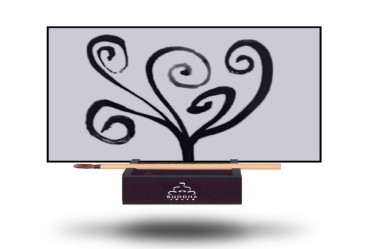
Over twenty years ago, Eric Thrall was on a trip to Japan when he came across a man in a crowded square. In the middle of the throngs of people, the man had a stick and water, which he was using to paint on the pavement. Unlike the common other forms of street art and installation pieces, Thrall noted that the man's creations lasted only as long as it took for the water to evaporate. 

When he went back home, the idea of using water to paint remained at the back of his mind while he watched his mother work in her art studio. She showed him some of her materials, which eventually led to the creation of the Buddha Board. Thrall created the Buddha Board as a way to bring Zen thinking practices into Western society. He sees modern society as so caught up in technology and reliving experiences through our devices that we forget to just experiences moments as they come. The idea is that it encourages people to live in the moment, focusing on the water as it is brushed on the board, slowly making the design come to life for a few moments before it fades as it dries. People are invited to appreciate their artwork while it lasts without creating attachment. As soon as the brush touches the surface of the Buddha Board, the design comes to life and is continuously changing.
Art has long been hailed for its meditative and healing qualities. Art therapists argue that the creative process behind art helps reduce stress and anxiety, and can improve quality of life overall (Malchiodi). Thrall's Buddha Board embraces a common practice in art therapy, Zentangle, which promotes a practice of mindfulness and encourages patients to own their mistakes and to doodle aimlessly. The Buddha Board philosophy is "Let it go." Thrall says that many people use the board as a stress reliever, and encourages them to meditate while they play. 
While Thrall created the Buddha Board with the intent for use by adults, children quickly found it enticing as well and many schools began to bring the board into the classroom. Just as the board reteaches adults how to engage in child-like play, it teaches children the beginning of Zen thinking. In both cases, the Buddha Board opens up different ways to of thinking and expression of oneself.

Both the use of the Buddha Board and art therapy in general relate to the arguments made by Melcher et al. about the creative effects of music. Melcher argues that music encourages improvisation and improves communication. Just as music is a form of expression, the Buddha Board allows for a direct passage between a person's thoughts and the surface in front of them. It allows for focus to be placed on stream of consciousness, looking at a person's creative process, rather than the end product. 
Sawyer discusses the advantages of improvisation and argues that it leads to more creative ideas. Without the permanence and tactile end piece associated with most art mediums, the Buddha Board encourages improvisation and the opportunity to flesh out ideas. Mistakes are part of the "let it go" philosophy that Thrall adopted, and within a few minutes users are free to start completely anew, on a literally blank slate. 
The Buddha Board creates a unique sense of transience not found when using other materials to make art. Because of the "In the moment" philosophy of the Buddha Board, users are allowed to simply play with the product. They don't have to consider consequences, guidelines, or mistakes. Thrall created a product that removes the limits placed on our creative thinking by forcing us to stay in the present. So often our thoughts and actions are influenced by past memories and previous knowledge. We are dictated by the world around us and the rules set out for us. The Buddha Board provides a break, even if for only a few minutes, where we can clear our minds of everything except the here and now.


Find out more about the Buddha Board here

Tuesday, April 8, 2014

EV ARC

     With the greater emphasis placed on environmental concerns in the past few decades, many people have been searching for new and innovative ways to limit their impact on the environment, often by trying to shrink their carbon footprint. Since transportation makes up a large portion of each individual's carbon footprint, many people have tried to make a difference by buying more fuel efficient vehicles, taking public transportation more often, and rarely by buying electric vehicles. Despite the fact that it is commonly accepted that the products from gasoline use are causing great environmental problems, electric cars still face criticisms because of their short battery life, few recharging stations, and the fact that the energy they use often still is created using fossil fuels.

EV ARC™ is displayed during EV Week, in the Bay Area & Silicon Valley.      Enter the EV ARC, created by Envision Solar. It is a portable (though heavy) solar charging station developed to help address some of the common concerns with electric cars. Each unit stores enough energy to fully charge one vehicle per day, or enough to give multiple vehicles partial charges. Because it is more portable than other solar charging stations, many hope that it will begin showing up in parking lots throughout cities and rural areas and therefore increase the number of people who are willing to consider owning an electric vehicle. Environmentally, it is also better than most electric car charging stations, since it is not attached to any electric grid. Most solar energy comes in through the grid, meaning that up to 75% of it may have been produced using fossil fuels or another form of energy that creates carbon emissions. Obviously, regular solar power is better than just burning coal or fossil fuels, but the EV ARC is taking things a step further. Since it has a battery in it capable of storing enough energy for one solar vehicle, there are no wires or connections to anything else, which further decreases the reliance on carbon emission-producing fuels.

     The CEO of Envision Solar, Desmond Wheatley, wants to "[give] environmentally conscious business owners, individuals and officials and opportunity to get to know the only transportable and fully renewably energized EV Charger in the world." It truly is an innovative product pushing in the right direction to resolve many of the inconsistent and conflicting feelings that people have regarding climate change. As Collins and Amabile explain, Freud hypothesized that creativity is a way to work through conflicts and divert energy into a more socially acceptable direction. The creation of a product like the EV ARC seems to do both, as it seeks to solve the conflict between the desire to protect the environment and the desire for cars to continue to function in much the same way that they have for the past several decades.

     Of course, the EV ARC still needs a lot of development if it is to entice the majority of the population to drive electric vehicles. An increase in battery life - both in the cars and the charger itself, will convince many who currently would not consider electric vehicles to switch over. As it is, the fact that each unit can only recharge one car to full in a day means that it is not terribly useful for public spaces, but a battery that could charge closer to ten or even more vehicles would make it a smarter buy even for places like grocery stores and shopping malls. The price is also currently a barrier, as it is priced at $40,000 - essentially the same price as buying a second car. Over time, the money saved in gas adds up, but that sill doesn't solve the issue of the upfront payment required.


A Child Called Mayhem

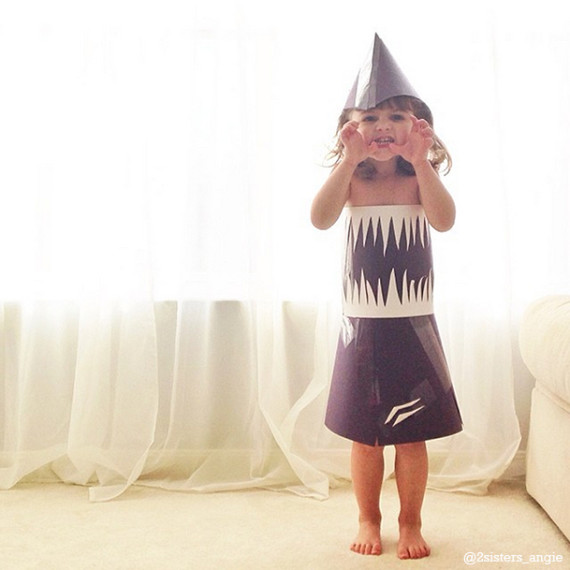
Not many 4-year-olds can say that they've been featured in the Huffington Post; however, "Mayhem" is no ordinary 4-year-old. With help from her mother, Mayhem has designed hundreds of paper dresses based on movies she enjoys (such as How to Train Your Dragon and Frozen), the designs of Project Runway, and the dresses worn by celebrities during awards season. Her mother's Instagram, @2sisters_angie, has exploded over the past few months with the news coverage. Mayhem has been featured on several major news outlets, and she continues to design dresses as often as she can.


1643876

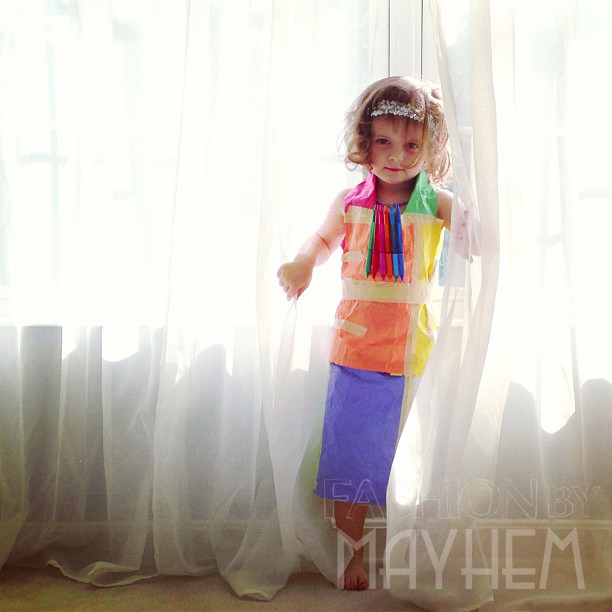
Mayhem's mother and father are professional photographers. They have encouraged Mayhem's love of dress up and imaginative play; however, Mayhem's mother, Angie, quickly got tired of finding her own clothes strewn around the house. One day, she suggested that they try making clothes out of paper and tape. The idea stuck, and the two have been making paper dresses together ever since.

http://www.fashionbymayhem.com/wp-content/uploads/2013/10/fashionbyMayhem_firstdress.jpg

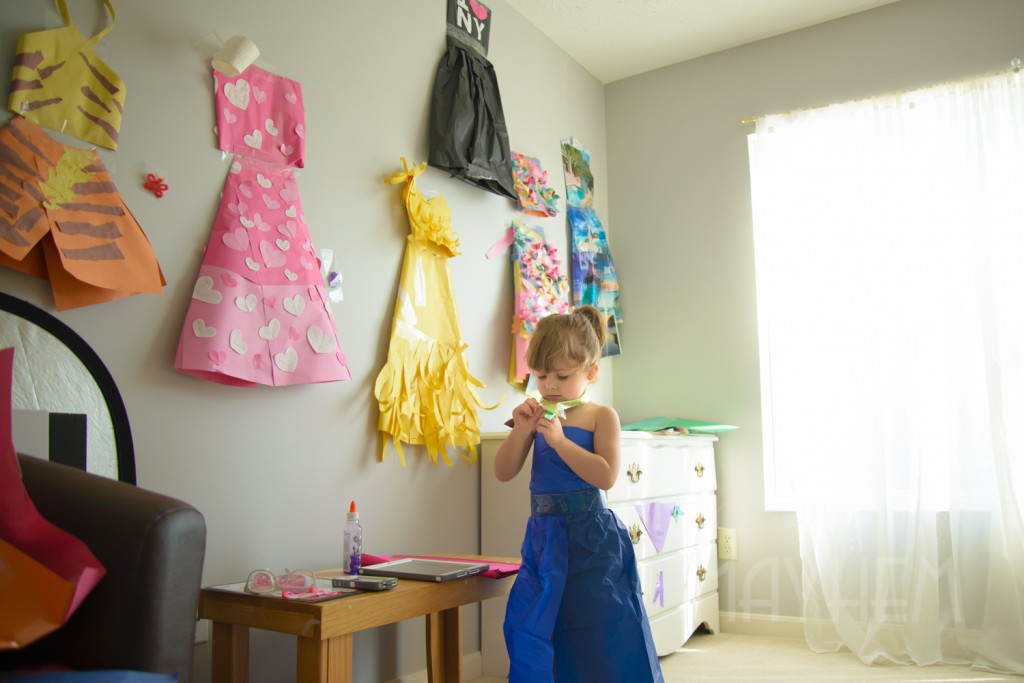
According to Angie, Mayhem actually does a lot of the work in planning and constructing the dresses. Angie "see[s] her learning new skills every day" (HuffPost). If Angie's not home, that doesn't stop Mayhem from producing a new work; she finds the construction paper and tape and creates something single-handedly, and insists upon Angie photographing it as soon as possible. The materials used in Mayhem's works are many and varied. She is limited only be the number of pliable materials in her house; tissue paper, aluminum foil, toilet paper, and athletic tape have all been employed to manufacture original Mayhem creations. Unfortunately, most of Mayhem's creations don't last too long; they are taken apart piece by piece and the remaining paper is put aside to produce the next day's dress. A few of Mayhem's dresses have survived, and they currently hang on the walls in her room.

 1643876

What We Do With The Dresses | FashionByMayhem.com

Angie has been surprised by Mayhem's desire to continue making the dresses; her daughter's interests are many and varied, and Angie expected her to lose interest relatively quickly. Now, ten months later, Mayhem's still making at least one new dress a week. She pulls inspiration from everywhere, and her dresses show a similar breadth of interest. From the shark dress inspired by an aquarium trip to the Olympic bobsledder's outfit to the vacation-inspiration-board-turned dress, Mayhem relies on all sorts of ideas and themes to create her outfits.

1643876

Mayhem's nickname originated with the AllState commercial, The Jogger; apparently, she had donned a pink headband and started throwing her toys around the room mere moments before this commercial appeared on the family television. This vivacious and energetic child is already capable of so much creativity; it will be thrilling to see how she channels this imagination as she grows up.

The importance of imaginative play in children is not to be underestimated; according to the research of Russ, et.al., pretend play can be linked to creativity and divergent thinking as children get older. This ability may enable these kids to come up with unique solutions to problems in later life, especially if they enter professions that require them to discover new ways of solving social, medical, or technological issues. Although it's hard to tell at this age, Mayhem's ability to think outside the box and work with her mother to create new and exciting designs may show us a glimpse of her future successes.

Check out more from Mayhem at @2sisters_angie on Instagram, or on the #fashionbymayhem website.

Sunday, April 6, 2014

Personalized Prosthetics: from Awkward Gawks to Admiring Gazes

Losing a limb is one of the most psychologically devastating events that can befall a person from lingering phantom sensations, months or even years of rehabilitation, to receiving incessant awkward glares and stares from fully limbed individuals. All of these events and countless others put tremendous stress on amputees who just want to live a satisfyingly normal life. This is where Scott Summons, founder of Bespoke Innovations, comes into the picture. His company develops fairings (“specialized coverings that surround an existing prosthetic leg”) that allow wearers to not only cover up their sterile prosthetic but also express an individualized part of their personality.

The process is amazingly quick and unobtrusive. Patients begin by sorting through an immense online catalogue to choose what designs, finishes, colors, and materials they want for their fairing. This includes composite materials, fine metals, and even leather. Afterwards, they are brought to any facility where a 3D scanner can image both their real leg and their current prosthetic. This allows the prosthetic to fit in the shape of the person’s real leg. After the scanning process, the engineers tweaked the image for the specifications. The design is then sent to their factory in South Carolina where a 3D printer manufactures the entire covering in one go. The amputee then receives their fairing in almost no time at all.
 The fairings cost between 3,000 and 6,000 dollars and are lightweight, durable, and easily cleaned. The designers also recommend that patients do not get a fairing until after they are fully habituated to their prosthetic, so they do not have to buy a new one if things do not work out. For me, the coolest thing is that even double amputees can also undergo this process. They have “stand-ins” (pun probably intended) who match the individuals in build and stature and who stand on the scanner for them. This permits for the recipient maximum normalcy and comfort.


These fairings are at the convergence of new technology (3D printers), timing (lowering costs), and collaboration (so many diverse fields are involved here). The overall process requires the involvement of the patients, their prosthetists, mechanical engineers, and artists. It would appear that they have obtained a near perfect Q score to achieve such amazing things in their biosocial-medical field.
And, it was Scott Summons who brought all these people together to give individuals who lost so much in their lives so much back. Just as how Bob Taylor in the Bennis reading brought together the foremost computer scientists to push the limits of the technology, Mr. Summers collected the best and most diverse talent he could get just to let them work together to find the most personal and effective way to help people feel at one with their prosthetics
Mr. Summers also holds at least one of the paradoxical qualities of the creative individual. In Csikszentmihalyi’s article, eminent creatives are both imaginative but realistic. In this case, Mr. Summers believes that one day his company will be printing and grafting organic tissue to totally replace the damaged body part instead of just these fanciful coverings. He believes that if lizards can regrow tails, then humans can build real, biological limbs. While quirky sounding and still a little far off from today’s technology, this is a very realistic possibility in the next few decades, especially with recent advancements in 3D printing, which has allowed the printing of skin grafts for burn victims.
I find this truly an amazing and creative process, because Mr. Summers and his team are not only doing some beautiful, they are also advancing science while helping others to live as normal and as awesome as a life as possible.

Sites for further information;