Tuesday, September 26, 2017

Speaking Out, One Poem at a Time


Spoken word poetry, or slam poetry, has been all the rage since it was created by Marc Kelly Smith in 1984. In his words, slam poetry is "the remarriage of the art of performing and the art of writing." It is an art form used by hundreds of young people to shed light on prevalent issues in our world today. I am personally a huge fan of slam poetry--I find it incredibly moving and inspiring to listen to. One of my favorite slam poets is Olivia Gatwood.

Olivia Gatwood

Olivia Gatwood is a 25-year-old slam poet originally from Albuquerque, New Mexico. As a Title IX Compliant educator, she tours the nation teaching workshops on sexuality, social justice,  sexual assault prevention and recovery, healthy relationships, and gender equality at high schools and colleges all over the country. She is an active slam poet, and her work has been featured on Button Poetry, Huffington Post, HBO, and other platforms. Olivia and another spoken word poet, Megan Falley, cofounded SPEAK LIKE A GIRL, a national feminist spoken word poetry tour. She has recently published a collection of poems, entitled New American Best Friend, that explores themes of girlhood, relationships, and growing up, among others.

"Ode to the Women on Long Island" by Olivia Gatwood

The Creative Process

When creating her poetry, Olivia starts with memories from her childhood that stand out to her. From there, she builds a narrative, weaving in her opinions on contemporary issues like feminism, rape culture, gender roles, classism, and misogyny.

Olivia's creations are unique to the world of slam poetry because she manages to combine her own personal experiences with real-life issues in such a way that they turn out to be "simultaneously universal and also deeply specific to [her] own life."

To put Olivia's creativity into the context of this week's reading, "Most creative persons are very passionate about their work, yet they can be extremely objective about it as well...Without the passion, we soon lose interest in a difficult task. Yet without being objective about it, our work is not very good and lacks credibility" (Csikszentmihalyi, 72). It is clear from watching any of Olivia Gatwood's performances that she is incredibly passionate about both poetry and the issues she writes about. However, I believe her ability to take her personal experiences and generalize them to more broader concepts is demonstrative of her ability to be objective in her writing, making her work both credible and immensely meaningful.


"Being a poet, I think, has something to do with illuminating both the beauty of the mundane and the enormously huge."


Sources:
Csikszentmihalyi, M. (1996). Creativity: Flow and the psychology of discovery and invention. New York: Harper/Collins, Chapter 3: The Creative Personality

Unless. Unless.


The title is purposefully vague.

I am fully aware I am a young adult white girl writing about Lin Manuel Miranda. Its cliche and you probably wouldn't have clicked on it unless I tricked you but here you are so you should probably just continue.


Let's start out by saying Miranda is extraordinarily creative and has created a revolutionary piece of work.  Its doubtful, you have not heard of it but if you haven't he is the lyricist, composer and playwright for the Broadway smash hit Hamilton.  He also originated the title role, Alexander Hamilton.  Other credits include, composer, lyricist and book writer for In The Heights, composer and lyricist for Moana, and much much more as composer and performer.


Despite having run for nearly 3 years and opening a second show in Chicago and a touring show, Hamilton tickets remain one of the most difficult and expensive tickets to secure in New York City, Chicago and the cities in which it is touring.  Hamilton broke records being nominated for 16 Tony awards and taking home 11.  It has enjoyed almost universal acclaim, with Even then President Barack Obama remarking, "Hamilton I’m pretty sure is the only thing that Dick Cheney and I agree on."

So in a Broadway world of movies turned musical, old "classic" revivals and large tap numbers with fluffy and insignificant plot lines where does someone come with rap battles between founding fathers?


 The idea originated in 2009 while Miranda was on his first vacation from In The Heights.  Miranda decided to pick up Hamilton's biography and was immediately enthralled by the possibility it brought to a musical format.  The combination of musical, founding fathers and Hip Hop was solidified when Miranda read Hamilton got himself off of a disaster ridden St Croix with his writing.  This combination is crucial to Hamilton's success.  Musicals about the American past are plenty and historically unpopular.  Musicals that are hip hop inspired are commonly underdeveloped and again unpopular. 
 

Miranda is forthcoming and upright about his inspirations.  He speaks about general life experiences to a specific trope he used for Lafayette he calls the Police Academy Rule.  After winning his Tony Award for Hamilton, Miranda explains he finds inspiration in all aspects of his life and many times the source needs to be pointed out to him afterwards.  One unique (and exciting to me) source of inspiration was from a podcast called My Brother My Brother and Me(MBMBaM).  However, he recalls a specific cadence being written in the song "We Know" that was directly linked to the same cadence of the McElroy Brothers on MBMBaM.


This set of words is of course "Unless.  Unless." and was often used as a way to add a twist to a joke on the McElroy brothers podcast.  

Regardless of his journey to get to Hamilton, it shows no signs of stopping anytime soon and has certainly altered the concept of a musical. Shedding light on America's past, while recognizing black, immigrant and female lives were a part of that narrative is a powerful and approachable message for an enormous number of Americans.  While we are all waiting our turn for a ticket, Miranda just might be on the beach developing the next revolutionary "New American Musical."

George R. R. Martin: Sex, Dragons, and Rock 'n' Roll


I haven't been a fan of Game of Thrones for very long, but I'll fight anyone who tells me George R.R. Martin isn't a creative individual. I'll admit that he had little popularity before writing the hit series and that commercial success is hardly indicative of supreme creativity. His perspective and creative process itself, however, mimic enough of the traits we've discussed that Martin warrants our attention.

One of the tenets most central to creativity is the curiosity and dissatisfaction that drives individuals to recognize and solve interesting problems. Martin, like so many other creatives, needs to feel active engagement with his writing in order to bring his ideas to completion. The "problem" that compelled Martin to start writing was a vivid image that wouldn't leave his mind. Ultimately, this scene became the first chapter of A Game of Thrones, and the rest is history.


When asked about his creative process, Martin is known for distinguishing between the writing styles of the architect and the gardener. The architect carefully outlines his narrative wherever possible, having a relatively clear mental image of how each character, as well as the plot itself, will develop from the beginning of a narrative to its end. The gardener, by contrast, takes as much time as is necessary to nurture the seeds of a narrative to maturation.

Martin has a general idea of the directions in which he'd like his plots to move, but he prefers not to know exactly how many branches each plant will have, so to speak, or when each will blossom. He asserts that, with a detailed outline ala architectural planning, Martin would rapidly lose interest in writing his own novels. The gardening approach keeps him curiously invested because his works frequently surprise him in ways that would be impossible with meticulous planning.

Regarding the necessity of convergent and divergent thinking described in this week's readings, "the generation of novelty is not the main issue [in creativity]. A Galileo or a Darwin did not have that many new ideas, but the ones they fastened upon were so central that they changed the entire culture" (Csikszentmihalyi 60).  Martin himself explains when prompted that "ideas are cheap…I have more ideas now than I could ever write up. To my mind, it's the execution that is all-important" (Baer). Martin clearly has plenty of divergent thinking skills, illustrated by his success in creating a wildly successful (and rather lengthy) original story. He balances it with a necessary convergent thinking, however, that allows Martin to concentrate on his series-worthy ideas and avoid dedicating precious time to those that are less creatively profitable.

Engineer Jacon Rabinow's strategy of envisioning himself in jail is also interesting to consider, because the purposeful construction of obstacles seems to facilitate the creative processes of both Martin and Stravinsky, my creative this semester. Paradoxically, he not only felt liberated by self-imposed constraints but also creatively thrived under them. Martin prefers WordStar 4.0, a writing program that is nearly obsolete in 2017, to programs like Word that undoubtedly offer more bells and whistles. The computer he uses to write cannot send an email. In this bubble of his own creation Martin manages to avoid the distracting pull of social media, focus on his work, and exercises a patience that allows him to spend years on a single project.

WordStar, the program George R.R. Martin uses for writing.

"You just forget everything except that it's got to be built," says Rabinow. It's fair to assume that Martin, who writes with a similar zeal, would agree.

Sources:

http://www.businessinsider.com/game-of-thrones-george-rr-martin-on-his-creative-process-2014-4
http://www.thisisinsider.com/why-winds-of-winter-is-taking-so-long-2017-1
http://jamesclear.com/george-rr-martin
http://www.georgerrmartin.com/for-fans/faq/
http://www.talesofsuccess.com/george-rr-martin-writing-tips-18717/
https://winteriscoming.net/2017/03/20/video-george-r-r-martin-on-why-hes-more-of-a-gardener-than-an-architect/
Csikszentmihalyi, M. (1996). Creativity: Flow and the psychology of discovery and invention. New York: Harper/Collins, Chapter 3: The Creative Personality

Narendra Modi: The Game-Changing Prime Minister

Influential. Devoted. Powerful. Passionate. Innovative.
            These words highlighted the newly inaugurated politician Narendra Modi, as he first took office in 2014. Narendra Modi is the Prime Minister of India and the leader of the BJP Party. His strong and confident aura has the ability to attract and inspire a massive number of people. The leader’s paradigms and ideas are groundbreaking and revolutionary which elicits astonishment, respect, and inspiration out of many of his colleagues and followers. But why was the leader of India recognized as a two-time winner of Time magazine’s Person of the Year? As one of the 100 most influential people in the world? As the Indian of the year? What is it that makes this Indian politician prevail over others and take the Indian elections by a landslide?
            Modi charged through the 2014 elections on with two major platforms: anti-corruption and environmental reform. Corruption was a high priority on Modi’s to do list when he first took office. He believed that corruption is the bad apple that rots all the other apples in the basket. The constant fight against corruption was tedious and unfruitful, therefore, the Modi administration took drastic measures in an attempt to eradicate the extreme corruption and black money market in India. Modi’s decision left everyone shook.
            Overnight, PM Modi made the executive decision to discontinue all the old 500 rupee and 1000 rupee bills and introduce a new 500 rupee and 2000 rupee bill in its place. There were no leaked stories of this decision; the news swept the whole nation off its feet. Some were applauding Modi for his bravery to go to such extents and his determination to cleanse India of corruption. Others ranted about the injustice that the nation had to face due to Modi’s impulsive decision, to which Modi’s supporters rebutted, “you have nothing to worry about if you have done nothing wrong”. Modi gave the people of India until the end of the year from the day the decision was made to swap the old 1000 and 500 rupees, but you could only proceed with the swap if you could state where the source of income was from and have the government tax the exchange. In order to respond to the nation’s outcry due to the inconvenience PM Modi states, “Brothers and sisters, in spite of all these efforts, there may be temporary hardships to be faced by honest citizens. Experience tells us that ordinary citizens are always ready to make the sacrifices and face difficulties for the benefit of the nation.”[1] The method is disruptive, inconvenient, and problematic for the Indian citizens, but in the larger scope, it is what the country has been yearning for ever since the dictatorship of corruption ruled the country. Creativity takes courage, it needs initiative, it has spontaneity, it elicits chaos and inspiration, and it makes a difference.


[1] Hyperlink: https://www.nytimes.com/2016/11/09/business/india-bans-largest-currency-bills-for-now-n-bid-to-cut-corruption.html?mcubz=0

Marjane Satrapi: Candidness through Comics


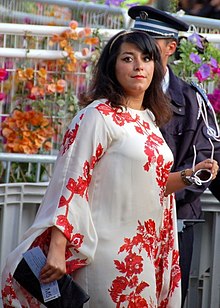
Marjane Satrapi Cannes 2008.jpg

This is Marjane Satrapi: graphic novelist, director, and former rebellious teenager. Known primarily for her autobiographical stories Persepolis and Persepolis 2, Satrapi has had a prolific career filled with other great works, such as her other novels Embroideries and Chicken with Plums. Marjane blends imagery and prose in a unique and genuinely creative way.

Satrapi, now 47, was born in Rasht, Iran to a very middle-class family. Both her parents and her uncle supported Marxist causes against the Shah, and were horrified by the Islamic fundamentalists’ success in the Iranian Revolution of 1979. Marjane was particularly close to her uncle, and was distraught when he was arrested and executed by the regime. She began acting out and snubbing her nose at the government’s rules over how women should dress and act. Worried about their daughter, her parents sent her to Vienna to finish up school. Persepolis and Persepolis 2 focus on this incredibly pivotal part of her life.

When it comes to actually writing a story, Satrapi defaults to graphic novels, or comics as she prefers to call them. Words aren’t enough to get the point across, her brain functions with images. She doesn’t start with one or the other, they both happen simultaneously and the finished product sort of just comes together.  

Marjane lists the old poets Rumi and Hayam as huge influences on her world view. Their verse affected the scope and perspective from which she saw the world. Satrapi’s upbringing in an increasingly conservative Iran seems to have had a profound effect on her outlook. The combination of two different mediums to express herself is indicative of her creative spark, and reminiscent of “collaborative cognition,” mentioned in the Smith and Ward article. Marjane isn't limited to just comics either: she's written children stories and helped direct films, most notably the adaptation of Persepolis.
Sources:

https://en.wikipedia.org/wiki/Marjane_Satrapi

Pia and Sam Aren't Screwin' Around

Pia Narula and Sam Devenport, the co-founders of 57th St. Design, have always had a passion for furniture. Their goal has been to deliver extremely functional pieces whose form is also purposeful. Since their start in 2016, their repertoire has grown to over 30 products with the Linnea Shelving System on the way. All of their furniture is made in Chicago with the exception of the Linnea Bookshelf which is currently produced through Opendesk, a local manufacturing platform. The large shelving unit is available on Opendesk and they are implementing changes to the design for their store edition.


The creators backgrounds have strongly attributed to their work. Pia lived in England, London, and Bahrain while culturing her philosophy on design. She developed the belief that her furniture should be sustainable and represent strong social principles. She pursued her passion at the University of Chicago where she met Sam. Sam was introduced to woodworking by his father who owns 57th Street Bookcase, the hardwood company that brings to life his and Pia’s designs. Sam’s designs are similar to his father’s style - contemporary and clean. Surrounded by furniture his whole life, Sam realized that companies were trading quality for cost, leaving no barriers to entry for a small quality furniture shop. He and Pia were part of the Polsky Exchange at the University of Chicago, a platform for innovative students to receive outsider resources and knowledge. This platform and the opening in the market is what allowed them to pursue their creative endeavors.

The process for creating Linnea was actually not considered very creative by Pia. I spoke briefly with her on the phone and she said “I had no idea of what the product would look like”, only that she wanted to be able to construct it without screws and tools. Pia did not consider herself creative, but instead said that she and Sam just applied traditional concepts to a modern design. I beg to differ, for they used several creative processes without realizing it. With implicit cognition, Pia used the aid of conceptual combination, as discussed in the Smith and Ward article, to create something new out of old processes for the contemporary lifestyle. Additionally, since Pia and Sam design together they are constantly involved in collaborative cognition. Most of their creative processes are deliberate and analytical, rather than insightful, but they are nonetheless creative.


All of their designs are modern but the Linnea Shelving System is different in its construction. It’s not IKEA’s version of “easy assembly” which consists of directions without words, easy-to-lose tools, and broken parts. It's traditional joinery cuts enable construction with just two hands and easy transport when disassembled. Pia said that “if we could use traditional joinery, the resulting design would be that much more elegant, and would better reflect our brand, which draws heavily from the craft tradition.” Linnea reflects their desire for durable products that can conform to their customers specifications and dynamic lifestyles.

Wednesday, May 3, 2017

Gadi Amit: The Designer Behind the Fitbit

Meet Gadi Amit. He is the Israeli designer behind the Fitbit, the Palm Zire, and multiple products for Dell and Netgear and the owner of the design firm NewDealDesign. In my opinion, Amit is the epitome of creativity: he blends art with functionality and technology, creating products that are as aesthetically pleasing as they are useful.


Amit, 51, who is originally from a small suburb in Tel Aviv, seemed destined for a creative career. His parents were both architects and LEGO blocks were Amit’s favorite toys, just like his father’s. It is no doubt his parents influenced Amit’s creativity at a young age, encouraging him to appreciate art and technology equally. In high school, he studied technology and science and later enrolled in the Bezalel Academy of Arts and Design. Post education, Amit worked as an industrial designer with various design and manufacturing companies.

At his small firm NewDealDesign—which only employs about 30 people—collaboration between the designers is responsible for much of the firm’s success. There are different “collaboration rooms” that mimic the different stages of a product’s design. The rooms provide space where the designers can draw colorful sketches on the walls, in an attempt to draw (literally) inspiration for the general structure and color of a product. The next stage is construction, which Amit says is the most important. This is where he encourages his staff to work with all sorts of materials (wood, foam, paper) before they move the design to the computer. He believes computers “kill the serendipity of exploration” and believes in the importance of “play” to create a strong product and company.


Amit appears equally motivated by intrinsic and extrinsic factors, as discussed in Collins & Amabile’s article on different forms of motivation. His main goal is to create products that interact with people in multiple ways, allowing for an aesthetic, practical, and sophisticated experience. He is always aiming to think in new, innovative ways. He also seems to be motivated by the demand for his designs, but he is careful not to get too carried away; projects can take up to one and a half years to complete. Overall, Amit is a fantastic example of a creative and if you are interested in his/his firm’s work, you can check out NewDealDesign’s website here.