Today, The Walt Disney Company is everywhere – the name is slapped onto movies, television channels, theme parks, cruises, action figures, and so much more. This entire company, now worth an estimated $130 billion, was all started by one man – Walt Disney. Without Disney’s unique creative process, the company may not be what it is today.
When first looking at Disney’s work and seeing Mickey Mouse alongside his other famous characters, it’s easy to only see the side of Disney that was a dreamer. However, Walt Disney had a unique creative process that consisted of three different sides of his personality. Not only was Disney a dreamer, but he was also a realist and his own critic. Disney was able to use the part of him that was a dreamer to come up with his ideas for his animations, movies, and theme parks. Disney knew that it was easy for him to get carried away with these ideas, however, so he would turn to the part of himself that he knew was a realist. This was the side of him that took his ideas and tried to think of ways that they could realistically be created with the real-world limitations. Finally, Walt would take his creative idea and his plans to realistically go about it’s creation and critique it. When Disney would critique his ideas, he would look at it from every possible angle to try to produce an end result that was as perfect as humanly possible.

It was Disney’s ability to be able to critique is own creativity and find real-world ways to bring his creative ideas to life that made him so successful. He was able to not only see his creative vision, but also the realistic version of his creative vision – something that is much harder than it sounds for many creatives. Instead of letting his creative ideas overwhelm and consume him, he compartmentalized each aspect of his creativity and then combined them in such a unique way it ultimately impacted the entire world.
Walt Disney passed away in 1966 at the age of 65, just ten years after the grand opening of Disney Land in California. Although his life was shorter than many, he made lasting impacts on the entire world and founded one of the biggest companies in the world today. I think that it’s amazing that one person could come up with all of the creative ideas that feed into Disney from one animation of Mickey Mouse that was created in 1928. If Walt could see The Walt Disney company today, I think that he would be amazed at the progress that Disney has made, both in their animated films and the numerous product lines that the company currently offers.
I think that it would be hard to argue that Walt Disney is anything but a Big-C creative as his innovations and ideas truly did change not only American culture but impacted the entire world. After Walt Disney, the entertainment industry was completely changed forever. If Disney had never created his animations starring Mickey Mouse, it is very possible that animated cartoons and films would not be where they are today because animation was never popularized and perfected by Disney. His unique idea to incorporate characters from animated cartoons and films into theme parks is also something that was revolutionary at the time. Walt Disney Land and Walt Disney World are he standards of theme parks in today’s society, with numerous other theme parks across the entire world attempting to mimic them.

Sources:
https://www.designorate.com/disneys-creative-strategy/
https://d23.com/about-walt-disney/
https://www.businessinsider.com/disney-family-net-worth-fortune-media-walt-2019-6

There are very few people in the world who can say they’ve accomplished something like training to be a cosmonaut, trekking to the North Pole or building a satellite. But for artist Tavares Strachan, these achievements are just a few of the projects on his resume. This bizarre collection of accomplishments is complemented by the variety of his chosen mediums. He really does it all, from collage art to ice carving, to neons to encyclopedias. There seems to be no challenge or topic he isn’t game to explore. Besides his unique choice of mediums and his impressive research and commitment to them, Strachan often uses his work to highlight the achievements of others that were lost to history because aspects of their identity made them invisible. “I’m fascinated by invisibility and how we as a society get it wrong” “if there’s a place we go to find out things we know, where do we go to find out the things we don’t know?” These ideas inspired one of his most well-known works The Encyclopedia of the Invisible which is an ongoing research project in which he chronicles the achievements of many marginalized and overlooked people. Right now it is over 2,400 pages. His trek to the North Pole and subsequent art piece (which included a 14 hour video recreation of the hike, two-dimensional work, sculpture, and two identical ice sculptures, one from a block of ice from the poles and another carved to mirror its image) was in honor of the explorer Matthew Henson who was perhaps the first one to walk on the North Pole but who’s contribution to the adventure went unrecognized until recently because he was black. Strachan also launched a rocket in collaboration with SpaceX, that carried a golden bust of Robert Henry Lawrence Jr. the first black man to train as an astronaut who died before he could make it to space. Another project of his highlights the accomplishments of Mary J Bonin, the first female master diver in the US Navy.


While all of the things he’s done are incredible and unique, what I find especially fascinating about Strachan is the way he talks about his audience and his motivation. According to the artist, he isn’t creating for the art world that holds him in esteem. He would tell you instead that his audience is school children because “I think they’re me and I’m them”. While others may appreciate or resonate with his work, they aren’t his audience. He would define their interaction with his work as “observing a conversation” he is having with someone else. This definition of his audience has led to a focus on working with schoolchildren. As a part of his SpaceX project, he installed beacons on the top of schools around the world that light up when the satellite passes overhead. He also founded an organization called B.A.S.E.C. the Bahamas Air and Sea Exploration Center. He hopes it can become the Bahamas version of NASA. Besides launching rockets made of various materials found in the area (including sugar cane!) into space, the group works with children allowing them to conduct their own experiments and meet various artists and scientists. The group and Strachan’s mother also launched the Basec Project, which produces a line of bomber jackets and the proceeds from sales go to the development of teaching programs, including sewing and design courses.

But where does this fascination with merging science and art and education stem from? What motivates him to take on these impossible projects? For Strachan his unique art forms have emerged from the constraints he has overcome to be successful in the art world and a mentality that these limitations drive the creative process. Born in the Bahamas he had to overcome poverty and the “smallness” of where he was from. In a recent New York Times article, he describes a ceiling that seemed to exist in his community, the most success you might achieve was as a doctor, lawyer or engineer. Science was a way up, art was not. But he did overcome these limitations, putting himself through art school by working every campus job possible and fighting with the administration over his financial aid. He sold his art to fund each new project as he carved out a space for himself. Now, he continues to push himself with each piece he does, launching into ambitious projects with various challenges to overcome. This fascination with exploration seems to come from an underlying motivation to “get off the island” which he refers to as both the literal place of his childhood and a psychological space. In many interviews he comes back to this idea that limitations create opportunity and he sees this not only in the people he chooses to highlight with his work but in his own work and life as well. But he also derives a lot of joy from this process which is perhaps why he takes on these challenging projects. In the New York times article he expresses this saying “there’s a certain pain-to-pleasure ratio in that pursuit…and it’s why I think most artists do what they do.”. This balance of extrinsic motivation to “make it” mixes with the intrinsic joy of the process of doing so and the exploration that corresponds with it, and this has led him to create incredible works we get to observe. I for one am baffled by the fact that this creator is not even 40 years old and look forward to seeing where his career continues to go.
While I tried to give you a good overview of who this artist is, he’s been so prolific that I couldn’t even begin to cover the full spectrum of his works and insight. I highly recommend learning more about him and here are a couple good places to start.
If you have a bit of time…. This conversation about one of his exhibits: https://www.youtube.com/watch?v=Rw8AMOBTXMI
Videos that show off some of his bigger pieces
https://www.youtube.com/watch?v=hSYGBFdPgfs
https://www.youtube.com/watch?v=-j0bkr4ozeE&feature=youtu.be
An overview of a lot of his pieces and links to more resources:
https://www.mariangoodman.com/artists/tavares-strachan/
Kanye West is a rapper, producer, and fashion designer who grew up in Chicago, IL. He became well known as a musical artist but has now grown his brand into the fashion industry, starting with his creation of “Yeezy” shoes. What started as a childhood dream has now developed into a successful brand, ranging from shoes and loungewear to designer pieces.
Kanye has built his career around his creative genius and outlandish personality. Starting with producing music and then releasing albums of his own, Kanye became a household name. He started to gain major successes in the 90s and early 2000s through his musical endeavors; however, he knew he wanted to do more. His contract with Adidas in 2013 made this dream a reality. His shoe line, Yeezy Season 1, launched two years later, in 2015, featuring his Lamborghini inspired shoes and a select number of clothes. From this first launch, the Yeezy brand has skyrocketed, propelling West into a centimillionaire with over 1,000 styles of sneakers.
Kanye describes his creative process by pulling inspiration from models of the past, particularly using Old Testament symbols and ideas. He says that “the Bible is better than Pinterest”, using scripture that speaks of not wearing “a garment of cloth made with different material” as a guide for his apparel. This inspiration has led to his monochrome, leisure- style that he has made into designer fashion. He goes on to explain how his life experiences often inspire color patterns and shoe styles. As the brand has grown, Kanye has kept his role as head designer, still owning 100% of the brand. He bult his company around his personality, following his ideas and not the big shot businessmen who work for him. He claims that he is not a “numbers guy”, focusing more on the creative side of his brand rather than its fiscal success.
Although his actions can cause negative media attention, it is his confidence in himself that has helped propel his brand. He knows what image he wants to present to the world and isn’t afraid to step on a few toes to achieve his goals.
Sternberg’s six distinct personality psychometrics are known to be correlated with being creative. Kanye is an example of an artist who encompasses most of, if not all, of these traits. Kanye’s “lack of conventionality” has given him the freedom to create pieces that are works of art, not necessarily pieces that will sell. He creates shoes and clothes based on his own style guidelines, not by what is deemed trendy in the media. The “integration” of scripture into fashion is another aspect of the Yeezy brand that makes it unique and also connects with Sternberg’s psychometrics. Pulling together ideas from unconventional areas of inspiration drives his creative process. Kanye’s imagination, drive for accomplishment, and perspicacity are aspects of his personality that have allowed the Yeezy brand to become such a success. His creations have changed designer fashion and he is still looking for more. With new lines of Yeezy dropping each season, Kanye West’s creativity shows no signs of slowing down.
Resources:
https://www.britannica.com/biography/Kanye-West
https://www.highsnobiety.com/p/kanye-west-yeezy-creative-process-forbes/


Who is Frank?
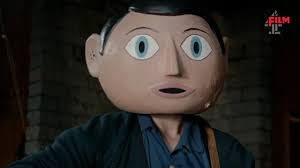
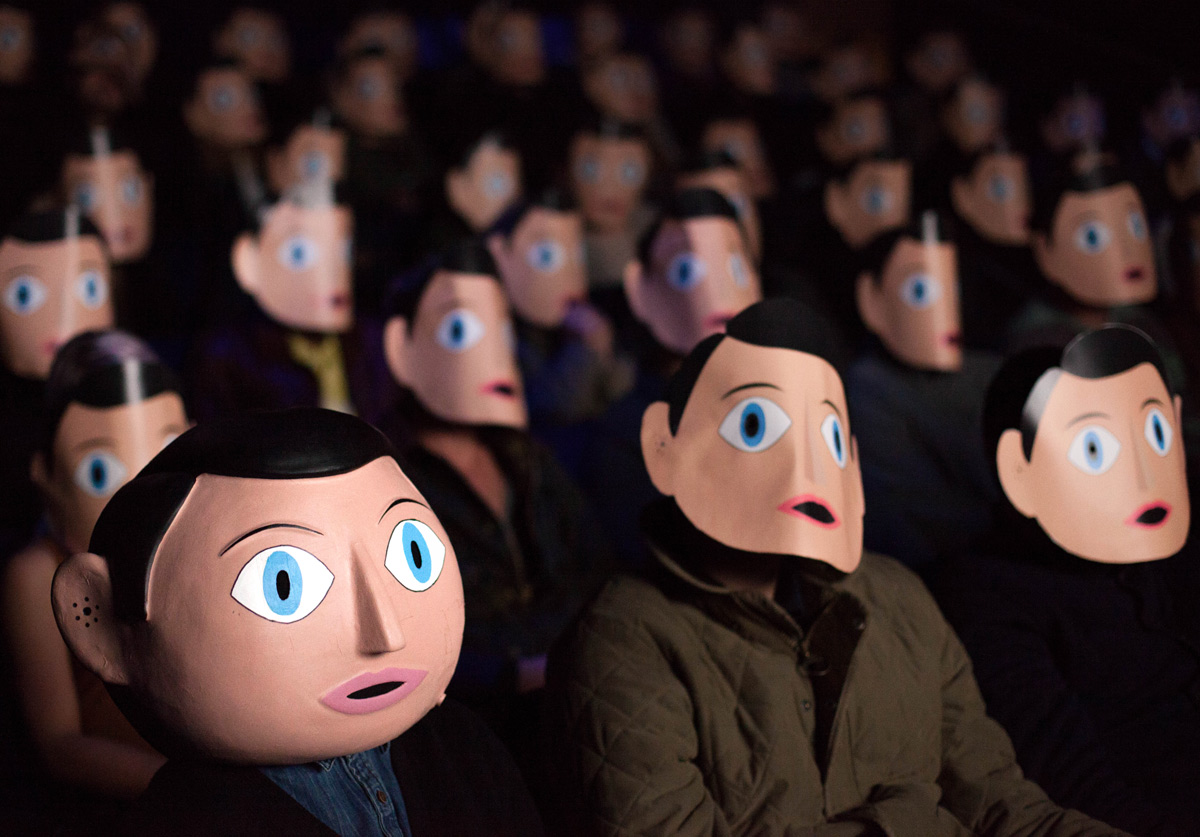
Well, he was inspired by Frank Sidebottom, an English comedian who also wore a giant papier-mâché head, but the similarities end there. He is, of course, some mixture of writers Jon Ronson, Peter Straughan, and director Lenny Abrahamson, as well as the man who embodied Frank: Michael Fassbender. But Frank is so much more than that. He is the greatest artist who ever lived, creator of "My Most Likeable Song Ever," and the epitome of Big-C.
Ladies and Gentlemen and non-binary folk, I give you a portrait of the artist as a young papier-mâché'd man:
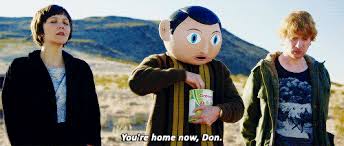
Although technically a fictional creative, he is a creative nonetheless, and a brilliant one at that. In the movie, we follow Jon's discovery of Frank and his musical troupe of misfits. Though Frank is certainly odd and eccentric, Jon becomes convinced that Frank is everything he could never be, that Frank should be famous, that everyone will love him, and that Frank is a perfect depiction of this so-called and exalted "Big-C thing" we keep going on about.
The film is odd and hard to describe, so much so that I recommend just watching it yourself. There's odd, dark humor, epic and peculiar music, and a rich examination of creativity that could only come out of a Sundance Film Festival. I will mention SPOILERS here, so go watch it now and come back.
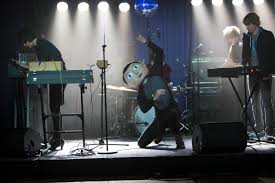
Frank and friends create music by secluding themselves in an isolated cabin in the middle of nowhere, making entirely new instruments, fighting each other, and doing so over and over and over until it's right. If we want to grow as creatives and researchers of creativity and all its greatness, we must learn from Frank… at least according to Jon. For Frank, the creative process is frustrating, it can be boring, and it's all-around unattractive in comparison to the mythic artistic process we see in the movies. But this obsessive and immersive creative process is part of what marks Frank for greatness, and everyone who sees Frank is all in.
Frank finds inspiration in creaky doors and tufts of carpet. His lyrics are emotional, expressive, syntactic nonsense somewhat akin to Lewis Carroll's nonsense poems. The music itself is a cacophony of sounds created by Stephen Rennick but contributed to by the cast much like the fictional group does in the film. While everyone in the Soronprfbs (the name of their musical group) agrees that Frank is their creative genius and leader, collaboration plays a critical role in their creative process. It is here that we can lean on Gardner's framework and dive into the "other people" in Frank's world.
The Soronprfbs's all influence each other, both within the creative process and outside of the creative domain just as any other group of friends would. Remarkably though, everyone in the group, and especially Jon, seems obsessed with how great of a creative genius Frank is. Jon almost seems infatuated with the idea of Frank (though maybe not Frank himself). In the Soronprfbs's world, Frank is the Biggest-C there will ever be.
But apparently, in order to be a true eminent (Big-C) creative, Frank's influence has to be more widespread. He has to "make it big" and become well-known enough to win a big prize or change an entire field or something like that. Well, Jon knows this, and that's exactly what he wants for himself--I mean Frank. So, with the help of Jon and some good-ole social media, the Soronprfbs get famous. They even get invited to perform at South by Southwest.
But there's just one problem. You see, the Soronprfbs don't create music to become famous or get any external recognition. They don't even really make music for other people at all. For them, it's just about making the music itself. They're almost entirely intrinsically motivated in this way. Frank is obsessed with making music. It never even occurred to him that an audience outside of his immediate collaborators would be involved. Can art exist without an audience? Not if you're going to be an eminent creative it can't.
Despite much protest from members of the group who see Jon's Big-C aspirations for the Soronprfbs as a corruption of who Frank is, they go to South by Southwest. Frank creates his "Most Likeable Song Ever," and the group gets to experience what it's like to have a large following of fans. Everything seems to be going great… until
Frank totally freaks out. Mental illness in creatives is shown throughout the film with almost every character struggling in some way, Frank as no exception. There's something about Frank's experience with "bigness" that triggers a breakdown. Perhaps he's overwhelmed with the crowd after living in a secluded cabin for months, perhaps he feels crushed under the inauthenticity of the adoration he's received from fans who like how " different" his music is, and perhaps he's just overstimulated. Any way you speculate, the eminence of Big-C destroys the fidelity of Frank's art, which is so closely tied to who he is, destroying a piece of Frank along with it.
Frank eventually makes his escape, from South by Southwest, from the crowd of misunderstanding eyes, from Jon, and everything. He gets hit by a car and we never see Frank's beautiful, wacky, papier-mâché head again...
This all leaves me wondering why.
Why are we obsessed with Big-C? Would a creative by any other name sound as sweet? Of course not! There's some serious honor attached to the "Bigness" of our Big-C. What is the cost of this eminence? Was Frank any less creative before he got "YouTube famous?" Is he a "littler" artist because he couldn't handle the pressure of fame? If his legacy blows up after he dies and revolutionizes musical expression as we know it, is he finally, truly then the Big-C that everyone saw in him from the beginning?
I'm not sure… that all seems kinda arbitrary to me. Even more than that, it's just biased. Is it worth it to us to discuss Big-C creatives as better than or more exceptionally creative than other creatives just because they are "well-known" and "eminent?" We would have to do this knowing full well that this "eminence" is determined by a society with fickle, inequitable, and sometimes seemingly arbitrary preferences for what, or who, is better than everyone else. Is that what we leave our scientific metric of creativity up to?
Now sometimes, we get it right. I 100% believe Beyonce is an eminent creative and she fits all the criteria for Big-C. But I can also list plenty of artists and creatives whom I think are worthy and deserving of being studied as "Big." I'm sure you can too.
What does our obsession with Big-C do to our perception of creativity? And what does it do to us? I don't want "bigness" to overshadow the creative products of the artists we study, and I certainly don't want this "bigness" to destroy the creatives themselves in the process, metaphorically or otherwise.
For me, Big-C died when Frank got hit by that car, and I'm gonna let it rest there. Words have power, and along with them comes a bias we must confront if we are to move forward. I don't believe there's anything I can learn with the lens of an exclusionary Big-C that I can't learn from studying other creatives who do great things without the burden of eminence.
And so, with that. RIP Big-C.
Looking sleek, smart, and suave, John Mulaney enters the stage, picks up his microphone, and beings to deliver his comedic masterpiece. John Mulaney is a prominent comedian, actor, and writer. He is best known for his array of original stand-up comedy bits, and his talent shows no limits as he continues to amuse society through his infectious humor.

John Mulaney was born into an Irish-Catholic family in Chicago, Illinois. He attended St. Ignatius College Prep for high school and attended his parent’s alma mater, Georgetown University. After college, he moved out to New York City to pursue his career as a comedian. Comedians in general are certainly creative. It takes specific types of jokes, an ability to relate to the audience, and flawless delivery to please a crowd. However, John Mulaney naturally incorporates an aspect into his stand-up shows that most comedians do not: intelligence. John Mulaney’s intellect helps perfect his sharp-witted jokes and aids him in connecting with his audience.
Mulaney is undoubtedly intelligent; this is seen through his acceptance into top tier schools, the earning of his English and Literature degree, and his passion for political activity. However John Mulaney’s talent is not formed independently in each area. Rather, it is formed through his ability to effortlessly combine these domains. Through this process, comedy is created. This skill is seen throughout his various jobs, inspirations, and original shows.
After moving to New York city, Mulaney auditioned for Saturday Night Live and was offered a position as a writer. Mulaney utilized his strong writing background to organize many amusing skits and sketches. He also helped tweak Tina Fey’s impression of Sarah Palin, which he was able to do through his attentive observations in politics. Mulaney combined his natural satirical humor with his views on current events to make light of political situations and other prominent issues in society. His creativity did not go unnoticed, and he eventually went on to create and perform his own stand-up shows: The Comeback Kid, New in Town, and Kid Gorgeous.

John Mulaney has a very notable presentation. The comedian always dresses in a fully ironed three piece suit, perfectly gels his hair, and remains in good posture throughout his entire performance. These physical traits align perfectly with Mulaney’s pure and carefully constructed jokes. Mulaney engages in rich storytelling from his past and wisely articulates these tales with wisdom and wit.

The comedy club manager confronted him after his bit, advising him to make his jokes more concise. Mulaney boldly returned to the Stress Factory the following night and performed with brevity, consequently receiving significantly more praise. He developed this technique out of failure and trial and error. He applied the constructive criticism from both his manager and the crowd to his next performance, which eventually helped develop the ingenious style of his jokes and trademark polished presentation. This failure has served to bring him success in his comedic endeavors.

https://www.vulture.com/2018/05/john-mulaney-became-the-best-joke-writer-of-a-generation.html
https://peoplepill.com/people/john-mulaney/
https://www.nytimes.com/2018/04/30/arts/television/john-mulaney-kid-gorgeous.html