Sunday, February 18, 2024

Miley Cyrus:Crazy Creative or Just Crazy

 Miley Cyrus, if you haven’t heard of her, is a grammy-winning, American song-writer and actress. Born in Franklin, Tennessee she started her career following in her father (Billy Ray Cyrus) footsteps in the entertainment business. Her first notable role being Hannah Montana, in the hit TV Disney series Hannah Montana that featured a soundtrack that sold more than 3 million copies. Despite originally being told she was too young (only thirteen at the time) and naive to be in the series, she continued to push to be considered for the role. But by the time Cyrus was turning eighteen she knew her time on the show was coming to an end. 

In 2013 is where Cyrus really steps into her role as a creative in the music industry, she moves away from Disney and into a more mature musical genre. “The Meet Miley Cyrus” her debut album is what started to shift her identity away from “disney mascot” Hannah Montana, and towards her new identity Miley Cyrus. Cyrus claims this is when she really started to write her own songs as a solo artist, and where she says her song-writing career started.  

Miley Cyrus claims that in her house she has four shelves dedicated to old journals filled with songs her and her dad have written. These journals are filled with probably around 100 songs and other imaginative ideas to be used as fuel for songs in the future. This is part of Cyrus’ creative process, and embodies the idea that creativity is an infinite resource within each individual waiting to be tapped into and expressed. This is shown in Cyrus despite having multiple grammy nominated albums, has pages and pages of creativity that she has yet to fully tap into. In a Vanity fair interview she explains more about how these journals relate to her song-writing. These journals help to explain how she believes that “When people hear my music they hear a fragment of time, something I feel or felt right then” suggesting that her creativity for that song came from a moment in her own life where she experienced some sort of personal struggle. That “By the time it gets to your ears I may have grown past it, but I am truest to who I am at that very second”, explaining that she uses her personal struggles and issues to fuel and drive her creativity. And that by working through her issues she is also able to use song-writing as a creative outlet to work through her struggles

This connects to my focus book because in The Creative Spark by Agustín Fuentes, he talks about creativity through an evolutionary lense and talks about how progress happened sporadically. That when the first humans roamed the earth they went existent and had to try several different times and areas of the world before they were able to survive and eventually produce what we now know as our ancestors. This can be related to Miley Cyrus because she claims she can get really ahead of herself and get super anxious and just writing in a journal even a stream of consciousness can help her and later she will even find things that inspire her songs. But sometimes she feels so much and it's hard for her to manage and process all of her feelings and she describes the way she feels “can be so drastic moment to moment”, that sometimes it’s helpful to take a step back and realize that Rome wasn’t built in a day. Proving that what she writes is just for herself and doesn’t always make it into lyrics or songs and sometimes what she writes is gold and becomes a grammy-winning song and other times it never sees the light of day. Like our lineage some early humans took the wrong path and didn’t survive and others were able to thrive and produce offspring. That her creative progress (in the form of songwriting) happens sporadically not all at once, just like human evolution, sometimes it takes multiple tries to get things right. That perspective for her is everything and the time and place and the idea of living in the now is her key to success. 

Another connection is the idea of teamwork. That sometimes creativity thrives in the presence of others and can be the key to finding success. Micheal Pollack helped Cyrus write her record-breaking song Flowers. This exemplifies Fuentes’ point of creativity thriving in the environment of many. When humans first started to hunt and create tools they needed the help of others to successfully hunt and gather food in order to be successful and stay alive. That line of thinking can help explain why even talented singer/songwriters like Miley Cyrus call on others like Pollack to help with the creative process and song-writing. That sometimes even just having someone to bounce ideas off of and tell you you're getting warmer can be helpful. Although Pollack did more than that, he claims the original chores was less empowering and sexy, then the final “Yeah, I can love me better than you can” that he and Cyrus flipped from the original “But I could never love me like you can”. Pollack claims it is much easier to write songs when there is “genuine emotion to tap into and an authentic muse” and that he struggles when no one in the room can tap into that emotion and truth. Showing that having other people to connect to and use their emotion is what leads to the creative processes that led to great songs. 

Here's some of the articles I used if you want to check them out: 

Jay Chou- King of Mandopop

 Zhou Jie Lun, or Jay Chou, is a Taiwanese singer, composer, and producer who is recognized as the “King of Mandopop.” I remember hearing of this name but didn’t know who Jay Chou was. I looked him up one day and now, he not only has become one of my favorite artists, but is also what got me interested in other Mando artists. He may not look as pretty as most celebrities dominating Asian media, actually kind of ugly as per Asian beauty standards, but he has unmatched charisma. He is so cool that he pretty much gets his own slang word for being that level of “cool.” He is a down-to-earth kind of person and is still “normal” after becoming famous.


Like many creatives, Jay Chou is a collector-- of art. He buys pieces that speak to him and makes him happy. Since the price tag doesn’t matter, he is often ridiculed by his friends for being like a tourist collecting souvenirs. This mindset is representative of Jung’s Intuitive and Feeling types personality. His career is not motivated by fame and fortune but by what he feels like creating in the moment. Jay Chou is open to experience and advocates for looking at art as “a sensual experience that has much universal appeal.” He believes art is everywhere, and his feelings, as well as his audiences’ feelings about it, should be shared. 


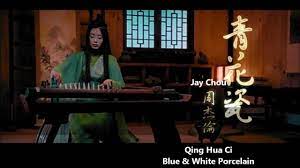
The first Jay Chou song that I listened to is called “Blue and White Porcelain,” one of his most popular songs. It is a beautiful poetic song about someone longing for their lover. The speaker compares the beauty of their lover to the beauty of blue and white porcelain, which is a highly valuable artifact. The mv is set in ancient China where a woman is captured, and to get her back, her lover brings the bandit king a blue and white porcelain vase. She is killed despite the transaction being completed. In another life, the couple do not know each other and compete in an auction for the same vase. The guy lets the girl have it, and the two rekindle their love from hundreds of years ago. The reincarnated bandit kills the guy to steal back the vase. 


https://www.youtube.com/watch?v=Z8Mqw0b9ADs

Jay Chou’s style is a fusion of traditional Chinese music and aesthetics with Western R&B, pop, rock, rap, and contemporary music. This combination isn’t technically something totally unique, but his reinvention of existing elements led to a whole new term being coined: “Chou Style.” This creative touch on music generates what critics call an “in-between” or “third space” and may even be considered convergent thinking as it invents a new product based on the exploration and interpretation of something already there. He is known for his insane variation in music, but recently, because of his consistency, he has faced some backlash.


Jay Chou has worked with some huge names, both in and out of his generation, in the Chinese music industry, including Andy Lau and Jolin Tsai. The Creative Spark by Augustin Fuentes highlights the evolutionary human predisposition to collaborate. Like many animals, we are meant to be in contact with each other. Evidence in fossil excavations and observation of our close primate relatives shows that our ancestors worked together in groups and reinforced social bonds through leisurely activities. Jay Chou works together with some of the most popular artists, actors, writers, and brands to create art that has greatly impacted social perspectives. As collaborators, each person might be responsible for one aspect of the final product. Together, they create something that touches the hearts of their fans and sparks creativity in them.


https://www.sothebys.com/en/articles/jay-chou-is-on-mission

https://whywendywrites.com/jaychou/

https://en.wikipedia.org/wiki/Jay_Chou


Christian Dior: Rule-Breaking Couture

     Christian Dior is one of the most rule-breaking, creative designers of our time. His collections revamped women's fashion and his impact on the industry still remains to this day. Dior came from wealth and was expected to go on to become a diplomat, yet his draw to the arts was too great to ignore. After studying political science at the University of Paris, he took to creating designs and illustrations, selling them on the streets of Paris before opening his own gallery (Christian Dior, Britannica). 

    Dior was called to service during World War II and kept creating during the war, designing clothes for Nazi wives. After his service, he joined the fashion house of Lucien Lelong. Over time he went on to create the fashion House of Dior in 1946, starting a controversial and creative journey (Christian Dior, Biography). 

    The look that broke the norms of fashion and flipped rules was the "New Look" created in 1947, right after the House of Dior was founded. The look featured a lower hemline, cinched waist, and no stuffed shoulder pads in the jacket. Dior broke the rules and limitations for daytime and night looks. Curvy silhouettes were designated night-time attire, but Dior brought those shaped into daywear. Small shoulders and longer skirts were not the average fashion choice for women and this look caused international controversy. Dior created all the pieces to complete an outfit, hats, gloves, etc.. This "New Look" was a key moment in fashion that sparked a movement for women postwar (Christian Dior's Most Famous Silhouettes in Vogue, Borrelli-Persson, Laird). 


    Dior grabbed inspiration from anything and everything. In a video posted on the Dior YouTube page, it gives the audience a look into the creative process of the designer behind innovative looks. 


He takes inspiration from fabrics, the shape of the model, and all other unconscious inspirations and lets his imagination have "free reign". Improvising with pulling and pinching fabrics till it forms a physical idea. In Week 2, we covered the idea of introspection, talking through a creative process. Dior talks through his thoughts in the video, fussing with accessories to complete the outfit. If something doesn't work with his vision, he talks through redirecting it till it satisfies. Inspiration for other works came to Dior from historical periods, architecture, art, and other designers. In Week 4 when talking about where creative ideas come from with muses, his mother was a muse for the couture (The World of Monsieur Dior in His Own Words, YouTube).

    Christian Dior was a very superstitious man, always accompanied by a wooden cane to be touching wood at all times, and carried various lucky charms in his pockets. The Creative Act: A Way of Being by Rick Ruben talks about rules, noting that "Rules, by their nature, are limitations...Rules direct us to average behaviors. If we're aiming to create exceptional works, most rules don't apply. Average is nothing to aspire to." Superstitions limit the mind to abide by their supernatural nature. The discomfort in battling the rules of superstitions and of fashion doesn't stop Dior from creating immaculate works. One wouldn't think that he would cause controversy and unleash such creativity, his collections are nothing close to average. Dior broke the rules of women's couture.


“Christian Dior.” Encyclopædia Britannica, Encyclopædia Britannica, inc., 16 Feb. 2024, www.britannica.com/biography/Christian-Dior-French-designer.


Borrelli-Persson, Laird. “Christian Dior’s Most Famous Silhouettes in Vogue.” Vogue, Vogue, 30 Sept. 2016, www.vogue.com/article/christian-dior-archival-looks.


“Christian Dior - Life, Fashion & Career.” Biography.Com, A&E; Television Networks, 2021, www.biography.com/history-culture/christian-dior.


“The World of Monsieur Dior in His Own Words.” YouTube, YouTube, 23 Apr. 2020, www.youtube.com/watch?v=ZESWE3myVLk.


Rubin, Rick, and Neil Strauss. The Creative Act: A Way of Being. Canongate, 2023.


Saturday, February 17, 2024

Mark Cuban and Conceptual Change


        Whether it is investing in the future, owning a NBA team, or entertaining us on ABC, Mark Cuban has had a significant impact on our society. Yet, many do not truly know who exactly is Mark Cuban and why he is considered a modern day Creative.  
        Born in 1958, Mark Cuban grew up in Pittsburgh with his family. Characterized as a natural business man, Cuban began to sell garbage bags around his neighborhood at the age of 12. In high school, he attended evening classes at the University of Pittsburgh to graduate sooner and begin working towards his business degree.  As he grew older, Cuban's success followed him throughout his career when he founded several companies like MicroSolutions, Broadcast.com, and HDNet to name a few. Once his companies were successful, he began to sell them to major corporations and as such establishing himself financially. Selling companies allowed Cuban build a fortune that helped him to pursue more ventures such as being an active stock trader and becoming the owner of the Dallas Mavericks. All of these successes have led to the current day Cuban's estimated net worth being about 6.2 billion US dollars. 
        Commonly known for his involvement in Shark Tank since 2011, Cuban has invested in several companies, allowing them to creatively tackle various issues and meet consumer needs. Arguably, his most creative and helpful product was a company he founded in 2022, CostPlus Drug Company. It stands out from other companies he has invested in because CostPlus is structured in way that presents Cuban's Creative Process. He utilizes this company to tackle one of the massive issues our country faces on a daily basis, the increasing cost of drugs. 

(In case the video doesn't work here is the link https://www.youtube.com/watch?v=Pp0zIQzRXjA&t=44s)

        The video above is a Katie Couric Media video of Cuban discussing the history of CostPlus Drug Company and its goals all while connecting to his creative process in this company. The mission of his company is to produce low cost drugs that they can legally sell to people in need. Cuban mentions that he is able to achieve cost savings by working outside of the current pharmaceutical system in place. Then, he proceeds to bring attention to the role of pharmacy benefit managers and how their communication between manufacturers and patients is what results in the increasing price of drugs. To resolve this issue, Cuban's company directly negotiates with the manufacturers on a reasonable price and then increasing the price by 15% to ensure the company can still be in business. The company prides itself with being transparent with the consumer so much so that on the company website itself it shows the negotiated price and what the customer ends up paying. 

        This semester the focus book I am reading is Rick Rubin's The Creative Act: A Way of Being. In his writing, Rubin describes what fuels creativity and its foundation through short excerpts. Early on in the book Rubin discusses awareness and how it plays a role into our perspective in life and how it factors into creativity.  To quote Rubin, "The gift of awareness allows us to notice what's going on around and inside ourselves in the present moment" (Rubin 19). Mark took the time to research the field of pharmaceuticals and recognized that the current system in place was not conducive to the wellbeing of others. Because of his attention to detail, Cuban was able to implement his realizations into an effective and never before seen product that addressed the issue. In a palindromic sense, Cuban's awareness of the situation supported his creativity and his creativity fueled his awareness. Additionally, Rubin mentions how science is not as rigid as we make it out to be and is subject to change much like how art does. Cuban shares this sentiment by expressing the necessary for change in order to improve the lives of people and how they rely on medicines. 


    Mark's creative product, CostPlus, is a modern day example of Conceptual Change in the Creative Process. In this instance, the Pharmaceutical system is considered the Domain that has a defined system. Our lecture mentioned there are 2 challenges when dealing with Conceptual Change: the existing rules of the Domain and the People's acceptance towards the change.  Cuban mentions the Pharmaceutical field is defined through the pharmacy benefit managers and how they operate situations pertaining to patients. This would be Cuban's challenge in terms of producing a creative solution to help the patients in need. This system also does not cultivate an environment healthcare workers create new solutions for patients.   A challenge that Cuban does not experience is the people's acceptance. CostPlus is used by over 2 million users, the people who benefit from this creative product support. Cuban's solution even changes the field of Pharmaceuticals by having competitors accept this new change. According to CNN,  places like CVS are starting to follow along with this change because of Cuban's creative process.

https://www.cnn.com/2023/12/06/business/cvs-mark-cuban-nightcap/index.html
 

    Ultimately, Mark Cuban is a creative who utilized the flexibility in the field of science and his own awareness to change the Domain of Pharmacy through his creative product. In doing so, Cuban's Conceptual Change provided a path to affordable drugs in America for patients. 


Friday, February 16, 2024

Wes Anderson - A Master in Directing


       Wes Anderson is by far my favorite director and has made some of the best movies I have ever seen. His unique and stylized way of filming matches his familiar themes of death, grief, loss, and dysfunction, but also love, weird or wacky personalities, and wonder. My favorite of his films are Grand Budapest Hotel and Asteroid City, both of which I have watched multiple times.

  Wes Anderson is renowned for his distinctive visual style and quirky storytelling in cinema. Born on May 1, 1969, in Houston, Texas, Anderson's films are characterized by their attention to detail, vibrant color palettes, and whimsical narratives that often explore themes of family, belonging, and nostalgia, but also loss, grief, and death. His creative process is as distinctive as his films, marked by a fusion of meticulous planning and spontaneous inspiration.

Central to Anderson's creative process is his penchant for visual storytelling. He is known for storyboarding every scene of his films, meticulously planning every shot to achieve a precise aesthetic. Anderson's films are often described as living dioramas with carefully composed frames that resemble intricately crafted dollhouses. This attention to visual detail extends to every aspect of production, from set design and costume choices to cinematography and editing.

Collaboration is another crucial element of Anderson's creative process. He frequently works with a recurring ensemble of actors, including Bill Murray, Owen Wilson, and Jason Schwartzman, fostering a sense of familiarity and camaraderie on set. Anderson's collaborative approach also extends to his crew, with many of his longtime collaborators contributing to multiple aspects of production, creating a cohesive vision across his body of work.

Despite his meticulous planning, Anderson also leaves room for spontaneity and improvisation during filming. He encourages actors to bring their interpretations to their roles, often resulting in memorable performances characterized by a blend of deadpan humor and heartfelt emotion. Anderson's ability to balance structure with flexibility in his creative process allows moments of unexpected magic to emerge on screen.

        I have not read very much of my focus book by Faith Ringgold, so I will make a connection to class. Most recently in class we talked about Myers Briggs personality tests, and the merits/issues with them, regardless of that, Wes Anderson would be an INFP because of his creativity and caring of others and himself. 


https://en.wikipedia.org/wiki/Wes_Anderson

https://www.imdb.com/name/nm0027572/bio/ 

Thursday, February 15, 2024

Greta Gerwig Tackles the Human Condition


From Lady Bird, to Jo March, to Barbie, Greta Gerwig crafts complex and distinctly human characters who mirror the intricate realities of life. Her screenplays are pure poetry, yet they never lose the authenticity of real human character and behavior. Whether working alone, with other actors, or with her husband Noah Baumbach, Greta Gerwig has a way of making intangible emotions come to life in fictional worlds. 

Greta Gerwig was born in 1983 in Sacramento, California. During her early childhood, Gerwig was involved in various forms of dance as well as competitive fencing. She received her high school education at an all-girls Catholic school before studying English and philosophy at Barnard College in New York City. Growing up without a television, Gerwig was forced to entertain herself with fictional books and imaginative stories. Gerwig’s Lady Bird (2017) is said to be somewhat of an autobiography, as it calls on many of these primary experiences in Gerwig’s youth. Throughout college, Gerwig explored her passion for theater and playwriting along with her college roommate Kate McKinnon. Gerwig strongly desired to pursue her love for playwriting beyond college. However, her rejection from a master’s program in filmmaking pushed Gerwig to focus on acting instead. From 2006 - 2008, Gerwig appeared in various micro-budget films written and directed by her boyfriend at the time. These “mumblecore" projects utilized a naturalistic style of acting that centered around improv rather than definitively written lines. In many of Gerwig’s later films, she uses this style of spontaneity in filmmaking by intentionally creating dialogue that sounds natural, almost as if it is improv itself. Her first break-through role in the film Greenberg (2010) launched Gerwig into a new realm of acting. This film also allowed her to return to her familiar love of screenwriting. Now, Gerwig is known for directing award winning films including Lady Bird (2017), Little Women (2019), and Barbie (2023)


Greta Gerwig in the mumblecore production of Nights and Weekends (2008)

Greta Gerwig likens herself to somewhat of a collector: she steals emotions, experiences, and conversations from throughout her life and stores them for future use. In terms of Carl Jung’s personality types, Gerwig is more sensing than intuitive in this particular instance. She uses factual experiences and real internal emotions to craft creative pieces. Consumers of Gerwig’s content feel as if she has captured the intangible experience of living in a complex and emotional world. By using universal human experiences and thus taking a more sensing approach to filmmaking, Greta Gerwig makes her audience feel understood. 


During an interview about the making of Little Women (2019), Gerwig shares that she enjoys collaborating with the actors in her films in order to achieve a shared cinematic vision. She believes that differences in experience, skill, and personality foster new ideas and a more accurate depiction of the human condition. In The Creative Spark, Agustín Fuentes mentions that the human species began as a homogenous group in which all humans occupied a similar role. As groups of humans increased in size and migrated to different geographical areas, communities became more structured and diversified. In these new societies, humans relied on collaboration in order to function as a combined unit: each individual possessed a unique skillset and social position which the society needed. Creative thought and innovation within the society arose from these different perspectives. Whether or not she is aware, Greta Gerwig uses these primal human methods of creativity to produce innovative films. 


Greta Gerwig collaborating with Ryan Gosling on the set of Barbie (2023)

Most recently, Greta Gerwig collaborated with her husband Noah Baumbach to write the screenplay for Barbie (2023). Much of their initial process consisted of talking through themes and important scenes which they wanted to include. Then, Gerwig and Baumbach would each take individual scenes to write themselves before editing one another’s work. Gerwig claims in an interview that “writing with someone is more fun than writing alone,” and she and her husband are able to bounce ideas off one another or help the other when stuck. 


Greta Gerwig is destined to become one of the directing and screenwriting greats in our time. As she continues to collect life experiences with age, Gerwig will continue to captivate her audience with fresh yet comforting pieces. 


Sources:

https://www.elle.com/uk/life-and-culture/a30377643/greta-gerwig-february-2020/ 

https://screencraft.org/blog/screenwriting-advice-lady-bird-writer-director-greta-gerwig/ 

https://www.britannica.com/biography/Greta-Gerwig 

https://www.biography.com/actors/greta-gerwig 

https://nofilmschool.com/greta-gerwig-screenwriting-process

https://www.anothermag.com/design-living/14977/greta-gerwig-mumblecore-frances-ha-damsels-in-distress 

Wednesday, May 3, 2023

Honor Levy


In a previous blog post, I touched on poasting as a creative avenue.  I will take that statement even further and say that it is the last great artistic sphere.  It is important that people who want to create adapt to this.  A creative who has excelled in formatting her writing for the online world is Honor Levy.  Being only a couple years older than us, she didn’t even need to adapt her artistry for the internet; it was born of the internet.  This is encapsulated in a piece written in 2020 for New York Tyrant titled
Internet Girl.  In reading this we can really see how big of a vibeshifter she is as it is kind of mother to all these other “girlblogs” that sprung up in the wake of covid.  Levy’s podcast with co-host Walter Pearce Wet Brain, also released in 2020, can be seen as not only vibeshifting but prophetic.


Internet culture is kind of like Reaganomics in that there are certain niche groups who will coin words or images and then this trickles down to more mainstream circles.  A favorite Honor quote of mine from the podcast is “all culture is downstream from reactionary incels”.   This is pretty much entirely true.  Knowing this, Levy writes in a totally new fashion tailored to the high speed of the contemporary world.  In her officially published articles we get a sense of this but they are much more comprehensible to the average viewer than say her tweets or substack posts, which, to the untrained eye, appear very “schizzed”.  I believe she is to come out with a book this year, and I am curious if it will be in her more professional style.  Lots of people say that Honor Levy and the circle she runs in, irl or online, is insular and reactionary, but truly anyone can gain acceptance within if they just post good enough.


I used the term vibe shift which itself has become a meme at this point, but it is a powerful phrase that is apt in some situations.  It is tired at this point especially due to more mainstream platforms coming out with articles about it or the “zeitgeist” and in doing so somewhat misunderstanding what they attempt to describe.  I’m not going to describe anything right now as it requires so much context that you Had To Be There For, I am simply trying to impress upon readers the impact Honor Levy has had on internet vibes.  She gets it!  That’s how it boils down.


Levy tetters the line of pro-C as she has made money off of some efforts but it is definitely not the traditional idea of “professional”.  As for her motivation, a lot of it can be considered extrinsic but the writings are so personal there must be an aspect of an intrinsic need to get these feelings out.