Sunday, February 18, 2024

Nicki Minaj: Tribalism in The Music Industry

    Nicki Minaj, born Onika Tanya Maraj is a Trinidadian-American rapper, singer, and songwriter who has made a notorious name for herself in the music industry. Starting off, Nicki gained widespread recognition with her mixtapes in the late 2000s, displaying her versatile and distinctive style. Nicki's breakthrough came with her debut album "Pink Friday" in 2010, which spawned hit singles like "Super Bass" and "Starships." Known for her animated delivery, unique personas, and colorful fashion sense, Nicki has become one of the most influential and successful female artists in hip-hop. Throughout her career, she has earned numerous awards, including multiple MTV Music Awards and BET Awards, solidifying her status as a global icon in the music industry. More recently, Nicki has released her newest album Pink Friday 2, combining some new Nicki hits with exciting collaborations. Nicki has continued to expand her name and brand through the film industry, serving as a judge on "American Idol," and through various philanthropy involvements.

    The creative process of Nicki Minaj is anything but ordinary, relying on a mix of versatility and bold innovation. Known for her iconic personas and styles, Nicki often draws inspiration from her own life experiences, bringing fans into her own reality. This is extremely evident when one observes the intimate relationship Minaj has with her followers. Often referred to as “Barbz”, referencing one of Nicki’s personas (Harajuku Barbie), fans of Nicki are undeniably loyal, at times even going to extents that can be extreme to show their support. Her lyricism is marked by clever wordplay, unfiltered verses, and a fearless approach to addressing both personal and social issues. Nicki has a hands-on approach to her music, actively participating in the production and direction of her projects. A recent interview with Vogue gives fans a deeper look into Nicki’s creative process, showing off her at home studio where she does much of her work.

    Recently, Nicki Minaj has been under fire for events related to a conflict between herself and fellow rapper Megan Thee Stallion. Megan, like Nicki, has a solid fan base and has risen to fame through hard work, determination, and grit. Megan’s brand took off with the release of "Hot Girl Summer" in 2019 and the release of her EP "Fever". Megan's authenticity and stage presence have since earned her widespread acclaim and numerous accolades, placing her amongst rappers like Minaj in the music industry.

    In early 2024, Megan released a song titled “Hiss”, calling out anyone who uses her name as a shortcut to gain fame or recognition. Megan compares herself to an irritated snake, simply hissing at those who attempt to pester her. This “warning shot” so to say was not necessarily directed at anyone in particular, however, a number of “Hiss” lyrics appear to reference Minaj. Specifically, fans claim that a certain line seems to be pointed at Minaj’s immediate family: “These h--s don’t be mad at Megan, these h--s mad at Megan’s Law.”

“Megan’s Law” references a federal law that requires the police to disclose public records of  convicted and registered sex offenders. Minaj’s husband, Kenneth Petty, is a registered sex offender as of 1995, and more recently was put on probation in 2022 for failing to register as an offender in California. Although at first glance these speculations may seem nothing more than just that, the situation escalated quickly.


    Within 3 days, Minaj released her response track titled “Big Foot”, referencing an unfortunate event in 2020 in which Megan was assaulted and shot in the foot. Nicki’s track makes several digs at anyone who tries to come for her, but specifically addresses secrets regarding Megan's (deceased as of 2019) mother, Holly Thomas. The last minute of the song is adlib from Nicki threatening anyone who dares cross her, promising to specifically leak information on Megan in the event that this goes on any further. This back and forth continued to escalate within the two fandom’s, each defending their respective idols violently. It reached its peak when supposedly a group of Barbz leaked the location of Megan’s mother’s grave, threatening to vandalize the memorial site. Active security still stands guarding the grave.


    All of this goes to say that the two fandoms take this back and forth very seriously. Both sides appear to be willing to go above and beyond, resorting to tribalist behaviors and closing ranks. Rather than disassociating with these issues which have nothing to do with the fandom, they double down to protect their idol. In The Creative Spark by Agustín Fuentes, tribalist behavior and hierarchical systems are broken down into patterns of respect and recognition that require immense amounts of creativity and conceptual processing. Even in the digital age where socialization has changed drastically, many of these behaviors are still very prevalent, and in some cases appear to be amplified. In the case of this Megan/Nicki drama, fans appear to be using whatever means necessary to hurt the opposing side. Although there is no actual tangible relationship between fan and idol, followers of the stars continue to go above and beyond to show their support. Fuentes explains how creativity is used to determine one’s place in a hierarchy. Different techniques must be used to help one determine their rank in the pecking order. At the same time, an individual needs to prioritize their own safety. The solution to this is utilizing creative measures to do both. Fuentes in the early chapters focuses on modern chimps and follows how they determine who is in charge. He focuses on how leadership can change, and hierarchies are not stagnant or unyielding, and creative techniques can lead to this upward/downward mobility. In the case of the celebrity drama, fans use brutal but creative methods in order to level the playing field and show their support. It is deep in our own nature to defend our own. Even in the modern age, we are really no different than our primal ancestors.


https://www.youtube.com/watch?v=WrN3Dx3EBVI

https://www.washingtonpost.com/entertainment/music/2024/01/29/nicki-minaj-megan-thee-stallion-hiss/

https://www.britannica.com/biography/Nicki-Minaj

https://www.houstonchronicle.com/news/houston-texas/trending/article/megan-thee-stallion-s-mom-s-houston-gravesite-18639565.php


Laufey: A New Road to Jazz and Classical Music

 In spending the last year or so attempting to broaden my music taste, I have stumbled upon one of my new favorite artists: Laufey. 

Laufey (pronounced “Lay-vay”) was born in 1999 to a Chinese mother and Icelandic father, and grew up surrounded by music. Her grandfather taught violin in China, and her mother is a world class violinist. At an extremely young age, she was learning how to play both the violin and piano, which is no surprise given her classically trained background. Laufey even played cello solos with the Iceland Symphony Orchestra and placed second on Iceland’s Got Talent. 


      Laufey, 15, performing at Iceland’s Got Talent 

While at Berklee, prior to the shut down caused by the coronavirus pandemic, she recorded a song. It was a song about the heartbreak she was experiencing that she chose to release despite everything going on in the weeks after. “Street by Street”, to her surprise, rose to the top of the charts in Iceland. Laufey has said that her goal is to “...bring jazz and classical music to my generation through a more accessible road.” This is not at all surprising, due to her love for jazz despite her classical training. In fact, “Street by Street” is paired with minimal guitar accompaniment in the jazz style.

Her decision to release her song despite everything going on in the world reminded me a lot of Rubin’s comments about following one’s intuition to do what you feel is necessary for your career, even if everyone is telling you that you should not or you yourself are not completely sure. It also, due to the personal nature of the song, shows aspects of her inner world and how she processed the heartbreak at the time. 


Laufey, on the cover her most recent album, Bewitched

Now based in LA, Laufey has released many albums, the most recent of which came out in 2023, entitled Bewitched. She has also had the opportunity to perform on Jimmy Kimmel LIVE! in 2022 with the release of her first studio album. Everything I Know About Love also led her to a sold out tour across continents and to being the most streamed jazz artist on Spotify in 2022. 

Throughout each album, she continues to employ the same techniques and ideas in new and exciting ways, always letting fans into her inner world. Laufey allows everyone a new way to experience both jazz and classical music. 


Sources:

https://www.berklee.edu/berklee-now/news/whos-laufey-now

https://www.laufeymusic.com/about


Maggie Rogers: Surrender Yourself to Music


 Maggie Rogers, a 29-year-old singer-songwriter from Maryland, is creating in the alternative music space. From a young age, she was involved in music, playing in jazz bands and singing in the school choir. She recorded her first album,
The Echo, in 2012, during her senior year of high school. Two years later, while in college, she recorded a second album, Blood Ballet. She attended New York University to receive a degree in musical engineering and production, as well as English. Rogers’ two albums were released independently and went mostly unnoticed. Finally, in 2016, she was noticed by Pharell Williams, a music producer, who was visiting one of her classes to critique student work. She had been working on a song called Alaska. According to her, the song was about her time hiking in Alaska, which she visited because she had lost her passion for creating music. Ultimately, a video of him listening to and appreciating the song went viral on the internet, and she began to get recognition for her past work. Three years later, in 2019, she released her first studio album, Heard It In a Past Life, which featured the song Alaska.


I first started to listen to Maggie Rogers in 2019. Her music was unlike anything I had heard before. It always put me in a good mood, as her voice and background instruments were always uplifting. It was the kind of music you want to roll the windows down and drive around on a warm summer day, and that is exactly what I did. While I loved her first album, she became one of my favorite musicians after the release of her second studio album, “Surrender,” in 2022. Her sophomore album had a completely different feel than her first. There was more depth in the types of songs she produced. 
Her second album's production is unique, as it started during the pandemic. In addition to the influence of the pandemic, Maggie Rogers was also greatly influenced by grad school. She describes music as something very sacred and personal to her. She struggled to keep these realities true and still create music for public consumption. In 2021, she enrolled in Harvard Divinity School to get a master's degree in Religion and Public Life. While there, she worked on a thesis titled Surrender: Cultural Consciousness, the Spirituality of Public Gatherings & the Ethics of Power in Pop Culture. Her thesis directly inspired the album's creation, doing more than giving it its name, Surrender. She wanted to break out of the domain of music production and understand the importance and spirituality of public gatherings. She used the geneplore process to solve the problem of keeping her music sacred. She used divergent thinking by attending grad school to consider spirituality in her music. Then, she used convergent thinking by producing her album using the skills she learned at school. She challenged her previous creative process by introducing new forms of knowledge that would help her create music that would enhance feelings when played live. 


I have noticed that Maggie Rogers is intuition and feeling focused in her creative process. When making her music, she considers how it makes her feel and how it will make her audience feel. Rogers reveals her desire to create art that feels like the artist cared about; therefore, she makes decisions based on her emotions. She also describes an innate sense when she is working on her lyrics. Specifically, during the creation of Surrender, she understood them as coming from within her, mainly about the people she loves. This suggests her perception of the world is internal.


Roger’s creative experience making her second studio album involved many areas of creativity Rick Rubin outlined in his book The Creative Act: A Way of Being. During an interview discussing her album Surrender, Maggie Rogers discussed how making music and being creative makes her feel most like her and defines what it means to be alive. Rubin shared a similar sentiment, as he believes that being alive is an act of being creative and is a fundamental quality of being human. Maggie Rogers internalized this sentiment, as her motivation to continue to create music is because it brings her closer to her humanity. In the same interview, Rogers also discusses her value in collaboration. She described how Florence Welch and Jon Batiste played roles in several of her songs on the album. She also participated in a lyric writing group with other musicians during the pandemic, which she credits with the creation of two of her songs on the album. Rubin discusses the role of cooperation in creativity. He believes allowing yourself to cooperate with others and new ideas can only enhance your art. It should not be viewed as competition or something to be ashamed of. Maggie Rogers opened herself up to cooperation and collaboration with others. She herself describes this experience as inspiring and encourages other creatives not to be ashamed to admit they received help and cooperated. Lastly, Rogers explains how past experiences and the people around her largely influenced the album's creation. Rubin would describe this as a vessel. A vessel is a place where someone creates relationships with material collected and stores them in the form of stories and beliefs. Maggie Rogers collected her experiences, stored them in a vessel, and accessed them to create her album. 


Sources:

https://youtu.be/N3lv4Vta5y4

https://www.nytimes.com/2022/07/24/arts/music/maggie-rogers-surrender.html

https://artists.spotify.com/en/blog/maggie-rogers-best-advice-podcast-songwriting-collaboration-music

https://www.abc.net.au/triplej/news/how-maggie-rogers-got-masters-degree-made-surrender-new-album/14001782 

Science and Music: How Dexter Holland Doesn't "Keep 'em Separated"

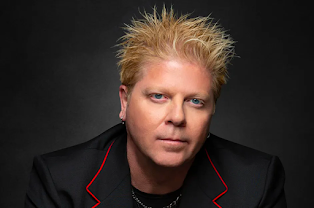
    I have a distinct memory of listening to the car radio when I heard the host mention that there was a lead singer in a rock band who had gotten a Ph.D. in molecular biology. I don’t remember exactly when I first heard this, but I can probably bet that it was on Q101, my favorite Chicago radio station, after they had played one of his band’s songs. Just hearing this struck awe in me, and it’s been a fact that I wonder about every once in a while since then. Yet, after looking into the creative process of this artist, it’s even more interesting that the inspiration for one of his band’s most famous songs came directly from his work in the lab. This creative is Dexter Holland.


    Holland is the lead singer of the rock band The Offspring that blew up in the mid-90s with the release of their third album, Smash. Making it big in the music industry wasn’t always his plan though. At the time that The Offspring’s music really started to take off, Holland was a grad student studying molecular biology at the University of Southern California. He had attended USC as an undergraduate, originally planning to become a doctor, but after he didn’t get into medical school, he decided to continue his education there. He was particularly interested in the study of viruses and eventually began to pursue a Ph.D. in molecular biology, specifically focusing on virology.
    While Holland had been a part of The Offspring throughout his time at USC, the band got lots of public attention with their song “Come Out and Play,” released in 1994. After the band had their big break, Holland made the decision to take a leave of absence from USC in pursuit of his music career. This decision would prove to be a good one. The Offspring went on to receive multiple awards, including the Billboard Music Award for Modern Rock Artist of the Year in 1999 and the Juno Award for International Album of the Year in 2000 for their album Americana.
    Although Holland took a temporary hiatus from his education to pursue music, it was a moment during his time in the lab that helped lead to the band’s break into success. In an interview with Alex Scordelis from VICE in 2022, Holland tells the story of how the iconic opening line of “Come Out and Play” came to be. It all started when he was working in a lab as a grad student, sterilizing a liquid to be used for Petri dishes. To do this, the liquid had to be steamed under a high pressure and temperature in an instrument called an autoclave. After taking some flasks out of the autoclave and waiting for them to cool, Holland recalls saying to himself, “These flasks are never going to cool off. I gotta keep ‘em separated.” Thus, the opening line of “Come Out and Play” was born. The song starts with what sounds like a bit of tame drumming and guitar, then the line “You gotta keep ‘em separated,” followed by a tone shift that sets up the rest of the song. While I can try to describe the song the best I can, nothing beats giving it a listen yourself, so I’ve linked a YouTube video of the song below.


"Come Out and Play" - The Offspring


    I’m not sure how familiar you are with 90s rock, but after growing up listening to Q101 in the back of my mom’s Honda, that line is one that’s forever ingrained in my mind. Now, as a college student pursuing my own degree in molecular biology, learning how that line came to be is a real full circle moment in my life. I haven’t had any creative breakthroughs myself while working with an autoclave, but hearing how Holland’s work in the lab sparked the idea for what would be The Offspring’s breakout song is truly inspiring.

    The connection that Holland made between a thought he had while working in the lab and his music reminds me of Rick Rubin’s discussion on the source of creativity in his book, The Creative Act: A Way of Being. Rubin is a music producer, working with artists such as Run DMC, the Beastie Boys, the Red Hot Chili Peppers, and many more. In The Creative Act, Rubin discusses different aspects of the creative process, what it means to be creative, and what inspires creativity to manifest in a person. Rubin compares the source of creativity to a cloud, saying that what serves to spark creativity is the same material that one has seen before presenting itself in a new way, just as clouds are all made of the same things, but never look the same twice.

    Holland, who at that point in his education was probably very familiar with an autoclave, took something that he had dealt with before, gave voice to a thought about that material, and expanded that thought into a creative act in another domain: music. This event that began a creative process for Holland resonates with other points that Rubin makes in his book. Namely, Rubin believes that we are constantly perceiving information through a filter that is unique to each of us. In some instances, we then take this information and present it in a way that is new. Here, Holland perceived something in his lab, made note of it, and presented it in a way that would help earn The Offspring their big break.

    I know I’ve spent most of this post talking about “Come Out and Play,” but The Offspring has many other songs that they’ve come to be known for over the years. Some of these titles include “Self Esteem” (1994), “Why Don’t You Get A Job” (1998), and “You’re Gonna Go Far, Kid” (2008), all of which are also linked to this post. So, during his break from academia to follow his musical aspirations, I’d say that Holland was more than successful in his career as lead vocalist for The Offspring and this career is still going strong, as the band is currently on tour.


                                                         "Self Esteem" - The Offspring


                                                "Why Don't You Get A Job" - The Offspring


"You're Gonna Go Far, Kid" - The Offspring


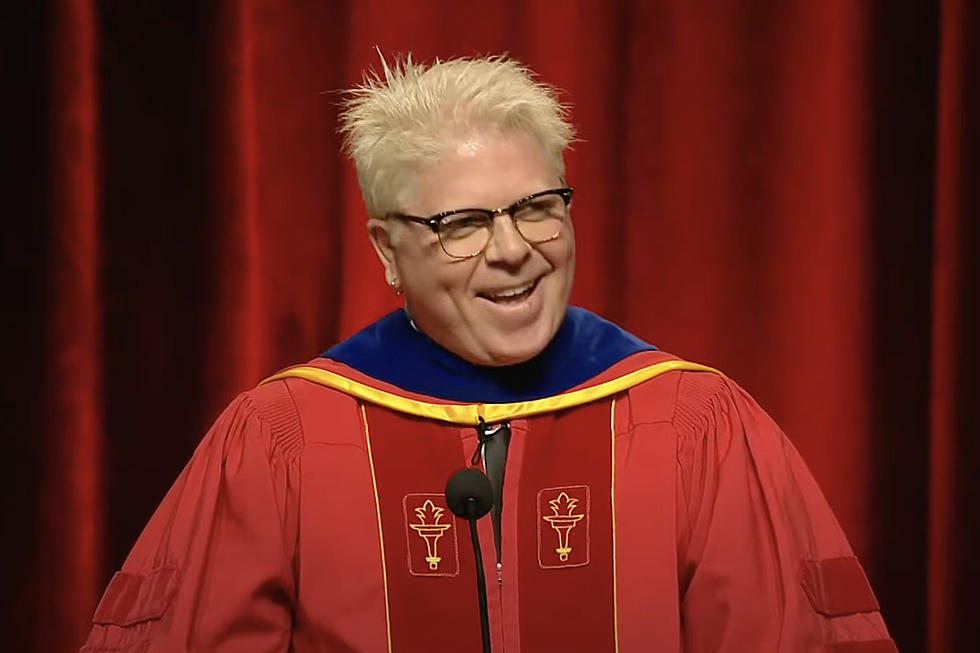
    While dedicating his time to The Offspring, Holland never lost interest in his research and returned to USC to pick up where he left off some 20 years ago. So, in 2017, Holland graduated with a Ph.D. in molecular biology after finishing his thesis on the research he had done studying HIV. In 2022, Holland would even deliver the commencement speech to USC’s Keck School of Medicine’s graduating class.


    In an interview with Liran Belenzon and others at BenchSci, Holland said that his work in the lab and his music are not totally disconnected. He remarked that both lines of work consist of solving puzzles and even complement each other sometimes. So, while the domains of virology and music may seem totally unrelated at first glance, for Holland, his work in one sometimes leads to a breakthrough in the other. 


Sources:

https://www.billboard.com/pro/the-offspring-dexter-holland-interview-let-the-bad-times-roll/

https://blog.benchsci.com/from-punk-rock-to-ph.d.-a-fireside-chat-with-dexter-holland-of-the-offspring

https://www.audacy.com/national/music/offsprings-dexter-holland-says-science-created-this-hit

https://www.asbmb.org/asbmb-today/people/090114/keep-em-separated

https://www.vice.com/en/article/xgdnnk/how-the-offsprings-lead-singer-went-from-punk-to-phd

https://loudwire.com/the-offspring-dexter-holland-commencement-address-usc-keck-school-of-medicine/


Dove Cameron- From Playing a Pop Star to ‘Resident Villainess of Pop’.

    Dove Cameron's influence on Gen. Z began far before her hit single boyfriend that dropped in February of 2022. Most people know her from her lead role in the Disney Channel series Liv and Maddie where she played twin girls navigating the dramas of high school and fame. However, her career in the performing arts began far before Disney Channel. Her acting career began in 2007 where she played the role of young Cosette in the Bainbridge Performing Arts stage production of Les Misérables. Although she has been in the public eye since Liv and Maddie in 2013, many aspects of Dove’s life went unspoken until the release of her first album Alchemical Vol. 1.

    Chloe Celeste Hosterman was born on January 15th, 1996 in Bainbridge Island, Washington. At the young age of eight, she began acting at the Bainbridge Performing Arts community theater. At 14, her family moved to Los Angeles CA where she sang in Burbank High School's National Championship Show Choir. When she was 15 her father passed away, and Cameron legally changed her name to Dove, a nickname her father gave her. In 2012, she was cast as Alana in the Disney Channel show Bits and Pieces, which was eventually remade into Liv and Maddie. She began her music career with a multitude of singles both with Disney and as a solo artist. However, it wasn't until 2022 that Dove Cameron began separating herself from her Disney legacy.

    With the release of her hit single “Boyfriend”, Dove finally “gave herself permission to do singer-songwriter stuff”. The song follows a young woman and her tale of fatal attraction to a man's girlfriend which not only revealed Cameron as a bisexual, but also presented her in a new light that many of her Disney fans were shocked by. “Boyfriend”’s unexpected success left Cameron feeling scared and vulnerable, and “it felt like everybody was in my living room interviewing me about my sexuality and my orientation, and it was just a very, very public way to have people see me as something they didn't know that I was.”

    However, the vulnerability from “Boyfriend” encouraged Cameron to talk about her life behind the scenes through the release of Alchemical Vol. 1 on December 1st of 2023. Throughout this album, she allows herself to open up about her trauma, mental health, depression, anxiety and eating disorder which she had previously been terrified to speak about. Yet the vulnerability of these topics was a tool Cameron was able to use to connect with her audience and create raw authentic music people everywhere could relate to it. Part of her process of creating the album was her backpack containing her journal, a lyric book and a poetry book which allowed her to channel her emotions into her music. Cameron's creative process stems from the 3:00 AM poetry writing sessions on her bathroom floor where she releases her angers and traumas she has accumulated over her life. She tends to “blood-let” and “hit these big energetic walls and it's like, If I do not get this out of my body right now, I will be writing about this forever. Or if I don't write about it, period, I'm not going to write anything good in the next five years.”

    Alchemical Vol. 1 combines many musical techniques from both American pop and the French Funk she grew up on. The album combines both the romantic, sexy atmosphere from "Boyfriend" with the big sound, jazz, dubstep atmosphere influenced by Daft Punk, Justice and French pop artists. There are also Beatles, David Bowie, Elvis Presley, and Iggy Pop themes that pop up throughout the album. The collections of musical techniques, personal experiences, and traumas from over the years allowed Cameron to create tracks that were dark and honest, but also interstellar and haunting. 

    Similar to Nick Cave’s music, Dove Cameron finds that vulnerability can create the best music while also granting the artist therapeutic self-reflection. Despite Cave’s creative process living in the studio repeating rhythms being far from Cameron’s 3:00 am poetry writing, their vulnerability creates relatable, meaningful, and ethereal songs that connect with people around the world. Since Dove Cameron’s first single, she received the AMA “New Artist of the Year”, and MTV’s “Best New Artist”, and “Best Video with a Social Message” for “Boyfriend” and “Breakfast”, solidifying her reign as the “Resident Villainess of Pop”.

Sources:

https://www.forbes.com/sites/stevebaltin/2023/12/03/sunday-conversation-dove-cameron-on-finding-her-voice-and-people/?sh=779e3a3a717a

https://www.papermag.com/dove-cameron-we-go-down#rebelltitem11

https://www.imdb.com/name/nm4874651/

Max Ernst: The Unconscious Mind

 I have always had an interest in art, both in creating and looking at art. A challenge many face when creating art is what exactly to paint, it can be difficult to come up with ideas and in reality, it becomes more difficult when you are actively trying to think of ideas. Surrealism is a form of art that doesn’t really have this issue, you do not need to think with your conscious mind to generate ideas, but rather create from your subconscious. One of the most influential surrealists is Max Ernst.

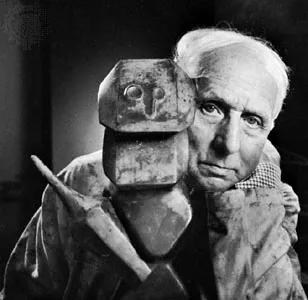
                                                             Max Ernst


Max Ernst was born near Cologne, Germany in 1891. His father introduced him to painting from a very young age and taught him much about painting. He studied philosophy in college but dropped out to focus on painting. Ernst was forced into the German army during WWI; in the war, he was subject to much of the horrors and trauma that come with war. These traumatic experiences caused Ernst to view the world in its absurdity which greatly contributed to his surrealistic works. Another source of inspiration for Ernst was the works of Sigmund Freud. Freud's ideas about the subconscious are a common tool for surrealists and Ernst was one of the first to employ his ideas in artwork.

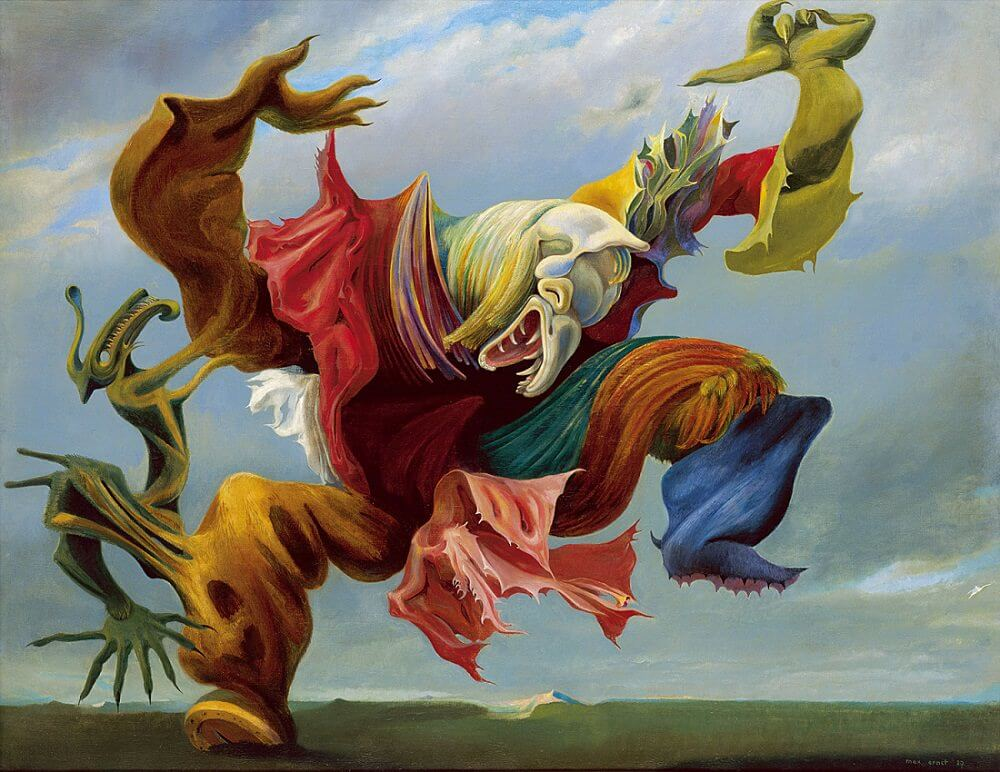
                                           The Triumph of Surrealism (1937)


Ernst gained quite a reputation for his works, especially during his time in France and the US post-WWI; he gained this reputation due to his art being unlike anything they had seen before. A prime example of this is his painting The Triumph of Surrealism. When looking at this painting it is evident that it is a depiction of something alive, and that is about all you get from it. Ernst painted this as a response to the chaos and ruin fascism has been bringing to Europe through the numerous wars. The creature is actually an angel according to Ernst and he did this to force audiences to question their notion of what is right. It also forces audiences to see it as not an angel of hope, but one of the four horsemen of the apocalypse, that being the angel of death. One can see how Ernst's experiences in the war have influenced his art here. There is the fact that its subject matter is that of war, but the way he depicts chaos is extremely intriguing. His ability to depict chaos without overt symbolism is really only something that can be done by one who has experienced it firsthand. Creating a work of art like this would be almost impossible to do completely consciously and intentionally, it is so abstract and absurd that it must come from somewhere other than the conscious mind. 

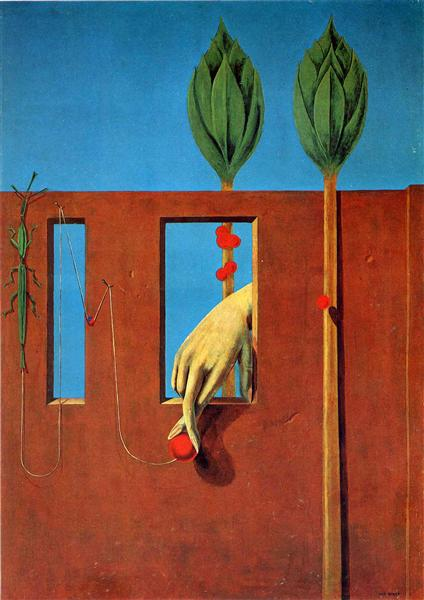
                                                 At the First Clear Word (1923)

Ernst applied Freud’s theories about dreams and the unconscious mind to himself and his art. He tried to separate any conscious effort to create something and instead tried to allow his inner psyche to be expressed. This process of creating his art without much conscious effort allows for his art to express exactly what he feels about the subject matter even if he himself doesn’t understand it. This was seen in The Triumph of Surrealism and another example of this is At the First Clear Word. This is a great example of Ernst’s application of Freud’s psychoanalytic theories, the composition of this painting is very odd. It features a hand reaching through a wall with fingers unnaturally crossed holding a red ball; it also features a bug and two identical trees. This painting makes absolutely no sense and often times that is the essence of surrealism. It doesn’t have to make sense because it comes from one's unconscious. To further help himself remove any conscious process Ernst used a process where he would place a piece of paper over some textured surface and rub it with a pencil to create an abstract starting point. This allowed him to have no intentional starting point which only further allowed him to use his unconscious mind. 


The use of the unconscious mind is a practice many still use today; often times one isn’t even aware of the fact they are looking into their unconscious. A great example of this is Nick Cave. In an interview with Cave, he talks about how his music comes from a sort of intuitive place. He further begins to describe this intuition in more detail. He describes it as a place that cannot be summoned, a place that is separate from your imagination and the rational world. He calls it an impossible realm, a place where glimpses into what is beyond our understanding and what is normal and possible. This realm sounds very similar to the unconscious mind, Cave is basically trying to separate any conscious effort in creating music and letting this impossible state of mind do the work for him. This is exactly how Ernst created his paintings.


Creating art is always a difficult process and trying to figure out what to paint can be an even more difficult process. I used to struggle a lot with what to paint which would often lead me to just not paint anything at all, this was extremely demotivating. I would spend so much time trying to think of some grand thought-provoking idea which inevitably led to nothing. Taking inspiration from Ernst and other surrealists has allowed me to just paint whatever. My art has no real meaning and I think that’s ok. My art is nowhere near the likes of Ernst but applying his process has allowed me to make art again. So if you ever struggle with what to paint, sometimes you just need to stop thinking so much and just let whatever happens on your canvas happen.


Sources:

https://www.thehistoryofart.org/max-ernst/at-the-first-clear-word/

https://www.max-ernst.com/

https://www.moma.org/artists/1752

https://www.theartstory.org/artist/ernst-max/