Friday, February 14, 2025

René Redzepi: The Danish "God of Food"

    This Danish chef's skills and creativity earned his restaurant the title of #1 in the world. However, he was not satisfied. In interviews, he has expressed that he does not believe in building a legacy, as people will forget anyway. Instead, Redzepi chases creativity, climbing to new heights and exploring new flavors or making old flavors novel once again. He craves the creation process and understanding of the meaning of food to connect to something special.

    
    Redzepi notes collaboration and knowledge as the most important elements of creativity. The I know this to be true project shares a quote from the chef encapsulating his emphasis on knowledge, "Wherever I go, I read, I look, I taste, I discover, I learn." Redzepi expands upon this concept explaining how when you gather knowledge, it becomes easier to connect past experiences with the present moment and that is where creativity happens. “The more we are open to new, valuable information, the more we study history, memories or these new experiences, and bring them into the now—that’s when something new really happens” (Redzepi in an interview with Smithsonian Magazine 2013).

    Collaboration on the other hand is a chance to fill in where knowledge lacks. According to Redzepi, teams make everything more exciting. Knew knowledge and perspectives are combined actively creating new ideas every single day. Not only is there excitement in collaboration to create there is also relief that you are not working alone. “If you have people to rely on and sort of comfort you at bad moments” (Smithsonian 2013).


    I don't work for the legacy, “I work for the creativity to be part of an energy that does something special.” To Redzepi, creation is the ultimate purpose of life. Rick Rubin, author of The Creative Act most certainly agrees. Rubin writes, "To hone your craft is to honor creation... By practicing to improve, you are fulfilling your ultimate purpose on this planet" (Rubin 204). Collaboration, knowledge, and, of course, creation are fundamental to the creative act. Cooking already takes the form of an act of creation. It is the innovation and care, the attention paid to cooking that makes Chef Redzepi one of the most influential and special chefs of our time.

Thursday, February 13, 2025

From Setbacks to Success: How Shifting Perception Fuels Creativity


When Grant Achatz was diagnosed with stage 4 tongue cancer, it wasn’t the 50 percent chance of death that scared him—it was losing his ability to taste.

With over 25 years of culinary excellence and four Michelin stars, Achatz is known for trailblazing molecular gastronomy. Outgrowing his parents’ small-town restaurant, Achatz attended the Culinary Institute of America in New York, graduating in 1994 and moving to California to work at Charlie Trotters. He then trained under now seven-Michelin-star chef Thomas Keller, his lifelong mentor, at French Laundry before moving to Evanston, Illinois, where he worked at Trio before opening his establishment. Despite his humble origins, many recognize Achatz as one of the best chefs in the world. He now owns restaurants in Chicago and New York and has received numerous awards from the James Beard Foundation, including “Best Chef,” “Best Restaurant,” and several other accolades for his innovation. 


Alinea, opened in 2004, is Achatz’s most well-known creative endeavor.

As the only three-Michelin-star restaurant in Chicago, meals cost visitors at least $750 per person, each with 23 courses full of experimental, immersive, and theatrical whimsy. From their iconic Table Dessert, an artistic swirl of saucy desserts painted on the table in real-time, to the clear pumpkin pie, which is exactly as it sounds, Alinea deconstructs familiar smells and flavors and Frankensteins them, resulting in unforgettably unique dishes. Achatz seeks to create unexpected experiences—whether through food on scent-releasing pillows or an entryway filled with pine trees and pumpkins—pushing patrons to rethink how they perceive food.


As his menu reflects, Achatz is no stranger to reframing his perception, especially within his creative process.

Chemotherapy wiped away Achatz’s taste and passion, and his entire career, built on dissecting and reconfiguring flavors, was uncertain. Achatz completely lost his ability to develop menu items for Alinea. Yet, rather than turning his back on his passion, Achatz rebuilt his palate piece by piece. Regenerating his taste revitalized Achatz’s perception of flavor and, in turn, his process of creating new culinary experiences. Achatz suddenly saw flavors in a profound, altered way, with a better understanding of how they worked together. Since his remission from cancer, Achatz has opened restaurants such as Next, Roister, The Aviary, and The Office. When Achatz’s world flipped upside down, it did not set him back—it refreshed his perception of creativity to see his work in a new way, motivating him to pioneer unique projects. 


Nick Cave’s transformative experience mirrors how Achatz’s loss of taste shifted his perception of creativity.

As detailed in his novel, “Faith, Hope, and Carnage,” the musician’s son passed away in 2015. Since then, Cave has faced unexplainable, immeasurable grief. Nevertheless, Cave felt he could still make music; “it just seemed like everything had altered...It’s not so much that I had to learn how to write a song again; it was more I had to learn how to pick up a pen.” Like Achatz, this great loss led to a complete shift in Cave’s perception of his work and his creative process—he could no longer write songs as he had for about the last fifty years. So, with his following record, Ghosteen, Cave shifted from solo writing third-person stories to collaborative improvisation. Cave speaks on his passion for this album, explaining that his music still tells a narrative, though his newfound grief has shaped his perception of creating music, and it’s a “radically different” narrative from any of his previous songs. Much like Achatz, Cave didn’t let his grief get the best of him. Instead, he took his altered perception of his creative process and reimagined what was possible, resulting in music more meaningful to him than ever before. 


It’s incredible how Cave and Achatz overcame such significant losses.

Witnessing how they transformed traumatic experiences opened my eyes to the creative value of loss. Rather than seeing failures as an impassible roadblock, I now realize we can see failure as a chance for new, better ideas. Whether it’s deconstructed cuisines or ambient rock music, it is through loss that we have the chance to push through the darkness and come out the other end with new perceptions. Now, will you give up on your dream the next time you face an unimaginable setback—one that flips your passion on its head? Or will you transform your altered worldview into new opportunities? Let me hear your comments below and join me in this conversation to transform our view of creativity! 


https://www.npr.org/2011/03/03/134195812/grant-achatz-the-chef-who-lost-his-sense-of-taste


https://www.finedininglovers.com/explore/articles/how-many-michelin-stars-does-grant-achatz-have#:~:text=Grant%20Achatz%20currently%20holds%20a,The%20Aviary%20and%20The%20Office.


https://www.ciachef.edu/blog/grant-achatz/


Mitski Discovering Sound: Creativity is Sometimes Accidental

Mitski seemingly stumbled across music as something that she happened to be good at as a result of her isolation growing up. Growing up, Mitski moved around internationally and listened to classic pop songs. However, it was not until she found Jeff Buckley that she realized there were other ways to approach music. Once she was no longer limited to the examples of music that she had growing up, she realized that music was something that she could and wanted to work with. 


This realization came to her in a rush. Mitski recalls that moment when she says, “That morning in Ankara, “suddenly there was something that was coming out of me that I could sing—and it was just such a rush”’ (Talbot, The New Yorker). She released the song that came as a result of this rush “bag of Bones” in her first album “Lush” which was posted in 2012 online after years of feeling like the music world was not for her. 


Mitski collected, or built concepts in memory or categories, different song structures as she turned to music in times of loneliness. She had primarily listened to pop music growing up, but once she discovered artists like Jeff Buckley, M.I.A., and Björk, she started to feel like she could identify some of her own unconventionality within the artists’ words. In this seemingly small discovery, Mitski was exposed to the way in which she was going to approach making her own music. Creators are limited to our knowledge of our current world, so when Mitski only knew of pop music examples, she thought that was all there was. 


Mitski was not aware that a different form of music existed. She knew what she felt and had her own internal hums, but she didn’t think it was possible to create music that matched her thoughts and feelings. Rick Rubin in The Creative Act: A Way of Being talks about how in the same way that we are able to become unaware of the sun’s existence on a gloomy day or when we are inside, information always exists, but it depends on whether we are aware of it or not. Sometimes awareness is out of an artist’s control. Aspects of the artist’s life such as setting, emotional state, and relationships can affect the discovery of ideas. Each creative discovery is due to circumstance making it all that more exceptional.


Michael Jackson: The Most Creative Artist of Our Time

Michael Jackson’s creative prowess broke the previously known limits of what artists were known to be able to do. His influence as a worldwide phenomenon was catapulted to that stage because of his trailblazing spirit and his willingness to think outside the box. Using groundbreaking music, dance, and performances to captivate audiences (and me since my years as a toddler), his process of creativity is one to marvel and analyze. 

In regards to Augustin Fuentes’ The Creative Spark, Michael Jackson definitely exhibits two major concepts of creativity that are discussed in the book. Fuentes argues that creativity is a defining characteristic of the human experience and more specifically, human evolution. In the book, he further elaborates that creativity is about not just personal artistic expressions but also how individuals can acclimate themselves to new environments, and push boundaries in a variety of ways. 


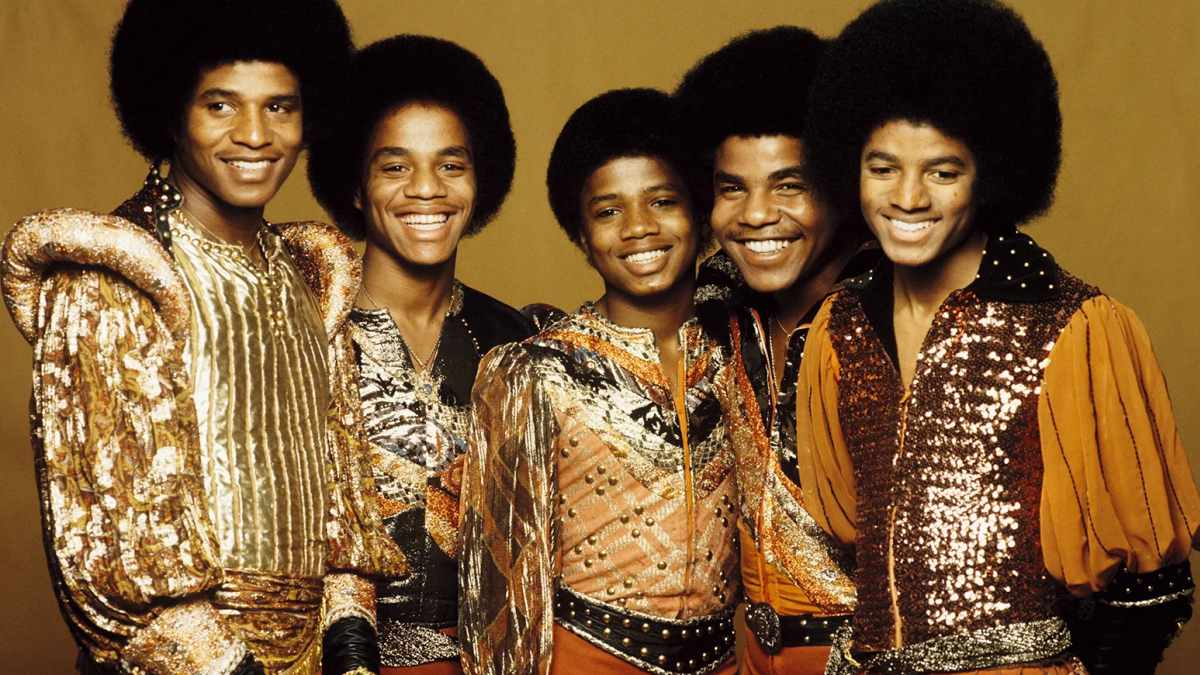
From this, the creative sub-process of collaboration and social interaction is an idea that Michael Jackson exemplified well in his career. Using the collective efforts of experts such as Quincy Jones (producer), Michael Peters (choreographer), and even his brothers as part of the Jackson 5, he blended existing styles of pop, rock, Motown, and R&B to create something new. Just like Fuentes elaborated on, Jackson understood that human creativity blossoms in environments where people exchange ideas and challenge each other to push beyond what is the current industry standard. 


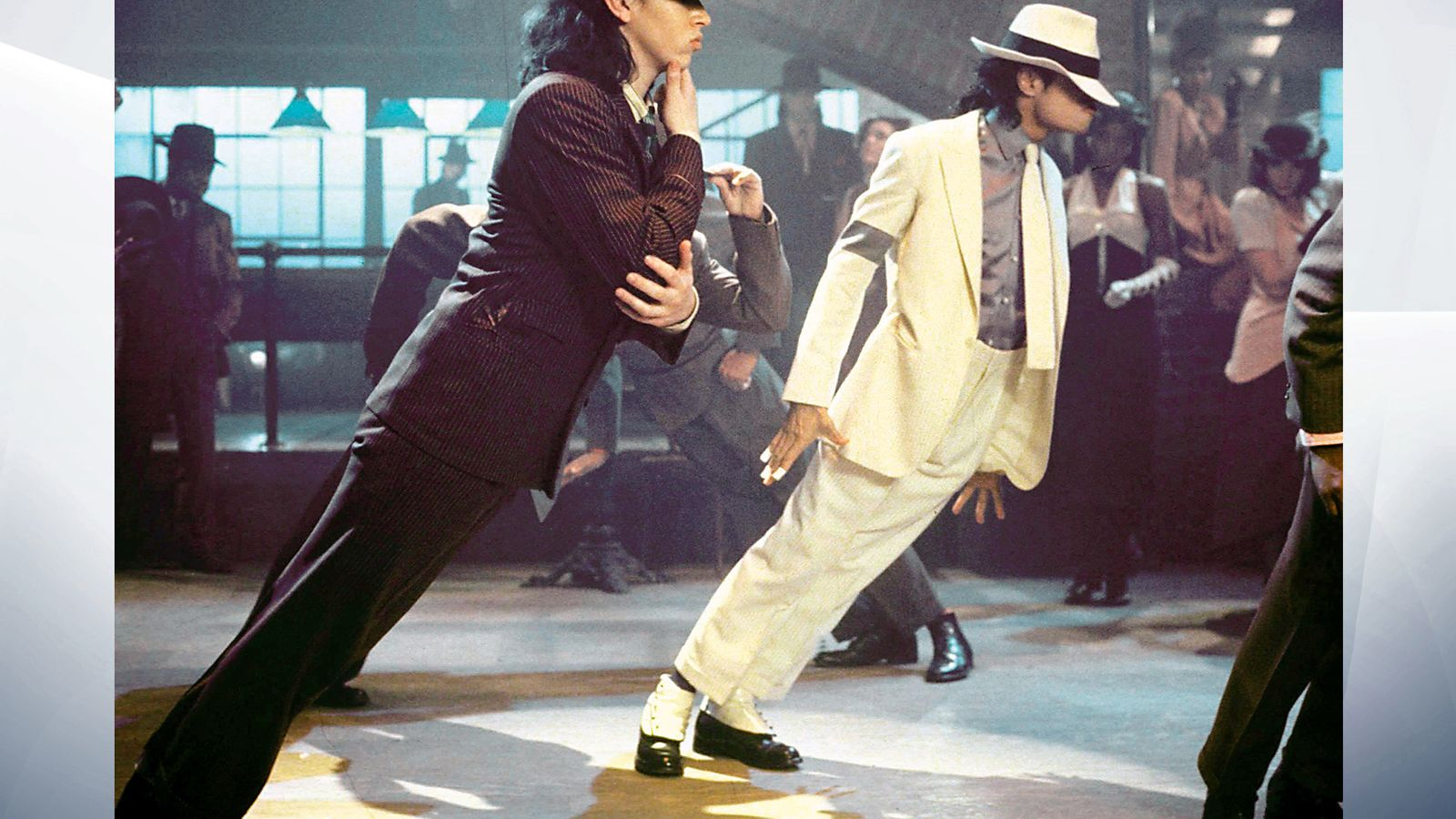
Additionally, Fuentes also discusses how a key part of creativity is the process of risk-taking. Michael Jackson constantly did this, with an example being his music videos setting the new standard for that sector as the creation of mini-movies. In regards to his dance, which captivated me the most, he utilized a seldom-used and crisp form of popping and locking within very simple movements to leave audiences in awe - along with the usual showstoppers of the “lean” and of course, his moonwalk. 


His creative prowess is what initially inspired me to dance, and I hope other artists can try to create what he did for me, for others. I truly believe that he is the greatest and most recognizable solo-artist of all time, and that was in part due to his ability to collaborate with the right people and take risks. 


Wednesday, May 1, 2024

Hozier: UnReal Unearth


     Hozier is a musician from Ireland. His unique music style and voice have gained him much traction worldwide. His first break-out song was Take Me to Church in 2014. His most recent album has gained him much popularity, love for its lyrics, and focus on reflecting on great work like Dante's Inferno. Hozier's work is often profoundly reflective and sounds like poetry. His work is much loved by people who love looking into the deeper meanings of songs. Much of this work reflects current problems and often works as an activism source. 

    This can be tied into my focus book on Faith Ringgold because she uses her work to raise awareness and speak about her community. She uses outside resources to reflect and talk about different issues and create great art. Both show how art can be used in many ways to reflect human experience and work as activism. 

    Hozier is a great artist and an intellectual; he has found much love for his outstanding production and storytelling. He is genuinely a fantastic artist for this generation. 

Ruel- Creating Experience through Music

    Ruel, a young artist from Australia, weaves his personal experiences with music into a tapestry that resonates with universal themes of love, friendship, and growth. His music serves as a mirror, reflecting on the pivotal moments, such as the first of life's journey to love and the bittersweet parting from friends. While his lyrics are deeply personal, they evoke emotions many can identify with, fostering a collective reflection on shared experiences.


    This connects to my focus book as Faith Ringgold talks about how being surrounded by art and great artists at a young age has helped her create great art. Ruel started his career very young and could learn from great artists through touring with them and collaborations. Both his experience and Faith Ringgold's can be compared as they both demonstrate how much their experience with art when they were younger had a significant experience on their art.


    Overall, I think Ruel does a great job of creating an experience of growing up and falling in love that many people can relate to, reflect on, and connect to. His music is fantastic in creating a moment in time and having all aspects of the music reflect it. It has been really cool seeing his music change as he has grown up and experienced new things. 


She is just like us- Sort of

    Olivia Rodrigo: we all know her name, I am sure we have all heard our songs. At points, it felt as if we had grown up with her. She was a disney star when we were kids, writing break up songs as we all experienced our first heartbreaks, and went on her first tour as we all began college. Every major part of our lives felt as if in coincided with hers. For that reason, Olivia Rodrigo is almost just like us, but not quite. 

olivia rodrigo    Olivia grew up in Temecula, California, with a mother as a teacher and a father as a therapist. At age 5, Olivia began singing lessons, inspired from the love of music she had developed from her parents. She started playing piano at 9, and song writing at 10. Olivia didn't come from a family of child actors, just your typical family, and yet her parents had encouraged her, as it had been her dream. At 10 and 12, Rodrigo made her first two big bookings in a movie and TV show. At this point, Rodrigo had to leave her previous "typical life" to grow a bit into the star she would become. 

    Rodrigo since her first gig at age 10 has blown up into being an international star known across continents. However, she simply highlights her creative process to that of a brain dump. She says that once a day, in the morning, dumping every though in her brain into her journal has helped her creativity and word usage in her songs. Rodrigo also highlights "Big Magic" and "The Artist's Way" as developing herself as a creative. She says that they helped her to think without punishment, without fear of judgment, rather than overthinking and failing to make progress every time she attempts to write.

    Similar to Ringgold's book. Rodrigo highlights her culture as much of her initial motivation for getting her voice and art out there. 

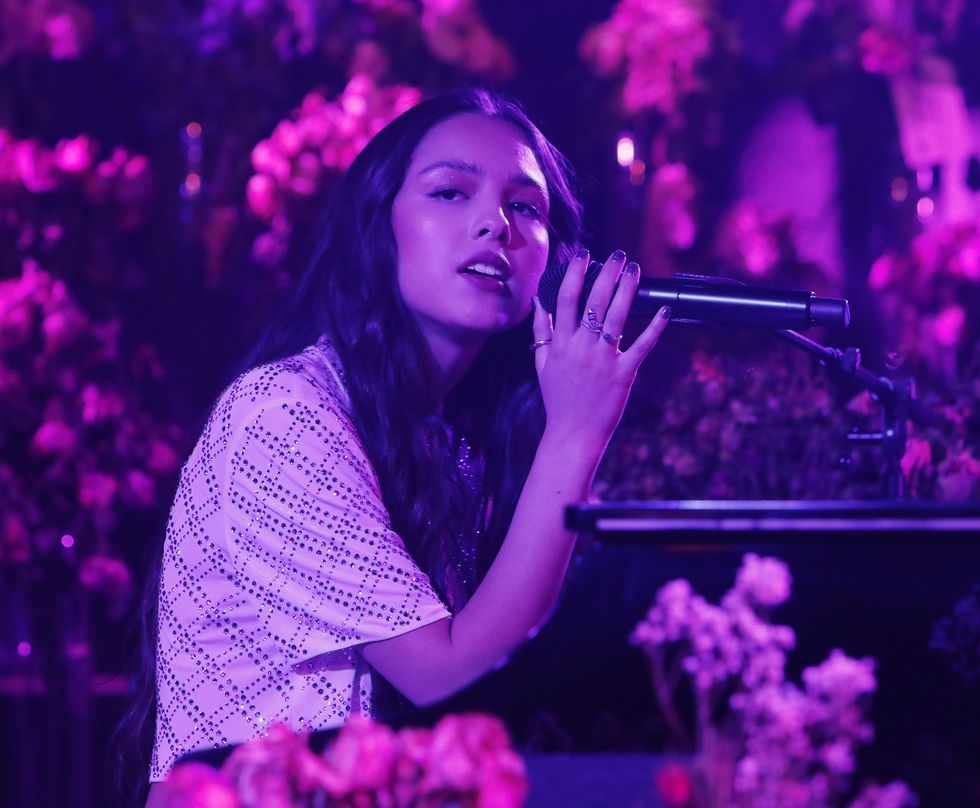
olivia rodrigo sits at a piano and sings into a microphone, she wears several rings and a bejeweled shirt    Olivia has put out two major albums thus far, Sour and Guts. The albums, coming about about 2 and a half years apart, show two different perspectives on love and romantic relationships. Her realness and genuinity in her art makes it so relatable to those of us who choose to listen. As she was experiencing different things when she wrote these albums, many of her fans were. She remains on the same page as many of her fans, and for that so many appreciate her creativity. 


https://www.marieclaire.com/celebrity/olivia-rodrigo-artists-way-big-magic/ 

https://www.biography.com/musician/olivia-rodrigo