Sunday, February 16, 2025

Iris Van Herpen: Exploring Nature

Iris Van Herpen, a world-renown designer, has made a name for herself by being one of the first designers to use 3-D printing to create many futuristic designs. Her ability to push past the traditional boundaries of design and use many innovative materials is what allows Van Herpen’s designs to be so sought after.  

Being Comfortable with the Uncontrollable  

Van Herpen has a deep interest in exploring the natural world. As a former ballet dancer, she is intrigued by movement and incorporates exploring movement in many of her pieces. She explained that one of her studios is by a body of water and she finds interest and motivation to explore mediums that are “uncatchable”: “I think water is one of the most beautiful materials there are. I mean, a real water dress, I will never—maybe? never say never—I will probably not be able to make [one], but those materials that are uncatchable are really inspiring. To me, the more impossible it seems, the better the challenge.” (Levaha, 2018). Being comfortable with the uncontrollable is something that drives Van Herpen’s creative process. Unlike many designers she does not sketch before she starts her work, she drapes. The creation of many of her designs starts with her looking at a material and placing it in certain ways until she reaches her insight moment where everything fits the way she wants it to. She explains: “I really look at the material, I start draping, I have no idea about the outcome. It’s completely uncontrollable. Sometimes it’s literally done in half an hour, and sometimes it can take up to two weeks, so it can be really frustrating.”(Levaha, 2018). Allowing the materials to form and move in a certain way, and embracing the fact that she will not really know the end piece when she starts designing, is something that she relies on nature to take control of.  


Exploring What Nature Holds

Van Herpen looks to nature to answer the many questions that people have – a desire fueled by her interest in biomimicry. Biomimicry is the belief that nature holds the answers to many of the questions that humans have. Van Herpen states: “‘Matter is creation, it’s evolution, it’s nature, it’s us. It’s the source of all energy & the source of all our questions. I am fascinated by matter in all her shapes & all her mysteries’. Iris van Herpen”(Van Herpen, 2024). This interest is explored in her exhibition “Sculpting the Senses”. She explores the uncontrollable in nature through the lens of water, movement, and regeneration. This connects to Code Breaker: Jennifer Doudna, Gene Editing, and the Future of the Human Race as it explains Watson’s drive to map the human genome. Watson wanted to help and understand the nature of his son, who was diagnosed with schizophrenia. "But I soon realized that his troubles lay in his genes. That drove me to lead the Human Genome Project. The only way I could understand our son and help him live at a normal level was to decipher the genome.”(Isaacson, 2021). This drive to understand nature and the mystery of his son’s condition was what drove him to this obsession of wanting to map the human genome. He wanted to understand the nature of his son's disease, just as Van Herpen tries to understand and explore the natural and incorporates it in her work.


Sources: 
The Code Breaker by Walter Isaacson


Saturday, February 15, 2025

Jesmyn Ward: The Medium of Grief


    Throughout her life, Jesmyn Ward has experienced an awful string of grave events: childhood bullying, her younger brother being stricken by a drunk driver in October of 2000, and having her life upheaved by hurricane Katrina. Ward has felt immense grief -- it has repeatedly manifested across many aspects of her life; however, she does not allow it to control her. Two of her works, Where the Line Bleeds and Men We Reaped -- although set and described in different perspectives -- demonstrate Ward's usage of her grief towards creating unprecedented works of art, just as Nick Cave describes in Faith, Hope, and Carnage the inspirations and processes behind his own production of Ghosteen. 

    Ward describes her creative process in an extremely similar context to that of Cave's own musical auditing sessions. When she teaches undergraduates the art of creative writing, she strives to convey "what a process it is and how there’s an entire group of people working together to revise your work, to refine your work, before it ever reaches an audience." [1] This falls directly in line with Cave's discussion of arriving to the recording studio with the complete intention of changing, breaking apart, or outright deleting lyrics which he had previously thought to be perfect -- all through the process of collaborating with his co-songwriter.

    Jesmyn Ward's Where the Line Bleeds connects in a great level to Cave's own exploration of where grief takes both the mind and the soul. As the two main characters struggle to find their footing on account of interpersonal struggles and societal biases, they must similarly contend with the encroaching thoughts of grief at the notion of their parents abandoning them; Cave discusses this feeling from an alternative perspective when describing the immense pain he felt on learning of his son's passing. The impact which grief has on the mind can neither be succinctly communicated nor given a quantitative duration: the experience alters one's perceptions, compelling oneself to view the world -- and one's interactions with it -- in a wholly new way; often, though the lens of how different life feels, despite the outside world seemingly continuing without faltering for even a moment.

    Men We Reaped, on the other hand, strikes more precisely at Nick Cave's own descriptions of alienation. Although certainly not the same -- the former underlining the turmoil of poverty, sexism and racism while the latter discusses the struggle of creating something untested and unpredictable while fueled by grief -- both individuals describe the process of becoming alienated. Grief drives one to great lengths, and may form divides -- whether intentionally on the behalf of the individual, or as a result of outside influence -- between oneself and the world.

    Both Ward and Cave demonstrate their creative expertise not through repressing their pain, but through fully embracing it. Their artwork is tangibly hefty in content, and is so without being cautious of shocking the audience -- in fact, the works are intended to leave an impact. Without the impact, the grief cannot be properly conveyed; both Cave and Ward discuss the feeling of necessity to incorporate the "souls" of those they have lost into their works. Through the art, their loved ones persist -- our interactions with the art keep them alive.

[1] Interview with Jesmyn Ward:
https://electricliterature.com/how-jesmyn-ward-brings-writing-to-life/ 

Kyle Hanagami: Choreography and Connection

        Kyle Hanagami is a 38-year-old, professional choreographer whose unique style has had immense influence on the world of dance. Though initially studying as a psychology and economics major at UC Berkeley, there was no doubt he had a natural talent for rhythm and musicality when he joined the hip-hop team in a spur-of-the-moment decision—one that would change the trajectory of his life forever. 


        Now, Kyle has choreographed for some of the biggest names in the music industry (BLACKPINK, Britney Spears, Dove Cameron, and Shawn Mendes) and for hit movies (Mean Girls (2024), Red, White, and Royal Blue, and My Old Ass.). He brings his genius to the public, as well, teaching masterclasses at the well-known Millennium Dance Complex and Movement Lifestyle Studio in Los Angeles. More than that, Kyle goes above and beyond in increasing access to dance classes and choreography by embracing the power of social media, especially YouTube; Through his digital content, he is essentially creating a new industry for dance founded on inclusion and accessibility.


        Hanagami employs creativity for the purpose of creativity, revealing an intrinsic motivation that drives his creative process. Simply put, he just wants to make “cool sh*t” (Weatherby 2019). Dance in itself is one of the most expressive art forms, and Kyle’s choreography always reflects his individuality and unique talent. By recognizing his deepest fears and failures, Hanagami harnesses his vulnerabilities and lets them take the wheel in his creation. Kyle’s creative process also relies on collaboration as he and his right-hand, Haley Fitzgerald, have worked together for over ten years. With their individual expertise and innovation, the pair blend seamlessly to create powerful artistry overflowing with emotion and genius.


“I wanted to get to the future . . . and that’s when I realized that it was something I had to create.” 

– George Church (Isaacson 171)


“So often, we dream about achieving the things we can see right in front of us. But being okay with the fear of failure has allowed me to achieve things I couldn’t see.”

– Kyle Hanagami (2024 IDA Gala)


        Both Hanagami and the scientific creatives of Code Breaker have tapped into their curiosity to discover the barriers present in their respective institutions and work to dismantle them. For example, despite its massive potential, Jennifer Doudna recognized the financial barriers that would prevent certain groups of people—especially Africans and African Americans—from receiving life-saving treatment. She, then, embedded a new mission at her Innovate Genomics Institute (Isaacson 248), establishing a sickle-cell initiative and promoting health justice at an institutional level. Similarly, Kyle Hanagami creates and shares digital content across social media platforms to increase access to dance classes and knowledge, motivated by the mission of preventing institutionalization and social divides in this art form. In his acceptance speech at the 2024 Industry Dance Awards, Hanagami stated his goals of representation. He wants to show Asian dancers and cancer survivors that they, like him, can partake in the dance community and whatever success comes their way. Just as George Church confesses in the quote above, Kyle consistently chooses to be a guiding light for underrepresented people in order to create the future he wants to see.


Sonja Hilmer: Pushing the boundaries for creativity within sports


Sonja Hilmer, age 25, is among some of the top ladies in U.S. figure skating. Training primarily in Colorado Springs, Colorado, at the World Arena, she is surrounded daily by some of the top athletes in the world. Sonja began her skating journey at age 2 after seeing pictures of skating in a muppets book. From there, Sonja's skating career skyrocketed. Sonja has competed in 5 U.S National Championships and medaled at various nationwide and international competitions. 

What sets Sonja apart from her competitors is her creative process and how she portrays herself on the ice. Unlike most skaters, Sonja choreographs and makes all her skating costumes from scratch. While most skaters typically hire other people to choreograph and make dresses, Sonja does it herself. During an interview with the "This Week in Skating" podcast, Sonja shared her creative process and the steps she takes from a simple sketch to a full program with music and costume. Sonja shares that her love of designing and creating costumes started long before she made them herself. She said she would get much of her inspiration from listening to music and then creating dresses based on the music.

Another interesting thing about Sonja is that she has a skating move named after her. The "Hilmer" is a combination jump (meaning two sequential jumps happening one right after the other) that combines a triple jump rotating one direction and then, without switching feet, another jump in the opposite direction. This was a revolutionary combination because 99% of skaters only jump their dominant way, typically counter-clockwise. Very few individuals rotate in the opposite direction. In fact, Sonja is not only able to jump both ways but also spin both ways. Adding this extra element further sets Sonja apart from her competitors and makes her even. It's more fun to watch. 

To tie this all back into the class and the main points we've been learning about, Sonja embodies what it means to be an expert in her own domain and how she sets herself apart from other experts within her domain. Any skater can have a pretty outfit or a creative program. Still, Sonja takes it a step further and shows her creative expertise by taking the reins and saying, "This is my style; this is how I'm going to do it," which is really inspiring to watch. Sonja might not have all the big jumps that the other competitors do. Still, she has a certain aura that excites you to watch her and see what she creates every season. Every day, people push boundaries within sports; it's how it has stayed relevant for many years. Sonja is one of those people who push boundaries in fields, which is often overlooked in skating. From Sonja's creativity, I hope the younger generation of upcoming skaters see how important it is to work on their creativity and not just on jumps or spins. After all, skating is a sport of beauty. 


Here are links to some of my favorite programs from Sonja and the interview where she talks about her creative process:
-https://www.youtube.com/watch?v=72kV89TmWlQ
-https://www.youtube.com/watch?v=NsE69BRpYNs
-https://www.youtube.com/watch?v=WVMHmlcM6aE&t=2571s

“Language is the Fiber That Binds us to our Cultural Identity” - how Ka’ikena Scanlan is a kumu of Hawaiian heritage through his music

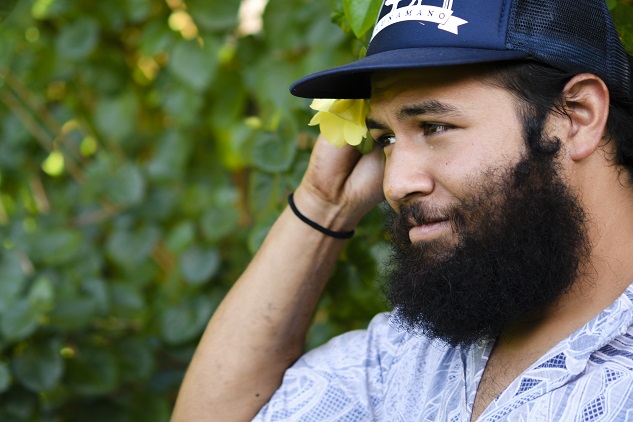
Ka’ikena Scanlan is a kanaka Hawaiian (native Hawaiian by blood) born on O’ahu but raised in Hilo, Hawai’i. This is the same town that Jennifer Doudna, of The Code Breaker, by Walter Isaacson, was raised. Doudna’s father taught American History at the University of Hawai’i, Hilo (an interesting boast from Doudna, considering Hawai’i is a colonized land which many kanaka recognize was illegally annexed into the United States of America). Scanlan attended and also taught at the University. Initially studying ‘ÅŒlelo Hawai’i (the Hawaiian language), post-grad, he taught a course in ethnobotany, the study of how plants were and are used in cultural ways. 


Scanlan was recently featured on the mai ka pÅ«nana mai (from the nest) podcast (found on Spotify here: https://open.spotify.com/episode/1htwq1mvrwozE3e6HFah54?si=b0270f81f51a48b6). On the podcast, he retells the story of winning a songwriting contest while an undergrad at UH Hilo. He explains how this inspired him to continue songwriting and connected him to other creatives. This fostered his creative work and propelled him to reggae fame. Also on the podcast, Scanlan explains his creative motivation. He aims to bring attention to Hawai’i songs, uplift the Hawaiian language, make them relevant to the new generations, and bring people together by touching their hearts. He describes this in conjunction with his innate need to be around Hawaiian people and talk about Hawaiian things in the Hawaiian language. He had at one point worked towards a PhD in ‘ÅŒlelo Hawai’i, but decided he couldn’t make a living out of it, so he went to work instead. Aside from teaching, he also works on his family’s pig farm and his music (often with his band, “These Guys”). 

*the best clip of him talking about his creative process can be found on his instagram here:  https://www.instagram.com/reel/DFnb3REy9YT/?igsh=M3JhbDkyaWN6OXF5


In this Instagram post, he explains further about his songwriting’s connection to the land. Not only are his songs about the land and teaching about the land, they are the land. The sounds in the song are the sounds of the land. This post is while he was protesting at Mauna Kea against a controversial telescope construction on cultural land: 

https://www.instagram.com/tv/CHib395Fnnq/?igsh=MXV0anhvZnpkZmNheQ== 


During a local news interview, he expanded on this creative motivation, saying, “I try to [be a kumu]”, which is a teacher. He continues, “telling a story - bringing our aloha ‘Ä€ina [land] to the forefront…it doesn’t have to be ‘dirty’.” The news interview can be found here: https://www.hawaiinewsnow.com/2021/03/29/kaikena-scanlan-performs-his-hit-perfarmer-live-kaunmano-farm-talk-story/ 


Beyond his music, another creative endeavor of Scanlan’s is his work building a social media influence. He started “Utu Bang Bang News Network,” a podcast/interview type of series. Here is a clip of him at the Holo Holo reggae music festival recently, interviewing Iam Tongi (a singer/songwriter from Hawai’i who recently won American Idol): 

https://www.instagram.com/reel/DBCowz2S13S/?igsh=MW5kN3lvenVjaHdrNw%3D%3D 


Due to the Hawaiian language being outlawed for years under the colonizers, Scanlan’s work is critical to continued efforts to revitalize the language and culture. Of all the links I’ve included of his work, I can most recommend you listen to my favorite song by him, Perfarmer. His creativity is making bigger and bigger waves in and beyond the islands, his journey is only at its start. 


Dr. Paul Kalanithi - neurosurgeon and writer


Who was creative and what did they do?
    My creative is Dr. Paul Kalanithi, a neurosurgeon and writer. He earned both a master's in English literature and his medical degree in neurosurgery. I read his memoir for my bioethics class, and I find his approach to patient focused care is heavily inspired by his love of literature. He carefully picks his words when addressing patients and their families to discuss life-altering diagnoses. Dr. Kalanithi pioneers the connection between literature and the arts to neurosurgery and medicine. After he developed lung cancer, he turned to literature to help understand his own mortality. He wrote his memoir to tell his story and comment on the current medical system’s treatment of medical students, residents, and patients. His book is an amazing story of compassion, literature, and the doctor-patient relationship.


What leads the person to the discovery, invention, or idea (what was the creative process)?

    His creative process heavily references the scientific process where he starts with a literature review and ends by testing through real world experience. His creativity, specifically his memoir and medical practice style, directly mirrors literature’s influence on his passions and life in general. Throughout the text, he discusses his main takeaways from classic literature through analysis or quotes. For example, he describes his experience after his anatomy lab, “Descriptions like Nuland’s convinced me that such things could be known only face-to-face. I was pursuing medicine to bear witness to the twinned mysteries of death, its experiential and biology manifestations: at once deeply personal and utterly impersonal” (34). This longing to understand the connection between death, meaning, and medicine is his main fuel for writing and practicing neurosurgery. A deep philosophical question that not even literature, in this example Nuland’s How We Die, can answer. This shows his dedication to answering this question, but also how he values real world experience over simple text. 


He frequently uses story-telling elements like metaphors, flourished descriptions, and an omnipresent narrative style which STEM centered books and research articles avoid like the plague. One example of his flourished text is the following quote: “All medicine, not just cadaver dissection, trespasses into sacred spheres. Doctors invade the body in every way imaginable. They see people at their most vulnerable, their most sacred, their most private” (Kalanithi 38). Kalanithi consistently discusses the morality and sacredness of human experience and medicine. He uses sacred twice in this one section to demonstrate the immortal, awe-inspiring, yet mixed emotions to his readers during dissection. The word invades gives off a negative connotation while the sacredness gives a sort of ethereal light to medicine and the power at the end of his scalpel. He also brings his words to his practice, especially when he must break a particularly tough diagnosis to a couple. “Based on the scan, there was no doubt in my mind that this was glioblastoma – an aggressive brain cancer, the worst kind. Yet I proceeded softly, taking cues from Mrs. Lee and her husband. Having introduced the possibility of brain cancer, I doubted they would recall much else” (Kalanithi 58). He does not flourish his words like when he writes, but he still chooses them carefully to ensure the best possible situation. By overwhelming the Lees, he would only ruin his chance to perform a life-saving surgery. He does not shirk his responsibility as patient denial or overload them without contemplating the consequences. He genuinely cares about his patients and uses his love of literature to inspire his compassionate explanation.


What themes and principles from your focus book connect to your creative?

I feel like Dr. Kalanithi and Cave from Faith, Hope, and Carnage have very similar themes of death and the spirituality of art. Cave lost his son as he was finishing Ghosteen. Cave describes this experience as both heart retching and awe-inspiring due to the deja vu from the lyrics in his album. The songs in this album seemingly predict what was to come and have a raw, unfiltered depiction of complicated emotions and stories.

Cave uses his music to cope with the loss of his son and Dr. Kalanithi uses words to help his patients and eventually himself cope with life-changing diagnoses. The two quotes below show how art and creativity can be used to help people cope with grief. Cave creates a world to memorialize his son in his album, while Dr. Kalanithi uses his words to shape the world his patients’ families create to cope loss. I find this world-building very fascinating since it demonstrates how similar their creative process is. Both Cave and Dr. Kalanithi use words to convey a heartfelt, genuine message about the human experience. They also both have extrinsic motivations to create and help others cope with difficult situations.

“They recur throughout the record, alongside the idea of the migratory spirit, the Ghosteen that passes from image to image, and from song to song, threading them together. For me, the record became an imagined world where Arthur could be” (Cave 19).

“When a patient comes in with a fatal head bleed, the first conversation with a neurosurgeon may forever color how the family remembers from a peaceful letting go (“Maybe it was his time”) to an open sore of regret (“Those doctors didn’t listen! They didn’t even try to save him!”) When there’s no place for the scalpel, words are the surgeon’s only tool” (Kalanithi 55).


Matt Ulery – Classical Music for Jazz Musicians

Matt Ulery is a household name in Chicago jazz. With over 25 years of playing, 15 albums, 9 ensembles, and recognition from sites such as Vanity Fair and NPR, Ulery is an incredible bassist. While his playing is an important part of his identity as a musician, his compositions have developed the sound that the jazz scene now knows.  

This inspiration came from an early age, when Ulery joined his middle school’s band, playing the tuba. Like my focus book, his creativity seemed to stem from an early source around middle school, and the character he has now was formed by that environment. Ulery grew up listening to rock and ska, which inspired the mixture of classical wind ensemble and rock music he now plays and writes.  


Composing for multiple Grammy Award-winning ensembles, Ulery’s music is known for its unconventional patterns and complex structures, often using classical instruments like violin and clarinets.  Ulery prioritizes working with the ensemble in composing pieces, saying “For most of my smaller groups, once I ask the right players, I tend to write specifically for these folks based on what I know/think they can do.” By understanding the musicians he works with, and knowing what ensembles he can write for, Ulery can let his creativity flourish.  

Ulery's album, By A Little Light, is a phenomenal example of his classical writing style and instrumentation. Give it a listen here: https://www.youtube.com/watch?v=qq6J5x1oGlc.

As he says, “Calling upon the right people for the aesthetic goes a long way to encourage new possibilities of development and longevity for any project. Discovering strengths and weaknesses in yourself in others through trial and error makes and keeps it all interesting.” By surrounding yourself with those who inspire you and who are within your realm of interest, you can grow creatively. Ulery sees the creative process as a process of patience, acceptance, and transition. Creativity to him is a place of growth and change, where you are constantly testing yourself. 

Links