Tuesday, September 25, 2018

Call Her Mother: RuPaul at the Nexus of Culture, Creativity, and Entertainment


Related image
Promotional image of RuPaul for season 10 
This Emmy season brought with it a historic win in the reality TV category: the first show to win both Outstanding Host and Outstanding Program awards in the category’s history. The winner? RuPaul’s Drag Race, a popular reality tv show that brings drag queens head to head to compete for a $100,000 cash prize and the title of “America’s Next Drag Superstar”. Recently finishing its 10th season to a record high number of almost a million views, it seems everybody is talking about Drag Race—and the hype is well deserved.

From its humble beginnings struggling to find a home with a network, Drag Race has grown into a force to be reckoned with. The show has featured 140 queens, many of whom have gained fame in their own right; viral YouTube series, movie deals with Netflix, book publications, and world tours for sold out comedy shows are all par for the course for Drag Race queens, both crowned and uncrowned. The show is a magnet for diversity and creativity, featuring queens of nearly every style and walk of life in its lifetime. Using their skills in singing, acting, choreography, comedy, and sewing, contestants must complete challenges that focus on creativity and innovation to impress the judges. Each week sees the birth of something new, from original runway looks to handwritten lyrics. The queens themselves embody a variety of styles—horror, camp, glamour, fantasy, and punk all find a place on the catwalk, even within the same episode. Sitting in the middle of this long-nailed, rhinestoned chaos is RuPaul, the eye of the metaphoric drag hurricane.

RuPaul appears on every episode polished and camera ready, the unquestioned expert of all things drag and the ultimate judge of the show. However, compared to the actual queens on the show, RuPaul’s quantitative creative output on Drag Race is minimal. He shows up to the mainstage every week wearing his “signature look”—a predictable blonde wig, a long dress or body suit, a consistent style of makeup. RuPaul doesn’t sing, dance, or act in the show; many of his lines seem scripted ahead of time, and his music career relies on catchy pop beats and autotune. So how did RuPaul create this drag empire and earn his $16 million net worth?

Image result for werk room
Season 10 contestants on the show
The answer is simple: RuPaul is creative, but his creativity manifests itself less flashily than that of the queens on his show. RuPaul’s talent lies in his business savvy, the way he rose through the ranks of the entertainment scene to claim his spot at the top. He regularly enlists the help of other celebrities to do the dirty work for him: the show frequently features the vocals and choreography of Todrick Hall, the popularity of guest judges like Christina Aguleira and Lady Gaga, and the know-how of long-time judges Carson Kressley and Michelle Visage. When describing the properties of creative people, Csikszentmihalyi likens them to “the color white that includes all the hues in the spectrum, they tend to bring together the entire range of human possibilities within themselves”. RuPaul is the embodiment of this creativity, incorporating all the skills and talents of his contemporaries and drag queens of every style and harnessing them to create the celebration of culture that is Drag Race. With his particular genius, RuPaul has brought drag onto the mainstage; spawning everything from high fashion to memes to no small amount of merchandise, Drag Race is revolutionizing the world. With his unique, combinational creativity, RuPaul has stamped his name on all of it, regardless of his own personal creative output, and that is where his true strength lies.


Swatch Her Go


What began as the side business of a single mother became a flourishing cosmetics company with a proud message. Taking a spin on look and meaning, Beauty Bakerie creates distinct dessertlike products and strives to provide for all skin colors on the spectrum – especially those on the darker end. This "passion project" was initially a labor of love and creative outlet for Cashmere Nicole Carillo, founder and CEO of the now over 5-million-dollar company. However, her journey to commercial success was far from sweet.

There were no shortcuts for Carillo. As a young mother, she depended on food stamps and daycare assistance after becoming pregnant in high school. Despite the challenge, she made it through college and nursing school while maintaining a small beauty business on the side. When faced with a breast cancer diagnosis ten years later, she fought the disease and underwent surgery while maintaining the fledgling business. Later after her treatment, the time spent educating herself on consumer safety came in handy when she devised her line of nontoxic, cruelty-free, vegan products, and the years of spending free time dreaming up product designs helped shape a successful reality.

While Carillo changed the look of makeup products with her packaging style, she went beyond simply superficial appearance by providing an array of shade ranges, proving diversity in the industry was as commercially feasible as it was necessary. As a creator, Carillo sought a deeper, more thoughtful perspective into the needs of her customers, and that depth was key to her ability to create something meaningful to so many. She followed her advice to really listen to what the clientele has to say, and her heightened awareness of the challenges nonwhite customers faced when shopping for makeup moved her to create a solution. While paying attention to feedback is crucial for a creator to best fulfill exigencies in their domains, Carillo had no trouble putting herself into her customers' shoes. Herself a woman of color, her own experiences led her to identify a critical feature missing in the cosmetics industry: diversity. Though she was light-skinned, she still had trouble finding makeup shades that matched her complexion - and an even harder time finding products for her daughter, whose skin was darker than hers. She utilized her personal experience and those of her customers well, as Beauty Bakerie not only makes products like foundations available in thirty shades but orders the colors in order of darkest to lightest, furthering Carillo's message of inclusivity. In an industry that so often forgets to include such colors, let alone number them first, it is a uniquely powerful statement. However, Carillo doesn't consider this shift from the status quo a radical one, as she claims she is simply "normalizing it. It isn’t genius. I’m making this brand look like how the world looks. It is diverse […and] we will knock down walls and make the world a sweeter place together."
Defying the status quo is a predictably common trait among creatives throughout history. One does not have to be in the flashy world of commerce and beauty to catch mainstream attention and success; Albert Einstein was an innovator from an entirely different realm and era but nonetheless made history for breaking convention. Creative people often find solutions by adjusting the questions that are being asked. In Creative Minds, Howard Gardner writes that such people accomplish this by searching for “basic understandings unhampered by conventional delineations of a question” (10). In the 21st century, convention used to mean women of color could expect to leave a Sephora with any products but those that matched their skin, but thanks to pioneers like Carillo, they can finally feel like every other makeup shopper. Einstein “was able to effect a breakthrough precisely because he did not simply accept as given the paradigms and agendas of the physics of his time” (9). Evidently, what made him different wasn’t just his intellect, but his defiance of accepted ideas and doggedness in the pursuit of his own. Likewise, Cashmere Nicole Carillo – mother, cancer survivor, and woman extraordinaire, certainly doesn’t plan on sticking to any agenda but her own.


Sources:
Creating Minds by Howard Gardner

Redefining an American Boy Band

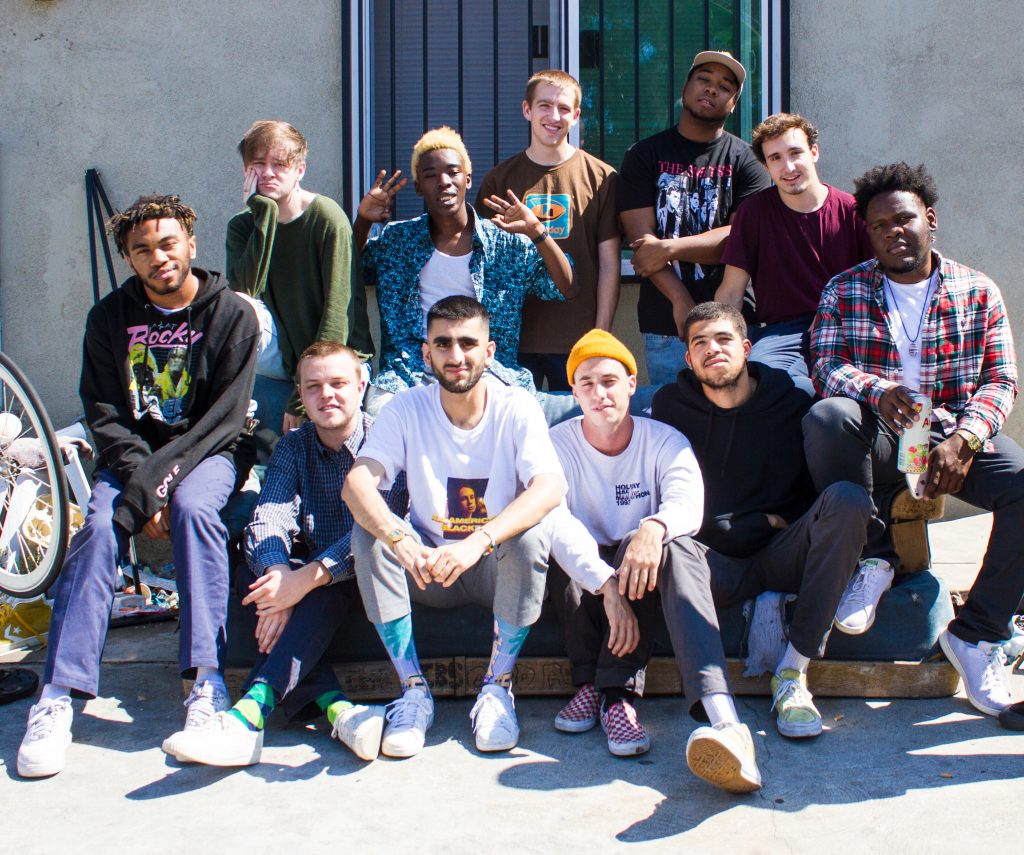
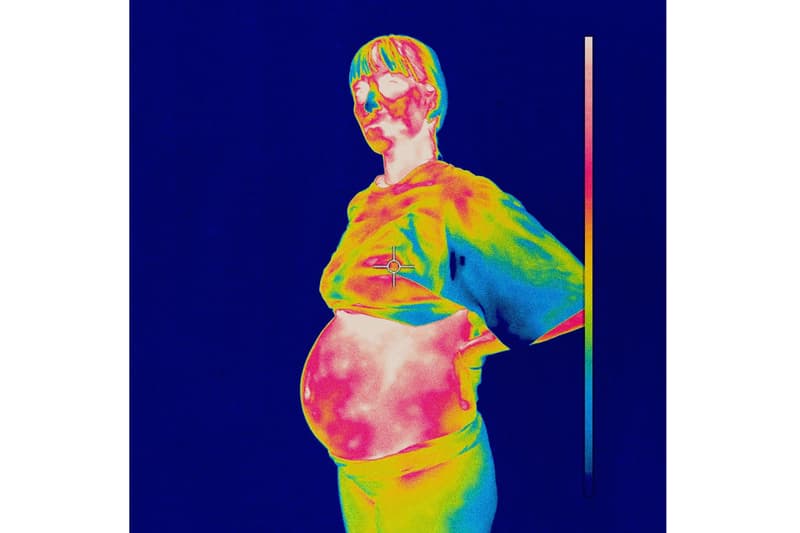
A boy band that makes hip hop music? Hmmm… interesting. Brockhampton is a hip hop group formed in Texas who advertise themselves as an “American boy band” and is comprised of 10+ members who met in a Kanye West forum/fan base. The performers in the group include Kevin Abstract (the lead member), Matt Champion, Dom McLennon, Merlyn Wood, Joba, and Bearface. They also have about 6 other members who handle producing, managing, directing, etc. Recently, they released their fourth album Iridescence, following their Saturation trilogy released throughout 2017.
 Image result for brockhampton

As someone who doesn’t traditionally gravitate towards rap or hip-hop music, I think Brockhampton is particularly creative because they deliver a fresh and honest approach to the genre of music through the way they make music and the content they address in their lyrics.
Instead of talking about money, drugs, girls, etc. like most hip-hop/rap artists, Brockhampton uses their childhood and life experiences to drive the themes in their music—such as being black, homosexual, a delinquent, experiencing drug abuse, issues with family, and the importance of friendship. In addition, they don’t stick to the typical bass-thumping and synthesized aesthetics but instead aren’t afraid to venture in to different sounds and instruments, like a string-quartet for example. Other than describing them as a hip-hop-rap group, their sound is hard to pin down because it is so unique.
Their newest album, Iridescence is the most experimental and funky compared to their previous albums and singles. In an interview featured on the Abbey Road Studios YouTube account, Kevin talks about how they wanted the album to be completely different compared to the Saturation trilogy, because they “wanted it to be a breakaway from what people know [them] as”.
Image result for brockhampton
One of the most inspiring aspects to me is their creative process. They allow as many creative people as possible to assist in the making of a song and just let the music come from being together in a room. For the latest album, the group gave themselves 10 days to make and finish the record. This reminded me of the concept of “flow” discussed in the article “Art and Dementia”. With a flow, you must have a set goal in order to create and that the activity of creating something is all-encompassing and worth one’s time.
Brockhampton is inspiring to me because they have become pretty well known recently but have curated their sound and message into something meaningful but also interesting and out of the ordinary
If you want to check out the album…. my favorite songs are HONEY, VIVID, SAN MARCOS, TONYA, and NEW ORLEANS.

https://en.wikipedia.org/wiki/Brockhampton_(band)

More than music: Kanye West

Kanye on the cover of Times "100 Most Influential People:
Titans" with his article written by Kanye's close friend, Elon Musk
  Kanye West is not someone who needs an introduction. So many people have heard of him that he made Time’s “100 Most Influential People” list for his music, as well as his many other projects, from fashion design to politics. Kanye has similarly made sure that his creative process is no secret. This is perhaps the biggest plus for studying Kanye’s process, as he has done multiple interviews on that exact thing, at least thirteen interviews in fact. Kanye is far from humble, something that he readily admits, and so he talks quite openly about his process and his ideas. He is incredibly proud of this process and its success, and has even described himself as a “creative genius”. In all of these interviews, however, he comes back to a few key ideas: a love for breaking convention, dreaming as big as possible (while not being afraid of failure at these dreams), and a mission to learn and try as many things as he can.
    Probably Kanye’s favorite thing to do, and a central theme to his creativity, is to think outside of the box. While this is rather cliche, it is not just a side effect of many of Kanye’s projects, but a direct goal of them. He has ventured into just about every creative field that he can and repeatedly comes back to the concept of breaking down barriers and convention. He often does this almost as a challenge to himself, by venturing into fields where he is both the only singer and the only black man. Kanye’s race is very important to him, and, especially in older interviews, he talks about how he has tried to be successful in situations where his race would usually hold him back. He also revels in situations where he is not the master, the most notable of which was fashion. There, he deliberately found a field where he was a complete novice, and the establishment treated him as such, up until the point at which they no longer could. He seemed to particularly enjoy the time he spends on fashion, even going so far as to say that he was “happy” to find that he had “no allies” at the beginning, and either apathy or outright criticism from those already in the field. Regardless of his actual success in fashion, Kanye likes breaking convention here, and in other areas, just because he can and because there is a convention to be broken.
    In all of these disparate fields, he sets almost impossible goals for himself. He sometimes accomplishes these goals and sometimes does not, though he seems to care a great deal which direction that goes. He set out right from the beginning to be the biggest name in music, something that he has arguably accomplished. Even beyond the world of pop culture and fashion, however, his dreams know few bounds. He has often talked about running for president, and has for many years been talking in terms of “when I run for president” rather than “if”. He has gone so far as to announce a campaign for 2024, though not every venture has been as successful as fashion and music. His forays into politics have largely been limited to controversy rather than a political office, as he has angered both the right with his comments about President Bush in the aftermath of Hurricane Katrina, as well as the left with his support of President Trump. This controversy has had little effect on Kanye, however, again proving how good he is at brushing-off failure. Regardless, Kanye has not given up, and has instead looked into other fields where he has found moderate success, such as filmmaking, where he has made multiple critically-acclaimed short films, or television, where he has joined his wife, Kim Kardashian, on numerous shows.
Kanye on his self-designed "floating stage" which
moved around the arena 15 feet over the audience
    The last thing that Kanye focuses on is something that one does not usually expect out of a rapper: learning. He is good friends with Elon Musk, and Kanye reportedly loves learning about the science behind Musk’s projects such as his rockets or the Hyperloop. In the words of Musk himself: “Kanye does think. Constantly. About everything”. Probably the place that Kanye has spent the most time on, his music, is where Kanye has spent the most time learning. He has spent a substantial amount of time learning enough to go beyond the actual lyrics and songs, to the point that Kanye is, in many ways, his own producer. He does much of his own publicity and is the architect and choreographer of his concerts. This is one place that Kanye stands out, as he is able to combine his songs and on-stage sets in a way that can only happen when the architect and the singer are the same person, with unique results such as his floating stage or his stage that was just a mountain in the middle of the crowd.


(This is just a small smattering of Kanye’s many interviews on creativity)

http://time.com/collection-post/3822841/kanye-west-2015-time-100/
https://www.highsnobiety.com/p/kanye-west-creativity-guide/
https://www.interviewmagazine.com/music/kanye-west
https://hiphopdx.com/news/id.26720/title.kanye-west-describes-creative-process-behind-yeezus-tour#signup
https://www.billboard.com/articles/columns/hip-hop/8455473/john-mayer-kanye-west-creativity-comments-interview-beats-1-video
https://www.youtube.com/watch?v=s9bjY0Xrt1o
https://www.youtube.com/watch?v=GzaKUqLw9Rg

Start of the Gluten Free Revolution

Cake. Cupcakes. Cookies. Donuts. Crackers. Pasta. Bread. What do they all have in common? Gluten. That is, until Beth Hillson decided she did not want to settle for subpar food.


The Disease Behind Gluten-Free
Image result for celiac diseaseCeliac disease is an autoimmune disorder in which the ingestion of gluten causes serious damage to the small intestine. Gluten is a protein found in grains such as wheat and barley. These grains are commonly used in baking and cooking because of gluten’s ability to hold the rest of the ingredients together. Today, celiac affects around 1% of Americans, and 97% of people with the disease are undiagnosed.


The Company
Gluten Free Pantry was founded in 1993 and is one of the first gluten free companies in the US. Its key founder, Beth Hillson is a professional chef, author, and president of the American Celiac Disease Alliance. She was diagnosed with celiac disease about 40 years ago. When Hillson was diagnosed, celiac/gluten intolerance was a lot less common/diagnosed, and there were very few food options for people who were gluten free. Using a creative process not so different from our “great minds,” Beth worked tirelessly and created things the world had never seen before. In 2005, Gluten Free Pantry joined with the Glutino company to expand their products.

Image result for glutino
Some of Glutino's products, after Gluten Free Pantry joined them
So What Exactly can you Make Gluten Free?
Image result for gluten free cronut
G-Fronut
Gluten Free Pantry started off creating award winning baking mixes. As the company expanded and eventually joined with Glutino, their products expanded to things like brownie mix, pancake mix, cornbread, and pie crust. In addition to the baking mixes, they started selling english muffins, a multitude of crackers, pretzels (of course some covered in chocolate), and many varieties of cookies. Of Beth’s creations, she is most proud of her “G-Fronut” (cronut) and “Winkee” (her version of the Twinkie). By substituting the typical wheat flour with various combinations of rice flour, potato starch, almond flour, oat flour, and other gluten free grains, Beth has proven that it is possible to make anything you set your mind to.

Beth’s Creative Process
Beth Hillson
Beth was driven by a desire to help herself and others who were dealing with celiac disease. She was unhappy with the current gluten free food options and decided to do something about it. Beth packed her things and moved to France and then Germany to attend culinary school. She studied the science of cooking and baking to figure out which properties of gluten were essential to recipes, and she worked to find other ingredients that could be used in replacement of things like wheat and barley.

Like Gardner points out in Chapter 2 of Creating Minds, Beth’s creativity is strongly correlated to her domain. Just as Einstein’s creativity is greatly attributed and appreciated to the state of physics in and around 1900, Beth’s innovations are seen as creative in the lens of the newly discovered gluten-free domain. Gardner believes that “an individual cannot be successful in the abstract.” A person’s creativity is tightly woven into the the circumstances of the world around them. This Impersonal level of creativity seems to be one of the most important drivers behind Beth’s success. Once she was diagnosed with celiac disease, she saw a world in which people like herself had very few food options. As celiac diagnoses became more common, Beth saw a large community with a want for better food options, and she found a way to fill that want.


Why it Matters to Me

As one of the 3 million Americans with celiac disease, having gluten free food options is very important to me. When I was first diagnosed, it was hard to make the transition to gluten free food. With resources like Beth’s cookbooks and magazines, I have been able to find joy in food again. Almost every restaurant I go to now has options for people who cannot have gluten, and they use the substitutions that Beth discovered while in culinary school. People with celiac disease all over the world have Beth Hillson and her creativity to thank for the basically unlimited options we now have in terms of food.


A Few of the Amazing Gluten-Free Baked Goods that Can Now be Made...

Image result for gluten free baked goodsImage result for gluten free baked goodsImage result for gluten free baked goods
Sources...
Howard Gardner, Creating Minds, ISBN-13: 978-0465027743