Friday, November 13, 2020
Medical Applications of 3D Printing: van Hoorick and Bio-Ink
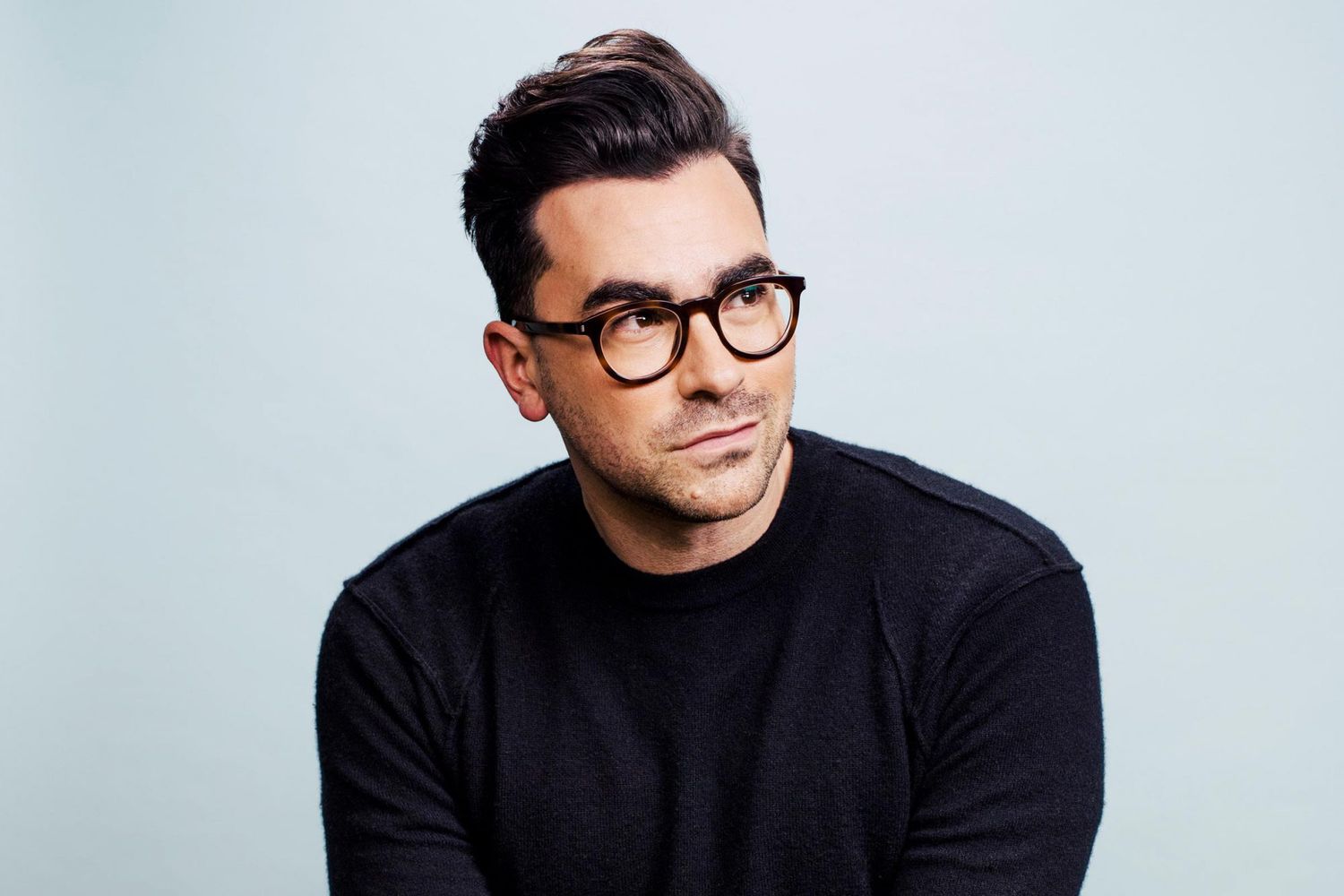
Dan Levy: The Mastermind of "Schitt's Creek"

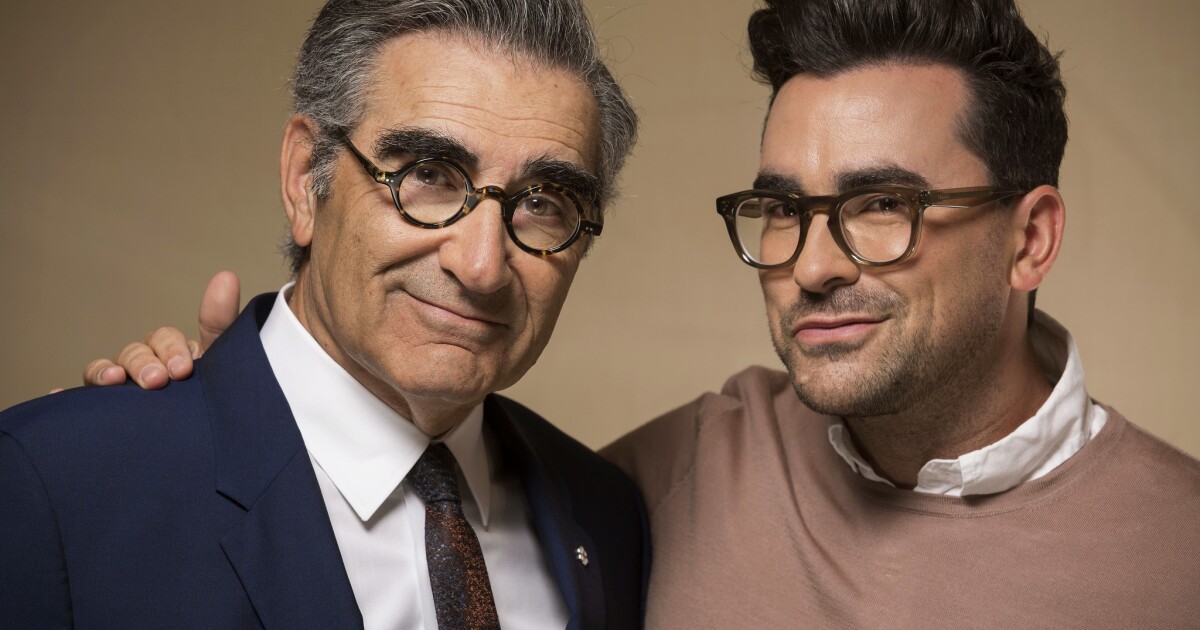
With the final season of “Schitt’s Creek,” a Canadian sitcom, having already been aired on television and put on Netflix in October, it is the end of an era for Daniel Levy. Daniel (Dan) Levy is the son of the award-winning actor, Eugene Levy, and the co-writer and co-star of “Schitt’s Creek.” The show follows a once wealthy family as they discover that they're broke and lose everything that they have, forcing them to move into a motel in a small town called Schitt's Creek. The six seasons follow the family as they navigate their new life, realize that money does not provide happiness, and highlights the bonds/relationships that they form with one another and the people who live in Schitt's Creek.
Dan Levy was the MTV Canada after show host for a popular show called “The Hills” before his path to stardom with "Schitt's Creek." When the after show ended, Levy left MTV and began taking small writing gigs to support himself and thought that his television career was pretty much over. Levy told himself that if he was meant to be in the industry, it would happen, but up until that point he was having little to no success in auditions and was beginning to think that he needed to begin looking for a new career path. It was when he was taking these small writing gigs that he started thinking of concepts for a television show. One day, while at a café, Levy came up with the original concept of “Schitt’s Creek.” Levy went to his father with his idea for the show and asked him if he wanted to help him with it. His father agreed and the rest is history.

An extremely important part of Dan Levy’s creative process while working on the show was his collaboration with others. His father ended up not only being an actor in the show but also became Dan Levy’s co-writer. While it was Dan Levy who came up with the basic concept of the show, he credits his father for helping him make it a reality. Through their collaboration in brainstorm and writing sessions, they were able to come up with what they did and didn’t want the characters, setting, and plotline to be. Bouncing the ideas that each of them had off of each other allowed them to snowball into a more feasible idea, ultimately landing them a deal. The Levy’s also collaborated with other writers, spending weeks at a time working on the episodes of a single season to make sure that everything was perfect. Without this massive amount if collaboration, both with family members and other professionals in the industry, it is likely that the show would not have become what it is today or be as beloved by fans.
Dan Levy is a very intrinsically motivated individual. Growing up, he was exposed to the industry through his father' s career, which influenced his passion for writing and acting. This passion is what ultimately motivated him to come up with the concept of “Schitt’s Creek” and put in all of the work that is necessary to have the show picked up by a network. Levy doesn’t believe in letting anything get in his way, even if it’s himself. It is this intrinsic motivation to be a successful writer that motivates him to follow through on his ideas and not give up. Levy believes that it is the inability to follow through on ideas that is the reason that so many people fail, something that he says simply wasn’t an option for him.
Dan Levy is more of a middle-C creative. While he has not completely changed the industry, his progressive themes, storylines, and character development (especially in regards to the often underrepresented LGBTQ community) have definitely made waves within the industry. At the 2020 Emmy Awards, "Schitt's Creek" broke the record for most wins in a single season for a comedy television series. The show won nine awards, including best comedy series, best supporting actor in a comedy series (Dan Levy), and best directing for a comedy series (Dan Levy and Andrew Cividino). Daniel Levy is truly the mastermind behind this show and without him, it would have never come into fruition.

Sources:
https://variety.com/2020/tv/news/daniel-levy-interview-schitts-creek-1234571257/
https://www.backstage.com/magazine/article/what-you-can-learn-from-dan-levys-journey-to-schitts-creek-66953/
https://www.hollywoodreporter.com/race/emmys-schitts-creek-sets-record-for-most-wins-in-a-single-season-for-a-comedy
Thursday, November 12, 2020
Macaulay Culkin: More Than Just "The Kid' In Home Alone
Tuesday, November 10, 2020
Reed Hastings: Bringing Movies to Our Fingertips
Reed Hastings is the CEO and co-founder of Netflix. He was born and raised in Boston, Massachusetts and studied mathematics in college. He joined the US Marine Corps and served in the Peace Corps before returning to the US and becoming a software developer. Along with his co-founder, Marc Randolph, Hastings launched Netflix in 1997 as a DVD subscription service. Through the years he has adapted the company to fit the standards and needs of a technologically advanced society, as Netflix now has over 183 million users globally.
Recently, Hastings was asked to comment on how Netflix has adapted to the current pandemic, as millions around the world quarantined and relied on streaming services to stay entertained. He responded by explaining that he prides himself on creating a company that is focused on bringing creativity into people’s homes. “We've been able to adapt from DVD by mail to domestic streaming to global streaming to original content in less than 20 years,” Hastings says. “Because we're so focused on supporting creativity.” His creative process includes his motivations to bring convenience and entertainment into people’s lives. This focus on creativity and openness to change is what has allowed Netflix, and Hastings, to be so successful.
Reed Hastings’ company, Netflix, can be tied to the idea of eastern culture that we discussed in class. Eastern culture focuses on the idea of building onto pre-existing or traditional ideas to bring about something newer. Netflix is a great example of this idea. At the time, before the company launched, DVD’s were able to be rented in a store. After accruing a hefty late fee, Hastings realized that this method was not very efficient and wanted to renovate the idea into something more convenient. By creating a DVD by mail company, and then further turning it into a streaming service, Hastings was able to build on the idea of movie rental stores and bring about something new.
Through his exceptional entrepreneurial skills, Hastings has navigated through studio partnerships and marketing that has put an emphasis on portraying Indie films and documentaries. Because of this emphasis, Netflix has been able to create its own content, which now accounts for 80% of the company’s budget in 2020. Hastings remains CEO and chairman of Netflix, with no intentions of slowing down.
Resources:
https://www.forbes.com/profile/reed-hastings/?sh=67d6881c2782
https://sports.yahoo.com/netflix-cofounder-reed-hastings-on-creative-culture-130348112.html
https://www.britannica.com/biography/Reed-Hastings
Move over Ralph Lauren... Sabyasachi is in town.
Among the wedding-obsessed streets of India, Sabyasachi Mukherjee is a household moniker. Mukherjee, also known as the King of India’s Bridal Market, is an Indian fashion and jewelry designer, retailer and couturier from Kolkata, India. Since the start of his designer brand Sabyasachi, he has pioneered a new identity of wedding couture in India, becoming one of the most noted Indian designers of all time. Today, his intricate beadwork and unique use of handlooms are recognized across the globe. His motto? A simple design philosophy: Personalized imperfection of the human hand.
Sabyasachi Mukherjee was born to a rich family on February 23, 1947. Shortly after graduating from the National Institute of Fashion Technology India, he began working on his eponymous label, releasing his premiere designs during the summer of 1999. Upon release, his work was recognized and he won most outstanding young Designer of India, thus paving his way to London to study under Georgina von Etzdorf, a world-renowned designer in England. Returning home from his apprenticeship, Sabyasachi incorporated his teachings into his works and began retailing across major stores in India by 2001.
As an intrinsically motivated individual, the majority of Sabyasachi’s designs are derived from his lifelong inspirations of the rich antique textiles and traditions from his hometown, Kolkata. His eccentric use of unusual fabrics combines layers of textures upon which he adds intricate detailing via South Asian beading and embroidery techniques. Upon each collection, he brings a revolutionary textile technique to the table. For example, his spring 2005 collection showcased unique hand block printing, embroideries and essence of Rajasthani prints. His summer 2006 collection shifted to folklore, simplicity, and intricate detailing, focusing on a unique approach to traditional Indian gold jewelry sets.
Sabyasachi began making brief excursions into films, serving as the costume producer. Today, his designs are a staple among many famous Bollywood films. Famous movie actresses wear his lehengas (traditional Indian wedding dresses) as the main pieces in their weddings and movies, bringing much fame to his couture. Sabyasachi’s exceptional handwork was even seen at Nick Jonas and Priyanka Chopra’s wedding while she walked down the aisle in a red lehenga studded with Siam-red crystals and hand-cut organza flowers. The dress took about 3,720 hours to create, each detail hand stitched into the dress. Mukherjee also stands as the only Indian designer to be a part of 3 leading fashion weeks: New York, Milan, and London
I’d say Sabyasachi is a Big-C creative because his brand/designs utterly transformed the realm of wedding and Bollywood couture in India and throughout the world. Watching the vibrant colors of his pieces come to life on screen depicts his impact on the film industry and the way he continuously rewrites Bollywood style with a cutting-edge design. Culture has an evident impact on Sabyasachi’s creative process. Born in the Eastern world, he incorporates the reinterpretation of traditional Indian ideas/style, but also introduces concepts that break with tradition, thus appealing to the Western culture. His diversity and identity as a queer, South Asian designer is proudly shown in his use of LGBTQ+ couples as his models. In the Eastern world, where the LGBTQ+ community is still not widely accepted, this deviance from the norm illustrates racial essentialism that propelled his works in the Eastern and Western worlds.
I’d highly recommend watching this video about Sabyasachi’s process of making a single wedding dress. The detailing is absolutely mind-blowing and the intricate effort put into each bead is so admirable. Seeing the very life of India put out onto an article of clothing hits home for me and my longing to return to the rich cultural landmine that is India. It also probably explains why a single lehenga ranges from $5,000-$25,000...
https://www.youtube.com/watch?v=len1aAhGhYg
https://www.nytimes.com/2008/11/26/style/26iht-Luxury08-Mukherjee.18176657.html
Lecture 10- Culture
Sunday, November 8, 2020
Kenny Ortega: Musical TV and Movies to Inspire Generations
From the moment he started to right now, Kenny Ortega has never failed to create, direct, and produce absolute magic on the screen. Every big thing he has made has inspired people, young and old, to remember that there is always magic (and music) in everything that you do, even if its something as small as going to high school or taking your sister trick or treating, all the way up to becoming a queen or doing a life changing performance at a high level venue. He has been credited as one of the best filmmakers and directors to work with by almost everyone who has worked with him and so far, he has never produced something that didn't become popular in some way. So how did he get to become as good as he did, and how does he continue to do it?
Kenny Ortega started as an actor himself, especially in musicals, performing in things like Oliver! and Hair before he made the transition to choreography and directing. In his early career, he mostly worked as a choreographer, even turning down the leading role in a production of Jesus Christ Superstar, and he worked for live bands and performers out in California, but eventually he was also working on movies including Pretty in Pink, Ferris Bueller's Day Off, and the 1987 film Dirty Dancing. He also worked as a choreographer for music videos for stars like Madonna and Michael Jackson, and even choreographed many of Michael Jackson's live performances and tour dances. He made his directional debut in 1992 with the Disney musical Newsies, followed closely with Hocus Pocus in 1993. While Newsies is a beloved musical, Hocus Pocus was really the first example we see of movies and TV shows that set a tone for a generation and almost gained a cult following. To this day, the movie is an expected one to play on a cable channel during the month of October and is a classic family tradition to be watched during the Halloween season as well. At this point, Ortega was well known and well liked, and he had gained a reputation as a highly creative individual with a talent for directing and choreography, as well as an ability to work with all kinds of people to create incredible things with them.
The next big conquest of Kenny Ortega was the wonderful High School Musical trilogy, which is a favorite of many people who were born in the late 1990s and early 2000s, a generation that many refer to as "zillenials", not quite millennial, but not generation Z either. This was the perfect audience to receive High School Musical and it was, and still is, extremely popular. Many actors, like Zac Efron pictured above, have Kenny Ortega to thank for helping to jump start their career. Ortega both directed and choreographed all three films, and thus really made the trilogy what it was: something that was fun and entertaining, but also had morals and life lessons in it in a way that a young child was able to understand. I myself remember being inspired by the students being able to break out of their traditional and stereotypical high school roles and become something greater while still maintaining who they were. I grew up on these films, and can attest to how much they shaped my generation (although I was very upset when people didn't randomly break into song when I started high school).
Up next came the Descendants trilogy, which was an ingenious way to take old fairytales and make them modern, making them to be something that the generation is was marketed to, generation Z, would be able to understand and be interested in. It took classics like Snow White and Sleeping Beauty and flipped the script in a creative way to make us pay attention to the villains and more specifically, their children. The movies carried the underlying message of how dangerous it is to make assumptions about people based on something they can't control, and how unfair it is to separate people based on those assumptions. Ortega tackled major world issues with this trilogy and made them something a young person could understand, likely leading to planting a seed in generation Z to fight things they saw unfair. Most recently, and my personal favorite, is a new TV show called Julie and the Phantoms where a teenage girl suddenly finds herself friends and performing with a band of ghost boys, trying to help them achieve their dreams. The TV show is amazing with representation, having characters that are people of color and those who are part of the LGBTQ+ community, but not making the show revolve around that. Its just a normal part of the show, as it should be. This show is perfect for the times and makes it easy for children to understand representation and grow up on it, and for children to see someone who looks like them living the dream so they know that one day they can do it too.
I bring all this up because I wanted to point out two things: the motivation and the collaboration. Kenny Ortega is motivated all on his own to create these things. Sure, people will come to him with ideas, but ultimately he is the one who brings them to life and makes them the voice of a generation. He is intrinsically motivated to make sure there are life lessons to be learned in everything he makes, and he makes it a point to put proper representation into his projects the best he can. No one is ever asking him to do these things or making him do them, he does them because he wants to and because he knows its the right thing to do. He never wants to make something that won't leave people feeling happy at the end and also like maybe they learned something along the way, even if they haven't realized it yet. It's also important to point out the collaboration. The reason people keep hiring him back is because he is such a joy to work with and he heavily includes other people in his creative process. He wants to ask his actors what they think and what they want to include. Yes, he is intrinsically motivated, but any extrinsic motivation that comes out is coming from the desire to collaborate. I don't think anything he made would be nearly as good if he didn't actively work to collaborate and include everyone on set in his process. Its what makes the chemistry between actors so powerful and what makes the scenes so believable. Everyone is happy to be at work and working together, and I think Kenny Ortega is a big part of that.
So how did Kenny Ortega get as good as he did and continue to do it? Because he works with other people to make sure he is always keeping up with the times and never getting stuck in his old ways, and allowing his intrinsic motivation to flow through him to continue to make life changing projects that kids will remember well into their adulthood, and probably their whole lives. (Like me. Go Wildcats!)
~~~~~~~~~~~~~~~~
Recommended Works to Watch:
-Newsies
-High School Musical
-Descendants
-Hocus Pocus
-Julie and the Phantoms
~~~~~~~~~~~~~~~~
Sources:
https://variety.com/2019/biz/spotlight/descendants3-director-kenny-ortega-receives-star-hollywood-walk-fame-1203275882/
https://www.dga.org/Awards/History/2000s/2007.aspx?value=2007
https://en.wikipedia.org/wiki/Kenny_Ortega
J Dilla: The Mozart of Hip-Hop
Unless you are a Detroit Native, or an avid Hip-Hop fan, you may have never heard of J Dilla before. James Yancey is largely credited for innovating hip-hop and mastering the art of the sample, leading the way for other prodigious samplers like Kanye West and Madlib to dominate the scene later on. While J Dilla's career will forever be influential to all who come after him, he has a short catalog of music to offer (aside from the posthumous EP's that drop now and then). However, Dilla's grand opus, "Donuts" would be the project that would change Hip-Hop forever particularly with his masterful sampling.
While hip-hop is synonymous to most of us with sampling, and largely has been attached to the genre since its conception with Grandmaster Flash, no one had really used samples in the way J Dilla did. Dilla's creative process was largely based in his extensive knowledge of Jazz. Yancey's Father and Mother were both in an acapella jazz group, so it was common for jazz and singing to flow throughout his home. As Yancey moved toward his career as a hip-hop producer he was notorious for having thousands of records alphabetized (mostly jazz) to use in his arsenal at the right time. And if that wasn't enough Dilla would pull out a keyboard, drums, or guitar and play the parts himself.
Yancey's most creative aspect of his process can be found in his use of the Akai MPC3000, a music drum machine-turned-sampler in his hands. At the time it was common for many other producers at the time to quantize their drum patterns on their drum machines, splitting up the beats perfectly and then looping them infinitely. Yancey however would prefer to play the drum part on the Akai live, creating a more alive and rhythmic sound on his beats that stood out among his contemporaries. Yancey would also use his Akai to insert more than just drum samples in his songs giving all of his samples a percussive feel. This would lead way to the "chopping" of soul samples that are so predominant in hip-hop today. Most of the producers nowadays that are famous for their sample prowess like Kanye and Madlib cite Dilla as their inspiration and golden standard for sampling.
In many ways I would argue J Dilla to be the a Big-C Creative. Yancey went up against giants of hip-hop producers in the late nineties and early 2000's, but still stood out above all his contemporaries and was unmatched in his production. While Yancey may not have gotten all of the roses while he could still smell them, his influence in his sampling techniques would change hip-hop forever, leading to the birth of a new era of hip-hop in the early 2000's led by Kanye West, The Roots, Madlib, and Common. It is safe to say that without Yancey's Donuts we may not have ever seen the golden era of hip-hop.
For a more in-depth look at Dilla's use of the Akai MPC3000 watch the video below:
How J Dilla Humanized his MPC3000
Sources:
https://www.npr.org/sections/ablogsupreme/2013/02/07/171349007/why-j-dilla-may-be-jazzs-latest-great-innovator
https://www.theguardian.com/music/2011/jan/27/j-dilla-suite-ma-dukes
https://www.newyorker.com/magazine/2016/04/18/j-dillas-the-diary