Thursday, April 27, 2023

Chance the Rapper: Reflections Ten Years After Acid Rap


Inside Chance The Rapper's Magical Puppet World | ComplexChance the Rapper, born Chancelor Bennett, debuted his second mixtape,

Acid Rap, nearly ten years ago to the date. For many of us who grew up in Chicagoland, this mixtape was a defining moment in our adolescence or childhood, and personally served as an album I hold near and dear to my heart, as it is tied to some of the best memories of my youth. If you are unfamiliar with this album, you may assume from the title that LSD was involved in the making of the album, and you would be correct, partially. Chance himself said “[There] was a lot of acid involved in Acid Rap… I mean, it wasn't too much -- I'd say it was about 30 to 40 percent acid ... more so 30 percent acid”. This was not the only factor in Chance’s creative process, however, it allowed some creative barriers to be removed. In the creation of this album in particular, Chance was extremely collaborative in the creation of Acid Rap, working with other Chicago artists both big and small, as well as national sensations like Childish Gambino. Even some of his first musical endeavors were collaborative, with a duo that he formed as a freshman in high school named Instrumentality. Acid Rap - Album by Chance the Rapper | SpotifyChance’s inspirations for his music are numerous, as jazz, gospel, and Michael Jackson were frequently played in his household. He also credits one of his greatest influences as Kanye West, who he collaborated with on his subsequent project, Coloring Book. These numerous inspirations for his music point to intrinsic motivation coming from a genuine inspiration from the significant musical influences in his life. Chance also credits teachers in school, who actually attempted to discourage him from making music. Although it may seem that this discouragement would have made Chance falter on his musical journey, it could have actually created an extrinsic motivation that caused him to want to pursue music more fervently to prove his doubters wrong. 
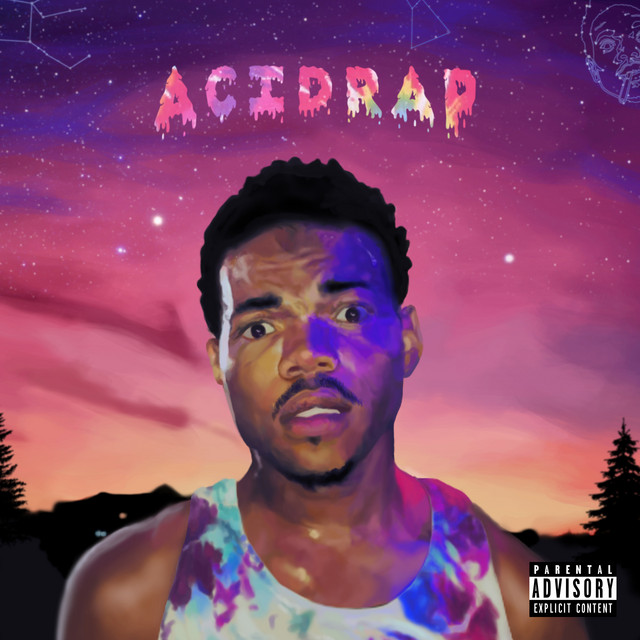
Acid Rap was the mixtape that put Chance the Rapper, one of the biggest Chicago artists of the 2010s, on the map. His music changed the genre of rap, and it is only fair to acknowledge him as a big-C creative. Undoubtedly, Chance made a significant impact on the adolescence of many Chicago teenagers. I know that I was one of them, and I am sure that at least one person reading this entry was too. 


References:

https://www.mtv.com/news/mb1747/chance-the-rapper-acid-rap-mixtape

https://www.complex.com/music/2013/03/who-is-chance-the-rapper


Tuesday, April 25, 2023

Ethel Cain, the Woman Behind the Revitalization of Southern Gothic

Ethel Cain On Touring, Fashion Week & 'Preacher's Daughter' SuccessHayden Silas Anhedönia, who uses the stage name Ethel Cain, was born in Tallahassee, Florida, on March 24, 1998. She was raised in the Southern Baptist church, where her father was a preacher, and this upbringing still greatly influences her values and music. Anhedönia’s debut album, after three EP’s, is named Preacher’s Daughter, and was re

In Ethel Cain's music, hell is a place on Earth | WUNC

leased in 2022 to critical acclaim. Although she goes by her stage name Ethel Cain, this persona is separate from Anhedönia, and Cain is the protagonist and main character of Preacher’s Daughter. The album opens with Cain reminiscing over the death of her father and wishing to escape from the small town she lives in. After she escapes with a man named Logan, who she knows is dangerous but doesn’t care, he pulls off a robbery but is killed by police. Finally, Ethel meets a man named Isaiah, and they quickly develop a codependent and toxic relationship. At the climax of the album, the song Ptolemaea, Isaiah becomes possessed and cannibalizes Ethel. She eventually ascends to heaven at the conclusion of the album. When speaking about her creative process, Anhedönia said “For me, the creative process is very much about self-indulgence.It’s about consuming certain types of media that I love and going places and having my little adventures. It’s about giving in”. This description of her process shows that Anhedönia uses convergent processes when creating her music, taking in things around her and creating a product rather than spitting out multiple different ideas like a divergent creative would. Anhedönia can also best be defined as a Pro-C creative, she has made major waves with her debut album, even being featured on Obama’s end-of-year playlist, but she is still fresh on the music scene. I have no doubt that she will become a big-C creative as she creates more music.

References:

https://thecreativeindependent.com/people/singer-songwriter-ethel-cain-on-trusting-your-instincts/#:~:text=For%20me%2C%20the%20creative%20process,%2C%20the%20press%2C%20the%20rollout.

https://sbpress.com/2023/03/the-dark-story-of-ethel-cains-preachers-daughter/


Sunday, April 23, 2023

Bill Nye the Creative Science Guy

 I’m sure we have all seen at least a few episodes of Bill Nye the Science Guy at some point in elementary school. For some of us, this show might even be the reason we fell in love with science. Bill Nye and his show made science easy to understand as well as engaging and interesting to the audience.


Bill Nye the Science guy was born out of desperation on January 10, 1987. At the time Bill Nye was working as a writer on a Seattle-based sketch comedy TV show called Almost Live! and in fact he was the lowest paid writer on the show as he was only doing freelance work for the program. On the day of January 10, 1987, the guest that was set to appear that night on Almost Live! cancelled and the writers were desperately trying to find a replacement. Bill then spoke up and suggested that he could do an experiment demonstrating what happened when you ate a marshmallow that had been dipped in liquid nitrogen. At first, the rest of the writers were reluctant, however, Bill pushed for it and that night Bill Nye the Science Guy was born.


In collaboration with James McKenna, Erren Gottlieb, and Elizabeth Brock, Nye went on to develop a pilot for a new show, fittingly titled Bill Nye the Science Guy. Nye pitched the show to KCTS-TV in 1993 and it went on to be one of the most-watched educational TV shows in the US until it stopped airing in 1998. Nye’s ability to make science entertaining and accessible is incredibly unique. His further work in the scientific community beyond the entertainment level proves his talent as not only a television writer but also as a scientist and educator. 

When reflecting on the night that Bill Nye the Science Guy was created, Bill Stainton, who was the executive producer of Almost Live!, stated that this character was created because Nye was able to ask a different question than everyone else in the room. The rest of the writers were trying to answer the question of who can we get to be a guest on the show while Nye asked the question of how can we fill the time. By asking a different question, Nye reframed the situation and realized the root of the issue was not the missing guest spot but instead, the empty 12 minutes of show time that needed to be filled. This situation proved Nye’s incredible ability to think divergently and work outside of the rules of the field of television. Furthermore, Nye was an outsider to the writer’s room being the only one working as a freelancer, and therefore his presence made the writer’s room a lower Q situation and he was able to bring newer, more creative ideas.


Sources:

https://en.wikipedia.org/wiki/Bill_Nye#:~:text=In%201993%2C%20collaborating%20with%20James,meets%20Pee%2Dwee's%20Playhouse%22.

https://en.wikipedia.org/wiki/Bill_Nye_the_Science_Guy

https://billstainton.com/tag/bill-nye-the-science-guy/

Sebastien Gabriel: Hero of Your Childhood

Sebastien Gabriel's official role at Google is an individual contributor who is assigned to assist in interface design. He has worked on many meaningful projects over the years. Perhaps the most memorable component of one of his major projects is the Lonely T-rex game developed with the Chrome design team. The game is beloved by millions everywhere with approximately 270 million players every month around the world. We can reflect on the process by which this game and other features of the Chrome browser were developed through the insights that Gabriel provides into his education and creative process.
 
With an initial educational focus on multimedia design, Gabriel later went on to take multimedia management classes only to find that he disliked project design but was "Attracted by the more creative part of the multimedia world." He went on to join a Google design team that worked on developing Chrome and ensuring compatibility with devices produced by other companies. Some of the design choices for the "hybrid" Chrome layout are illustrated below. This hybrid layout demonstrates the subtle changes that interface designers are tasked with. 


On his creative process Gabriel notes that finds "The process of thinking and writing tasks on a weekly basis to be a good way to reduce cognitive load. It’s freeing." He combined this method of organization and load management with a distinct sense of humor to develop the aforementioned Lonely T-rex game. Gabriel claims that the famed Lonely T-rex game was developed in response to the Chrome team's insistence on combating the lonely feeling of being disconnected from the rest of the world. The game's design was inspired by a desire to play on the idea of living in the prehistoric era with no internet, a joke amongst the team's members. The game was expanded upon from its original design with features like "nighttime sky graphics" and a special birthday event that was available for a limited time. 


As a member of a specialized interface design team working under a major company, Gabriel was familiar with the more traditional form of collaboration that we studied rather than more revolutionary forms like adversarial collaboration. Chrome team members commented on this collaborative process for the game stating that game mechanics and stage design were some of the more contested aspects of the project; however, the end result maintained a consistent theme with complementary graphics to deliver an undeniably enjoyable game for those stuck off the internet.

Sources: 
https://www.loversmagazine.com/interviews/sebastien-gabriel
https://blog.google/products/chrome/chrome-dino/


ABBA

    ABBA, the voices behind the soundtrack of Mamma Mia, has a rich and creative history.  In June of 1966, Björn Ulvaeus met future bandmate, Benny Andersson.  Both men had had previous experience in the Swedish music industry.  After a couple of weeks, the two had composed a song together and began a career that would set records worldwide.  It was in spring of 1969 that ABBA gained two more members and became the band that it is known as today.  Agnetha Fältskog and Anni-Frid Lyngstad, both solo singers, became acquainted with Ulvaeus and Andersson and decided to join the band.  Ulvaeus and Fältskog married in July 1971, and in October 1978, Andersson and Lyngstad married, as well.


    On April 6, 1974, ABBA won the Eurovision Song Contest with their hit song, "Waterloo."  It was during this time that they decided on the name "ABBA," an acronym of all of the band members' first names.  After gaining fame throughout Europe and making a name for themselves in America, ABBA produced its second world-famous song, "SOS."  By 1976, ABBA had become a household name around the world and went on to create some of the most well-known songs of all time.


    The creative process is one in which the recording studio was viewed as a laboratory.  The process began with Benny and Björn collaborating with an acoustic guitar and a piano in an effort to write the songs.  This first step in the process was often extensive, as hundreds of lines of melody were created and discarded.  After the melodies were set, the songs would enter the studio for lyrics to be created and combined with.  Something notable about the working (unfinished) lyrics and titles of the songs is the fact that most of the songs were firstly titled with a phrase from the lyrics.  One example of this is the song, "The Winner Takes It All," which was previously titled, "The Story Of My Life."  

    During the recoding process, an instrumental backing track would be paired with the lyrics and melody to create the song.  At this point, it was possible for a song to become a waltz, disco, tango, or rocker.  In order to maintain a neutral stance, Ulvaeus would separate himself from the other bandmates and take on the role of a producer.  The final lyrics for the songs would only be solidified once the instrumental backing was selected and completed.  ABBA noted that the most important part of the groups' sound were the voices of Fältskog and Lyngstad.  Both women were very active in the recording process and chose how they thought they could best contribute to the sound of the songs.


      ABBA's musical fame has allowed them to be remembered forever as a Big-C creative.  This notion is evident in some of the impacts that their music has had on other industries as well.  One example of this is the movie series, Mamma Mia!  The incorporation of ABBA's music into the film allowed for both the movie and music to gain attention throughout the world.  Prior to the movie, Mamma Mia!, ABBA's music had been used for the stage musical, Mamma Mia.  After more than 50 years since its founding, ABBA is still releasing music and being recognized for their impact on the music, film, and theater industry.      


Sources:

https://abbasite.com/story/

https://abbasite.com/articles/in-focus-in-the-studio-how-the-abba-songs-were-born/


Lorde's Stylistic Evolution


Most people are familiar with indie pop singer Lorde through her biggest hit, Royals, from 2013. The single is a prime example of her earlier style, gothic and dark with a purely teenage flair for dramatics. As she matured, her music evolved with her personality, and her most recent album, released in August of 2021, highlights her emotional growth during her four year disappearance from the public eye as she reconnected with herself and her home, New Zealand. Her Solar Power album is first and foremost a love letter, with threads of self-assurance and healing running throughout. Its departure from her signature style received skepticism from both critics and Lorde’s fan base; some of whom argued the leap between styles was too large, creating a sense of discord. As startling as the style change may have been, I also think the lack of initial love for the album may have stemmed from how late in summer it was released when it is clearly meant to be a summer listen.

One interesting thing about this style change is that it is clearly reflected in Lorde’s personal style choices when she did choose to attend public events. Her Pure Heroine era around 2015 was rooted in dark tones and “cherry-black lipstick,” which she states in her Solar Power track Oceanic Feeling is “gathering dust in a drawer--I don’t need her anymore.” As she retreated from the public eye and spent time enjoying New Zealand’s beautiful beaches and ocean, her style adapted, shifting toward colorful, flowy pieces. These choices are accentuated by the nature-inspired lyrics of Solar Power and background noises in the form of cicadas and chirping birds. Her music video for Secrets From a Girl (Who’s Seen it All) captures her personal growth through the visual imagery of three distinct styles.

Whether you’re a fan or a critic of her newest album, Lorde’s growth as a creative is unquestionable. Her extrinsic motivation stems from her connections with nature, as well as other influences in her life, such as her dog Pearl, for whom she wrote Big Star. Her reclusive personality benefits her creativity through allowing her to seclude herself in introspection and allow her musical ideas to develop over long incubation periods prior to actualization. Lorde has also called Solar Power her “weed album,” referencing its relevance in the period during which the album was written. My personal favorite track is Secrets From a Girl, included below.


Sources:

https://i-d.vice.com/en/article/g5gnyw/lorde-style-solar-power


The Mystique of Yves Tumor

Most likely raised in Tennessee and maybe named Sean, Yves Tumor (age also unknown) is an experimental musician and producer. Aside from the ambiguity, Tumor has been making music that could only be described as intoxicating, sensual, and menacing since around 2015 (at least under this moniker). As of 2023, they’ve put out numerous projects and albums, the most recent being Praise A Lord Who Chews But Which Does Not Consume; (Or Simply, Hot Between Worlds), released mid-March. 

With tracks like “Lovely Sewer,” “Parody,” “Echolalia,” and “Fear Evil Like Fire” with their heavy drumming beats and underlying guitar and basslines, Tumor brings in a shoegaze feel while still emphasizing the more sensory aspects of their music on Praise A Lord: the richness of sound, and a begging feeling; Yves Tumor wants to be known. 

Much of Tumor’s artistry comes down to putting on a performance, whether that be through gender expression, sexuality, the line between lust and romance (they’re a sex-god on Heaven to a Tortured Mind), and spirituality, among other things. This performance aspect also ties into the mystery of Yves Tumor as a real-life person and their experience with creativity. In interviews, Tumor has explained that they are self-taught regarding production, guitar, and the keyboard. Growing up, Tumor did what many other noise artists and experimentalists did: use Garageband. “It was pretty nasty,” says Tumor. But, noise seemed to be where Tumor got their start, calling it a “pure” means of gaining notoriety in a pretty intense scene for music. With inspiration coming from a variety of sources, such as 90s grunge, 60s Krautrock, Dean Blunt and ambient soundscapes, Tumor paints a complex figure.


Nowadays, Tumor has decided to explain very little about their personal life. Much of their work is produced in Europe, especially Berlin and Turin, but nothing is ever really confirmed, because for Tumor, it's simply not what matters. The performance, the attitude, and the mystique, is. 


Despite being so private, Tumor is known to collaborate with other artists and prominent producers. On their latest album, Alan Moulder, a titan in the production industry who has worked with the likes of The Jesus and Mary Chain, Nine Inch Nails, and My Bloody Valentine, is the primary mixer; Noah Goldstein, known for My Beautiful Dark Twisted Fantasy, The Suburbs, and Blonde, also worked as a producer and engineer. One of Tumor’s more famous tracks, “Kerosene!,” features Diana Gordon. Tumor is also featured on “Reanimator” from Joji’s Nectar, and WILLOW features them on “Perfectly Not Close To Me.” 


If you’re interested in Yves Tumor, some of my favorite songs are “Jackie,” “Crushed Velvet,” "Lovely Sewer," “Ebony Eye,” and “Romanticist.”