Sunday, April 7, 2024

Jackson Wang

 Jackson Wang is a famous artist from Hong Kong known across Asia for contributions to music, entertainment, and fashion. Growing up, he was trained to be an Olympic fencer as his parents were both athletes. He won many awards and was offered a scholarship to Standford for fencing. However, at 16 years old he was discovered by a talent scout while playing basketball and was invited to South Korea to audition. There, he became a member of the band GOT7 under a company he mistakenly signed with. He began to gain popularity for his charisma, singing, rapping, and dancing.


After the group disbanded, Jackson went on as a solo performer and fashion designer. He collaborated with a wide variety of artists that contributed to his diverse musical style. Because of his international activities, he is fluent in Mandarin, Cantonese, Korean, and English. He also makes an effort to learn a bit of the language of the country where he performs.


In “The Creative Spark,” art and music are described as an evolutionary mechanism by which we “express our imaginations.” Language was developed out of melodious sounds that communicated emotions. Gestures commonly accompanied these sounds that then evolved into dance. Jackson is a multi-talented performer who excels in song, dance, and language skills. Jackson's works aim to promote the expression of emotion of both himself and his audience.


LMYL or Leave Me Loving You is one of his most popular songs (English) under his own company “Team Wang.” Inspired by Hong Kong in the 1990s, this music video is set in a Chinese restaurant. Jackson plays a dishwasher who’s in love with a girl who doesn’t know he exists. He normally does music videos with dance choreo but decided to try something different. He explains that this is a concept he has always liked but never got around to doing. LMYL is filmed like a Hong Kong movie. The song is him speaking to a girl he is hopelessly in love with. He imagines a relationship with her, but it is all just his imagination.


https://www.youtube.com/watch?v=QIMihDOXMpY


Jackson has been diagnosed with ADHD and is one of the few Asian celebrities open about his mental health. Traditionally, Asians do not believe mental health is a thing. We tend to say “Just shut up and get over it” or believe it is a result of old-timey justifications like demonic possession or ancestral sin. Because he would talk too much and be hyperactive, his teachers at his old school suggested he change schools to somewhere that would be more accommodating to his needs. ADHD is the reason he had the opportunity to be noticed. Neurodivergence can contribute to his creative process and set him apart from hundreds of other idols. Jackson is resilient and also uses his platform to speak out for social issues and philanthropy in addition to his music career.


Tobin Heath: On the Field Magician


Tobin Heath, a professional soccer player, is a significant creator on the pitch. At age four, Heath started her relationship with soccer and has played ever since. Born in 1988 in Basking Ridge, New Jersey, Tobin Heath grew up in a time of expansion yet limited time for women’s soccer. The United States Women’s National Team had just started three years earlier, in 1885, allowing her to dream of a future in professional soccer. She eventually joined the US soccer team in 2008 at 20 years old. At that time, she was playing collegiate soccer with North Carolina, where she would have much success. After finishing college, Heath played professional soccer in several places, both in the States and overseas, but she is most notably recognized for her time with the Portland Thorns.


I have been a fan of the USWNT since I was young, and Tobin Heath has always been one of my favorite players to watch. As a soccer player growing up, watching the national team was extremely empowering as they worked to expand the sport on and off the field. Tobin Heath has been instrumental in both spaces. On the field she is commonly referred to as a magician. Her impressive footwork has played a significant role in how the women’s game looks today. Heath has a unique way of creating plays on the field. She talks about how this art of the game was a prevalent part of the sport worldwide, yet it was limited in American soccer. Heath describes how American soccer was very formulaic and required specific qualities out of players, yet Heath cherished what made her different as a player. She is a collector of the sport, as she has been a fan of Brazilian soccer her whole life and has found ways to bring elements of that game style into her skills. Heath became an invaluable member of her team, as her creativity on the field helped lead her team to two World Cup wins and three Olympic medals, two of which were gold. For many soccer fans, watching a perfectly executed passing sequence or a combination of foot skills to beat a defender is a form of art, and Heath is a facilitator of this creativity on the field.


While Heath is very creative herself, she acknowledges she could only do it with collaboration. For starters, collaboration played a considerable role in the development of her creativity. Heath reflects on how the freedom her coaches gave her provided her space to be different. She describes how she gravitated towards teammates and coaches who encouraged her creativity. They acted as mentors that helped her to grow her game. In addition to her creative development, collaboration is key to what she could create on the field. Soccer is a team sport requiring many people to work together simultaneously. As an attacking player for the national team, she was typically working the most with two other players. Over her long tenure with the team, the most successful group of three were Tobin Heath, Alex Morgan, and Megan Rapinoe. Collaboration is useful in that it helps bring originality and success, which these three exemplify. As players, they each had a distinct style of play, allowing them to bring different elements in attacking third of the field. Their originality in their positions enhanced the creativity on the field. This unique combination of creative forms brought them success, as their main challenge was scoring, which they did a lot. Together, the three put on a dominant performance in the 2019 World Cup. Considering their collaboration style, I would describe it as Medium Q. Each of them was very familiar with the other, as they had worked together for a long time. Still, each brought a new perspective and skill to the team. 


Tobin Heath has beliefs that are very similar to those of Rick Rubin regarding creativity. Heath is very aware of creativity's role in her life and cherishes it. Heath states, “Creativity is natural within all of us. I am a creator as an athlete…as an artist…and a million other ways.” In his book, The Creative Act: A Way of Being, Rubin describes creativity as a fundamental part of being human. He has a very broad understanding of what creativity looks like and encourages his readers to see their way of life as creative. Heath perceives her work as creative, even though it is not a traditional form of creativity. Rubin believes that actively participating in creation requires awareness of one's self. 

In addition to her understanding of creativity, Heath also relates to Rubin’s understanding of intention. He describes intention as the truth inside people that eventually becomes embedded in their work. Tobin Heath is intrinsically motivated, as the intention of her work is to bring her joy. She says she plays soccer because it brings her the most joy. Supporting Rubin’s argument, Heath’s love and joy for the game are shown through her creativity on the field. Intention for Rubin is more than a purpose; instead, it is a complete agreement with oneself. Of course, Heath has elements of extrinsic motivation, as she wants to win games and score goals, but she chooses to continue being a creative soccer player every day because it is who she is. As Rubin puts it, Heath continues to play soccer because it is the result of her commitment and capability. 


Currently, Heath is injured and has not played soccer in a few years; it is undetermined if she will return. As she is no longer creating publicly as she once did on the field, Heath has found new ways to be a creator. With several of her teammates, Heath has started a new clothing brand called RE-INC. The main goal of this new creative endeavor is to create eco-conscious fashion while also impacting social change and uplifting women’s sports. To this day, Tobin Heath’s creativity has inspired me and many other young female athletes to be creative and break the domain. 


Sources: 


https://www.espn.com/espnw/story/_/id/26691046/magician-us-women-national-team-meet-tobin-heath


https://www.internationalchampionscup.com/wonder-women-skilled-magician-tobin-heath-focused-on-being-more-of-an-inspiration


https://www.thecreativefactor.co/articles/tobin-heath-loves-to-paint


https://www.ussoccer.com/stories/2020/09/before-they-were-stars-tobin-heath


https://www.timbers.com/players/tobin-heath/


https://re-website.com/pages/impact


"Inside" the Mind of Bo Burnham

Most people can agree that 2020 was not the best year of their life. Between the global pandemic and the political instability, many people felt incredibly overwhelmed and struggled with their mental health. One of the most creative depictions of this was Bo Burnham's Netflix special entitled "Inside." His comedic musical numbers and creative production design showed Burnham struggling with isolation and staying inside while trying to be creative. He is a comedian who has been working for many years, but comedy relies on the reactions of an audience. A look into Burnham's creative process and his analysis of his mental health during the creation of "Inside" reveals the importance of creativity during people's lowest moments. 

One of the most impressive parts of Burnham's performance in "Inside" is how real it felt. He was sporting a Covid beard and sat in the same room for the entire show. His props were nothing fancy, but his use of lighting and projection helped to flesh out his story. The entire performance was a response to the limitations of quarantine and isolation during the pandemic. Inside" the Mind of Bo Burnham However, Burnham utilized the limited resources to enhance his creativity. His performance is an example of responding to the limitation of domains. In this case, the domain of comedic performance relies on the comedian's ability to read audiences and make them laugh. Burnham did not have an audience or even a crew behind his camera to make laugh. He had to think beyond what had previously been created by comedians and evolve to develop something new. 


Through Burnham's performance, he opens up about his mental health struggles, both before the pandemic and during the lockdown. The way Burnham discusses his own mental health experience fits well with the discussion of mental health and creativity that we had in class. As Burnham explains, his anxiety and panic attacks did cause him to quit performing for five years. This is an essential part of the mental health discussion to consider. Although there are plenty of creatives who have created despite their mental health struggles, sometimes these struggles can prevent further creation. Perhaps if Leonardo DaVinci had access to modern medicine and mental health resources, then he would not have created the way he did, but what if proper treatment allowed him to create more? 


Burnham's performance in "Inside" clearly shows that mental health treatment does not prevent the ability to create. In fact, taking time away from creating and learning to care for himself allowed Burnham to create something new. His openness about his struggles made his performance even more popular because it was relatable. The Covid lockdown was a shared experience, yet everyone experienced it differently. Burnham created music and a performance that connected people during an isolating time. He was only able to succeed because of his personal experience disrupting the domain of comedic performances and sharing his own experiences of mental health struggles. 

Alex Consani


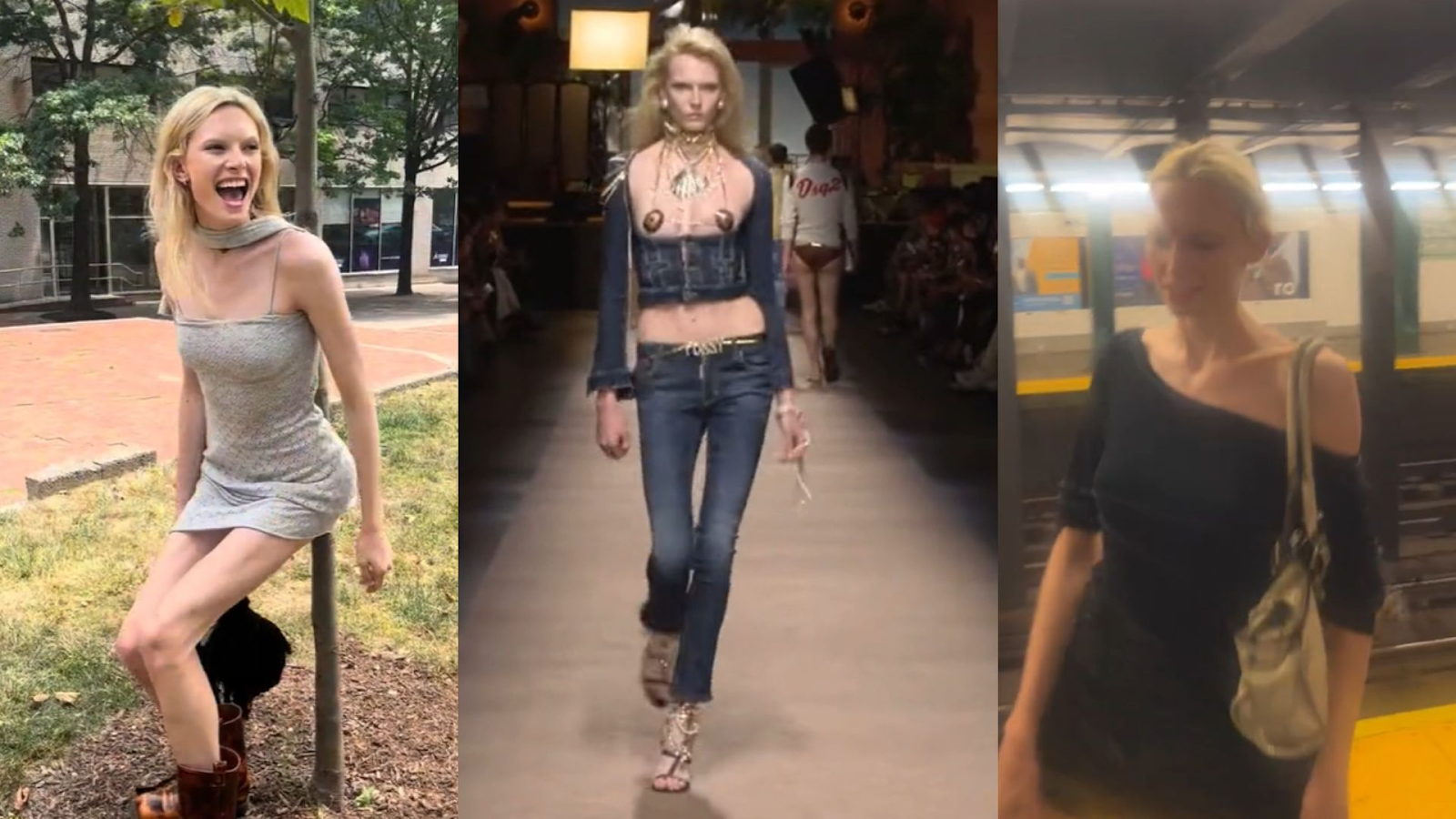
Alex Consani is an American model and social media influencer that has recently grown to fame within. Born July 23rd, 2003, Consani grew up in the San Francisco Bay area of California. Although her modeling career began in 2015, Alex Consani has recently amassed a wide following with her presence on social media (specifically TikTok and Instagram). This popularity exploded specifically during the pandemic when Consani's modeling career was temporarily on hold.   


Consani's creative process is anything but ordinary. Her presence on social media has catered to a niche but wide audience particularly targeting Gen Z. Her bold face contrasts sharply with her carefree social media presence. Consani's approach to comedy is chaotic and sharp. Her skits and commentary often come across as shocking or even bizarre but are received well by her fans. Her unserious attitude with her comedy is an interesting departure from the often stiff and stale domain of high fashion. The fashion industry is extremely creative and consistently breaks the mold. With that being said, it is rare that models nowadays are praised for their individuality. Consani's wide fan base has given her notoriety both on and off the runway, humanizing the often ethereal world of high fashion. Her creative process is one of individuality and independence. Consani shows no fear when it comes to self expression.


Before her social media platforms took off, Consani made her runway debut for Tom Ford in 2021. She has since worked with various designers including Alexander McQueen, Versace, Mugler, Burberry, and Roberto Cavalli. Consani was additionally named one of Vogue's standout models last Spring/Summer (2023). 

When analyzing Alex Consani holistically through the lens of The Creative Spark by Augustín Fuentes, modeling, as an industry, relies heavily on creativity, aesthetics, and cultural trends. When observing what Fuetes has to say on creativity’s effects on humanity, one may argue that the modeling industry reflects human creativity through its constantly evolving standards of beauty, fashion, and expression. Models are not just individuals who wear clothes; they embody cultural ideals and trends, serving as canvases for artistic expression and societal reflection. Consani however is much more than one of many. Though she is indeed a canvas for art, she herself is an expression of art. Her humor and personality live within the stoic figure onlookers see on the runway. Although Fuentes didn’t explicitly address the modeling industry, his ideas about creativity, culture, and evolution provide a look into the industry's dynamics and trends.


References:

https://www.imgmodels.com/new-york/women/6794-alex-consani

https://www.elle.com.au/culture/who-is-alex-consani-tiktok-model/

https://www.vogue.com/article/alex-consani-tiktok-model-fashion-month

https://www.thepinknews.com/2024/01/26/is-alex-consani-trans/


Hidetaka Miyazaki: Creator, Collaborator, and Collector

Video games have been a part of pop-culture since their conception. They have served as a form of entertainment for many and one aspect that constantly draws people to them is the challenge they can present. Difficult games always seem to be popular and one type of games known as soulslike is at the top of the this genre. Soulslike games are very difficult RPG type games with expansive environments and lore. The name primarily comes from the Dark Souls games and their predecessor Demon Souls. These souls games have so many differences between them such as the type of fantasy setting, the gameplay mechanics, and the monster and boss designs; they have so many innovative features making them all extremely unique. The one thing they all have in common is their director, Hidetaka Miyazaki. He is responsible for Demon Souls, Dark Souls 1-3, Bloodborne, Sekiro, and Elden Ring, all of which are extremely successful soulslike games. 

There are a few reasons why the souls games stand out so much. One of the most notable stand-out features is their difficulty and gameplay which has made them extremely notorious for how hard they are. Miyazaki says that he didn't create the games to be difficult but rather he wanted to create gameplay that gives players a true challenge and a sense of accomplishment upon beating the challenge. In addition to the difficult aspect of the games there is the mechanics of the gameplay. The mechanics differ widely between each of the games but what is very interesting about Miyazaki's process of creating the games, is that he comes up with the gameplay mechanics first and builds the world around them. A prominent example of this is the respawn checkpoints in all of the games. The most recent game Elden Ring uses checkpoints called Graces. The mechanic of this came first and drawing from other aspects of the lore their existence and gameplay mechanic can be explained by the in-game lore. Other games likes Sekiro also draw some lore from their mechanics, the parry and stance system in Sekiro gave way to the shinobi type gameplay.

The other main standout feature of these games is of course the lore. The games have a very unique way of storytelling; they are extremely vague and the lore is not outright told to you, it is revealed through subtle dialogue and descriptions of items found in the game. Miyazaki explain his reason for writing this way is that as a child he only had access to books he couldn't fully understand so he used his imagination to fill in the blanks and basically created his own stories. Since this was a form of storytelling he was familiar with, it found itself within his games. In his late college years he continued to read, he had quite an interest in the works of George R. R. Martin and stories like Berserk and Devilman. He attributes much of his storytelling inspiration to these works. These dark fantasy aspects are very apparent in his works. In the Bloodborne DLC there is a boss fight with The Orphan of Kos, this boss was literally just born from its dead mother and immediately gets attacked by the player. This is obviously a horribly dark part of the story and paints the player in a dark light. This ambiguity of good and evil further illustrates many of the dark fantasy storytelling he has drawn from other sources.

In addition to these direct influences, Miyazaki also works with other to help create his worlds. In his recent game he actually worked with George R. R. Martin in creating the lore. Miyazaki created the world the player is in and all the characters and then worked with George R. R. Martin to create the backstory to the game. 

Many creators create their products before giving them meaning. Miyazaki creates his gameplay and creates the lore around it giving the gameplay mechanics meaning. In a similar vein songwriter Nick Cave talks about a similar process with writing his songs. He explains how he can write entire songs while having no idea what the meaning of it may be, he then builds the meaning of the song around what he has written and already created much like how Miyazaki creates his meaning/lore around his already created gameplay. This way of creating is always super interesting and takes a real creative mind to find meaning in something that is seemingly meaningless.


Sources:

https://www.youtube.com/watch?v=cq_mpGh31bA

https://www.gamesindustry.biz/miyazaki-vs-ueda

Olivia Rodrigo

 Olivia Rodrigo, while now known for her multiple grammy nominations for her albums SOUR and GUTS, started off at 12-years old as a disney actor. Her first role on Bizaardvark (Disney TV show), allowed her to learn to never be embarrassed about her emotions and helped her conquer her emotions early on, to set her up later to be a brilliant songwriter. She also starred in the Disney show High School Musical: The Musical, which she left after three seasons to pursue new professional opportunities. She soon signed with a new record label and tried hard to forge a new path that wasn’t the disney star turned pop star like some of the others in the industry (ex. Miley Cyrus, Selena Gomez). 

Olivia Rodrigo’s creative processes depends a lot on journaling. Which she claims she has been doing since the ripe age of thirteen. When writing her newest album GUTS she read Julia Cameron’s book “The Artist’s Way”, and learned about the morning pages technique. Which is first thing in the morning is writing three pages of your conscious stream of thoughts and getting it all out, handwritten on paper. She found that this had a very positive impact on her mindset and creative process, and she found it very clarifying. This technique is meant to do exactly that, clear one's mind and fight against the creative death (the idea that your creativity will be negatively affected if everything you do is to monetize it or put it in the public eye where everyone can criticize it). Instead this process allows you to write just for you, and helps you connect to your own creative truths. By physically writing it down it makes it a physical task not a mental act. Rodrigo accredits her creativity to the book “Big Magic” by Elizabeth Gilbert”, which she read for the first time while writing her first album. She claims this is the only book she has ever read more than once and claims it was extremely influential in her creative process. 

This connects to my focus book The Creative Spark because Fuentes writes about creativity breeding out of necessity. That first we build the things we see as essential and then when mistakes or  beauty slips in we find a way to make it different and pleasant, and therefore creativity is born. This can relate to Rodrigo and her journaling. She uses journaling as a way to clear her head and calm her mind, and she pulls inspiration from those words that can be used for her songwriting and enables her to see what she wrote in different ways and use it to create lyrics.

Saturday, April 6, 2024

RAUW ALEJANDRO THE COLLECTOR


    Whether you love reggaetón or are not too familiar with Spanish, Rauw Alejandro is a name that is constantly growing in pop culture. Found in the same sphere as Tainy, Daddy Yankee, and Shakira to name a few, Rauw Alejandro makes a name for himself through his creative music and dance choreography. One could argue that he is a modern day Big C Creative in domain of Latin music. 
    Born in 1993, Raul Alejandro Ocasio Ruiz grew up in the quiet city of Canovanas, Puerto Rico. He was raised by his guitarist father and backup singer and dancer mother until they divorced in 2005, where he lived with his mother permanently. Raul went to school in the busy city of Carolina, Puerto Rico having dreams of becoming a professional soccer player. By the age of 20, Raul saw that his soccer career was not taking off and witnessed his mother face constant financial hardships. In a Billboard interview Alejandro said this period of his life was rough, having adversity stacked against him. Yet, music was his therapy, "like a medicine to get away from every problem."  He would sing and dance with friends during his hardships  and they were the ones who ultimately pushed him to pursue music. 
    Commonly seen with the same musical caliber as Bad Bunny, Rauw's journey is both unique and influential to his creative process and motivation to make music. His career started back in 2014, making songs on the audio streaming service SoundCloud. By 2019, Rauw made a name for himself when two of his songs made the top charts in the US resulting in him receiving the Best Urban Fusion/Performance in 2021 Latin Grammy. Rauw stands out from other singers because his creative process is presented through his work and personal life. 

    Rauw Alejandro's albums "Afrodisíaco", "Vice Versa", "Saturno", and "Playa Saturno" and his performances of them are the creative products he uses to express himself and connect to his listeners. An example of this at work is the video above. This is a live performance of the song " Desenfocao' " which is featured in the album "Vice Versa", in English the title of the song translates to "Out of Focus".  It is about the emotional conflict and numbness that is involved with heartbreak all while trying to live a lavish lifestyle. Alejandro uses storytelling alongside calculated choreography to express topics and themes that he has experienced that he wants his fans to understand and relate to. The beat of the song captivates the  audience, the movements express emotion, and the lyrics carry Alejandro's message. This is just one of many examples, this pattern can be observed in all of his other live performances. 


    In our class we have discussed collecting and how it influences the concepts we have about the world around us and how it plays a significant role in the Creative Process. Alejandro uses the personal experiences he has collected throughout his lifetime and incorporates them into his work to communicate his feelings in an art form he appreciates all while engaging with listeners. In the same Billboard interview mentioned above, when being asked what he would do if he was not a musician Alejandro responded with, " I think I'd be an architect. I like to design and create and draw". His response conveys his desire to express his life in meaningful ways, sharing the concepts of the world he has developed throughout his childhood and beyond. Alejandro's collecting is allowed him to build his own concepts leading to the integration of new information via his prior knowledge of the world around him. His collection of childhood hardships and interests in music and dance are the stories he wants to tell. Once he was given a platform, he brought his childhood and made sure that listeners were able to learn something from him all while enjoying a catchy tune. 
    In Rubin's The Creative Act: A Way of Being, he discusses the goal of creative works is to not to fit with a status quo, but amplify our differences as individuals. Rauw works with this philosophy in mind, he does not hide who he is or his experiences - he celebrates them. He shares his special characteristics that have helped him with his unique approach to seeing the world around him. Additionally, Rubin mentions that the purpose of creative works are to awaken something within us, then awaken something within others. Rauw is constantly finding ways to change is approach to new music, whether it is interacting with producers or engaging with other artists in collaborations. Looking at his entire discography, Rauw changes beats and genres that end up inspiring him with new ideas and those ideas end up with his fans. Ultimately, Rauw uses his collecting to define creative process and establish his music and choreography as an artist


(My favorite song by Rauw Alejandro is Todo de Ti, here is a video)