Sunday, November 9, 2025

Richard Feynman's Scientific Method

Richard Feynman was a Nobel Prize-winning scientist who creatively worked to make developments involving quantum electrodynamics, the superfluidity of liquid helium, and the decay of particles. He famously articulated the scientific method and applied it to his own groundbreaking discoveries. The first step is observation, and using that observation to develop a question. When Feynman and other physicists were studying particle movement in the 1930s and 1940s, they ran into the problem that the result of interactions between electrons and photons was infinite answers, which wasn't physically possible. He then went into experimentation in order to produce his Feynman diagrams, breaking down the the interaction between particles step-by-step. These diagrams allowed him to make mathematical predictions of how the particles could interact. The accuracy of his discovery earned him the 1965 Nobel Prize in Physics.


In The Creative Spark chapter "Scientific Architecture," Fuentes discusses the approach to the scientific method and how it is a creative process. Typically the scientific method begins with an observation about the world, and creativity is sparked when the curious observer proposes an explanation, experimental method, or guess that seeks to explain the wonder. Fuentes writes that "the goal of science is to develop the best questions and improve our understandings, not to know all the answers" (249.) The process is very important, as experiments work to continually disprove theories rather than define a certain one as law or fact. The more experiments that are considered "failures," the closer one gets to finding a more probable explanation. Feynman encapsulated Fuentes' idea on eliminating possibilities to discover a more accurate explanation by taking the answer from infinite answers to a very accurate predictive method.

Similarly, Feynman stated that "if it disagrees with experiment, it's wrong," highlighting his use of the scientific method to test against reality and what is known. Pushing the limits of "known knowledge" in order to discover new techniques is how creativity is applied to science. Lots of his experiments were rooted in skepticism, encouraging other scientists to doubt what is considered known. Feynman used the scientific method that Fuentes described in his observation of electrons and photons and his experiments in particle interaction. His creativity is evident in his creation of the Feynman diagrams, his mapping of particle movement, a method to describe these interactions that was before unused by other physicists.

Jerma985: Empowering the chat


Jeremy Elbertson, better known by his online alias Jerma985, is a content creator known for his unique and innovative steam and video ideas. Jerma switched from creating gaming-based youtube videos in 2016 and began livestreaming on Twitch. What distinguishes him from his colleagues is the diversity in the content he streams and his willingness to fully commit to bits that come up during his streams. He often goes the extra mile to physically act out scenarios and edit his camera setup, interrupting whatever he is doing in order to creatively explore the comedic potential of an in-game moment or chat comment. Streamer-chat conversation is a big part of Twitch streaming, but Jerma takes it the extra mile by making conversations with chat the priority and treating the game he’s playing as secondary. In the 2020s, Jerma started putting on and streaming big events with high production value, most notably his 2021 livestream, The Jerma985 Dollhouse.


The Jerma985 Dollhouse was a three day long event during which Jerma lived in a prop house and the chat was able to vote for him to take action. This upends the typical Twitch model of the streamer having control over the stream and the chat just being able to watch and donate. Instead, the chat makes the choices and controls the direction of the stream, as if he was a character in a video game which the chat was playing. The visuals and mechanics of this control were based on the life-simulation game series The Sims. This viewer-artist reversal of control is reminiscent of performance art like Marina Abramović’s Rhythm 0 (1974), in which the audience was able to use a variety of pleasant and harmful objects on the artist in any way they chose. During the dollhouse chat’s decisions started out helpful, keeping all of his stats up, but quickly trended towards putting him in comically and fantastically unsafe situations, like being thrown through a window, fighting a fire, or being mauled by a man in a bear outfit. Due to chat being in control, there was no clear way of knowing which direction the stream would take. Jerma’s creative process involves a dependence on improvisation, only making a general outline for the event instead of a script to account for this unpredictability. This paid off and the stream was a big success, winning the award for Best Streamed Event at the Steamer Awards.


Jerma also believes in people fostering their own creativity. He noticed it was difficult to find royalty-free greenscreen videos of people doing things, so he created his own pack of greenscreen videos of himself and released them for free. They are comedic, but the idea is that they would be a resource for people to make their own projects and pursue their passion for video editing without being blocked by paywalls or a lack of content. Some of them have even made their way into corporate videos. In The Code Breaker, which focuses on Jennifer Doudna’s development of CRISPR gene editing technology, the author mentions biohacker Jo Zayner. In 2018, Jo injected herself with CRISPR designed to knock out the myostatin inhibitor, theoretically increasing muscle growth. While she has been criticized for unsafe practices and unsubstantial claims, Jo also sells at-home CRISPR kits for people interested in learning the fundamentals of gene editing. In this way, both she and Jerma place importance on improved accessibility for the general public in their respective fields.

María Zardoya: Blending Nature and Culture

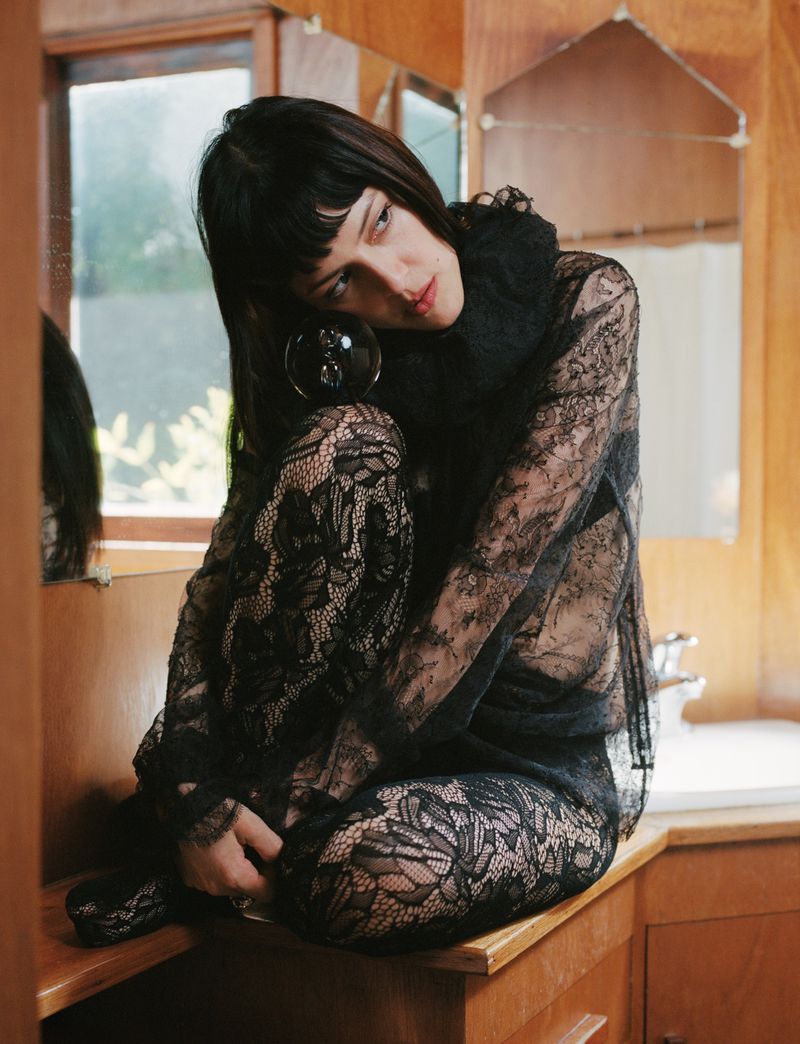
Heroine Magazine Issue 23 Maria Zardoya by Sophie Thatcher (Random cov -  YourCelebrityMagazines

María Zardoya is the front woman of the indie band, The Marías, and began making music from an early age. She first was taught how to play the guitar by her father and then gravitated towards writing lyrics to make her own songs. Coming from a Puerto Rican background, Latin culture has had a large influence in her music, and many of her songs are in Spanish. Her song “Cariño” originated from a nickname that her father would call her, a term of endearment and love.

    Cariño - The Marías

Much of her creative process comes from immersing herself into nature and living in the moment. Recently, she has come out with a solo project called "Not for Radio" and she talks about her inspiration coming from a creek for her song "Puddles". She also draws her inspiration from her film studies and uses this background to create her aesthetics. In The Marías first album, Cinema, María structured the main color to be red, which is the color of passion and love, since the album was inspired by the band members love for film. My personal favorite is her song "Swan" which was inspired by the animals, which are known to mate for life showing passion and simplicity for love. Swans were also significant elements to the branding of Cinema, so this song plays homage to the band as well.

Swan - Not for Radio

Puddles - Not for Radio

In my focus book, "Culture Care" by Makoto Fujimura, the main question was "is beauty essential to life?" and at the end he finally answers it and says yes. Beauty is the root of human nature, and it is at the root of our cultures as humans. Beauty is everything around us; in nature, in music, in art, but it is up to us whether we accept this beauty in our lives and value it. Connecting to María, I think she does value beauty and lives it. Whether it is through nature or her Puerto Rican culture, María finds beauty within even the simplest things and shapes it into her art. She allows herself to feel things and live in the moment, along with re-introducing those feelings into nostalgia within her music.

María of the Marías Announces New Solo Project 'Not for Radio'


Claude Monet

Claude Monet was a French impressionist painter known for his landscapes. He started drawing when he was 5 years old and gained attention locally for his caricatures. In the same year, his family moved to Normandy, France, where his father grew a successful ship-chandelering business. Exposure to the constant fluctuation of the ocean and weather in Normandy developed Monet's skill as an artist. He began sketching the ships in the ports of Normandy, learning to capture the movement and texture of the sails and wind. 

Monet became more interested in domestic scenes of families and gardens, often seen to be a celebration of middle class life. He eventually grew tired of this subject matter, known as "la vie modern" or modern life, and shifted back towards landscapes. During this transition, Monet became more interested in capturing the "impression" his subject gave him over producing edited replicas. He used wide brush strokes and color gradients to portray the sensations of his environment through color. Monet's most notable works, including "Water Lily Pond" and "Poppies," were after he transitioned to impressionism.


As Monet grew older, he began to repaint the same scenes to capture different angles and lightings. These paintings are displayed in groups, a notable example being "Haystacks" at the Chicago Art Institute, and showcase Monet's intimate knowledge of the natural world. 

Both Jennifer Doudna and Monet drew inspiration from the natural world. Doudna's childhood in Hawaii exposed her to unique biome with lots of ecodiversity. Though she did not incorporate her childhood environment directly into her work on CRISP-R, it stimulated her curiosity in science when she was a child. 

Kanye West's "I Feel Like That": When You Feel No One Will Understand

        In recent years, Kanye West has come to be known as a controversial figure due to his problematic comments but many people do not remember that West has not always been like this. West's controversial comments have been attributed to his bipolar disorder which he was diagnosed with during his 2016 The Life of Pablo Album tour but signs of his deteriorating mental health can be seen in his unreleased song I Feel Like That. I Feel Like That was first seen in the unreleased music video for his song All Day from 2015, only a year before his mental health diagnosis. Upon closer inspection of the lyrics, West is asking a series of questions that are commonly seen in mental health screenings. These questions include phrases such as "Do you feel tempered outbursts, that you cannot control?" "Feeling lonely, even when you are with people, feeling blocked?" "Feeling blue, sad, feeling disinterested in things, feeling fearful?" "Are your feelings easily hurt?" "Feeling that people are unfriendly, or do you feel like people dislike you?" 


        West most likely did not look up these questions, he most likely genuinely felt these things. West has always been a person that allows his emotions to influence his creations and this piece is no different. Despite the fact that this song ultimately went unreleased, the point still stands that West's emotions play a large factor in his creative process. Rick Rubin is a long time collaborator with Kanye West and in Rubin's book, The Creative Act, Rubin talks about how an artist's vision must be independent of their duty to society, how the artist must not allow society to limit the meaning behind what they are creating. This idea of freedom that Rubin talks about can be seen perfectly in Kanye West's I Feel Like That as West allows the listener a glimpse into how he truly has been feeling. 

Kohei Yoshiyuki's The Park; Exploitation, Immediacy, and Observation in Creativity

TW // Voyeurism

Kohei Yoshiyuki


While wandering the stacks of Loyola's oversized/art collection during my Freshman year, I stumbled upon a simple black art book tiled The Park - Kohei Yoshiyuki. Curious, I removed it from the shelf and scanned the contents, returning absolutely baffled from what I had seen. It was a life-changing artistic experience.

Yoshiyuki's provocative and intimate photographs of individuals messing around (and watching one another mess around) in public parks in the middle of the night are the types of creative and artistic endeavors that make me question to what extent photography is truly creative. In an interview with fellow Japanese photographer Nobuyoshi Araki, Yoshiyuki even goes so far as to say "Anybody can take photographs like these", and in this case he is referring to both the setting of the pieces as well as the technology used to capture these photos.

This above was one of the main connections I made with my focus book, The Code Breaker. Sometimes, it can feel like the main tool to solving a creative problem is to reevaluate what tools are right for the job. Just as Jennifer Doudna utilized DNA synthesis machines as well as x-ray crystallography to get what she needed done, and Yoshiyuki utilized Kodak's tricolor separation filters to shoot in the dark without emitting a harsh, obnoxious light.


All of this said, it is important to point out how deeply problematic and intrusive this nature of creation can be. In the effort to shed light on voyeuristic tendencies and creepy behavior, Yoshiyuki in turn can easily become the very off-putting subject he is photographing. While his works were revolutionary for their time, crossing boundaries and breaking borders often breaks them for everyone, and we must then wrestle with questions realted to the infamous "how far is too far?"


I would love to hear comments / input from anyone who decides to look into the photo series for themselves! Have a wonderful day!

The Bear that Bear-d Arms

 The story of the Wojtek is a perfect little microcosm of mutually beneficial domestication between two unlikely groups: the 22nd Artillery Supply Company of the II Corps of the Polish army, and a bear. In Augustin Fuentes’ “The Creative Spark” he describes the domestication of animals, primarily wolves, as a process that started as an unintentional evolutionary mutualism, but turned into an intentional, creative process for both species involved. Although turning an apex predator into man’s best friend took tens of thousands of years, Wojtek’s story is a bit more concise. 


1942 – Iran


A group of Polish soldiers, recently released from a Soviet Gulag, begin their journey to Italy to join the allied campaign, when they stumble upon a young shepherd with an orphaned bear cub. The cub was for sale! For the low, low price of a Swiss Army knife, a tin of canned beef, and some chocolate, the soldiers adopted Wojtek. As Wojtek grew, he was fed fruit, marmalade, and condensed milk out of a vodka bottle. The company also imparted some of their habits onto the bear cub, who gained a taste for beer and cigarettes. A soldier named Peter Prendys took a liking to Wojtek and trained him to salute, wave, march, and ride in trucks. 


Wojtek The Iranian-Polish War Bear ...


1943 – Palestine

A species used to the cold, brown bears are not acclimatized to mediterranean summers. To cope, Wojtek loved to take cold showers, and eventually learned to turn the water on and off by himself. When his water use became excessive, the soldiers banned the bear from showering alone. One June day, Wojtek, trying to get into the showers, found an enemy spy trying to locate the weapons arsenal in order to raid it. The bear terrified the soldier, causing him to scream, be found by the company, and surrender immediately. In exchange for his service to the company, Wojtek received two bottles of beer, and his shower ban was lifted.


1944 – en-route to Italy

Wojtek, who the company hadn’t revealed to army higher-ups, was found out. Pets weren’t allowed in the army. In order to skirt the rules, Wojtek’s position in the army is made official, and he is promoted to Private. 


1944 – Monte Cassino, Italy

In May of 1944, a series of four battles took place between allied and axis forces in Monte Cassino, Italy. The 22nd Artillery Supply Company was shipped in, and brought Wojtek along. The terrain was rough, and the outlook was glum. Allied powers had already tried and failed to break the Nazi stronghold on the German Gustav line in order to liberate Rome, but this time was different. There was a bear there. Wojtek, able to navigate the mountainous battle fields more easily than his human companions, carried artillery shells back and forth to the front lines. This helped, but arguably more importantly was his ability to keep morale high. Eventually, the Allies were victorious, Rome was liberated, and another step was made towards the end of the war. For his service, Wojtek is made corporal. 

Wojtek the Bear, adopted by the 22nd ...

After the war, Wojtek retired with the rest of his company in Scotland, where he lived out his life happily in the Edinburgh Zoo.


Wojtek the Bear | Private, Rank ...    


    Fuentes would agree that not only do we shape the animals around us, as the soldiers shaped Wojtek, but “they also tapped into our community niche and used some of our own physiology to shape us.” (Fuentes 109) The soldiers and the Wojtek made each other's lives immeasurably better. Wojtek went from an orphaned bear cub, destined to a life as a dancing bear in a circus, to a corporal with a cushy retirement, and the soldiers went from lonely and scared to entertained and comforted by an unlikely friend.