Tuesday, February 10, 2015

Dreaming the Dark: the Alien Artwork of H.R. Giger


     To say the artwork of surrealist painter Hans Ruedi (H.R.) Giger is bizarre would be an understatement. It is strange, kooky, grotesque, and alien in the truest sense of the word. His biomechanical landscapes - where flesh and machine spiral together like some kind tornado from hell - will remain fodder for my nightmares for years to come, and maybe yours too! So check for monsters under your bed, turn on your night-light, and let's talk about H.R. Giger. 


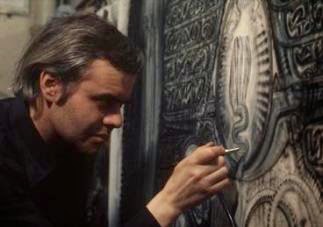
     Take a look at the guy on the right for a second. He's what we in the science world would call "creepy" (why is he holding that egg-thingy like that? It's a fake egg, right? Is he aware that it's fake? Should someone tell him?). But more than just looking nuttier than a squirrel working overtime, he is also -  in my book - brilliant. He's the kind of artist who made going to the museum fun when we were kids. He's the kind of artist who makes scary movies, scary. He's the kind of artists who, for me - and I'm gonna gush here - gives his audience a chance to look at reality in a completely new way. Take a peek at some of his landscapes and tell me you disagree...


     I can't speak for you, but for me, these "biomechanical" (really big theme in Giger's work) paintings are consciousness-expanding. They are alien art forms, and while they are pieced together with elements of reality (we'll talk about this more later), their points of focus exist in a dimension far removed from our own. 
     
     So what causes an artist to become as freakily psychedelic as Giger? All jokes aside, Giger actually lived a very troubled life. While he never said anything explicitly - or at least he didn't to my knowledge - he strongly hinted that some kind of trauma occurred in his youth, maybe even infancy. In interviews, he often cited recurring dreams, particularly those revealing painful truths about the darkness of the past, as primary sources for his art. In fact, what's interesting about Giger, and perhaps what makes him such a natural creative, is that his artwork doesn't seem to have arisen from a want, rather it arose from a need, an urge to self-heal and cope with the murky evil lurking in his psyche. 

     Giger never set out to be a professional artist (the interest was there, but his family didn't approve). He studied industrial design and architecture in Zurich, this period of schooling probably being the source of his masterful skills of drawing and painting which would allow his later career to flourish. Unfortunately for Giger, these college years sound like they were a stressful time. He struggled with severe anxieties about pain, women, and death; and always below the surface - lurking in the shadows of his unconscious and popping its head up in dreams and fantasies - was some terrible psychological force of unknown origin. For Giger, art became a tool for externalizing his emotional darkness. In his words, when he felt the need to "work it out" he would turn to drawing or painting, giving form to the invisible monster breathing down his neck. His artistic process became "like a kind of exorcism". Doing a little research, this "exorcism" that Giger described sounds like a legitimate, psychological event, and one I would imagine lots of artists experience. Through the functioning of a mental mechanism that psychoanalysts have termed: the creative imagination, people (and artists especially) can enter a state of extreme creativity, during which "the barrier between the id and the ego...temporarily [becomes] permeable. Impulses reach preconsciousness more easily than under other conditions, and their translation into formed expression can proceed painlessly" (K Ernst 485). 
     For those out of the psychology loop, an id is a psychological structure that exists, for the most part, below conscious awareness. In it is contained all carnal instincts humans inherit at birth, most of which are negative and aggressive in nature, and that are suppressed by the ego. Creative imagination is the capacity to suspend the ego-id conflict and express one's impulses more easily. Granted I'm not a licensed psychologist, but I've got to believe there is some validity to this theory, and I'm really compelled to think that Giger was victim to an extremely tense ego-id relationship, which he attempted to pacify through his creative expression. 


     Giger's "exorcisms" eventually paid off...big time. Famed director Ridley Scott was in the business of finding an artist brilliant enough to create a monster that was terrifying enough to make his movie Alien a box-office hit. Around this time, Scott was introduced to Giger's work and artistic style through Giger's infamous Necronomicon, a bound collection of some of the artist's more...shall we say...grotesque pieces. Scott ate it up and Giger was hired to design the film's monster and extraterrestrial set, earning the little-known artist an Oscar. From this point on, there was no turning back. Giger was launched into world-wide fame which allowed him to realize some of his far-fetched dreams. Giger eventually designed and built the H.R. Giger Bar, a "total environment" which welcomes its guests into the belly of the beast. The place is hard to describe in words, so take a look...(and yes, that is a wall of baby-heads...but they're not real...I hope)                                                                                  


      So beyond the fact that I really like the guy, what makes H.R. Giger so special compared to any other run-of-the-mill creative? I could go on and on, but I'll try and narrow it down to only a few points. First, he has the ability to completely shift reality in whatever direction he wants to. The imagination's creative capacity is limited by its owner's perception of reality, which basically means that our fantasies can only build new images using elements that already exist in the real world. Therefore, a person's creativity can be judged by the degree to which he or she is able to break down these "elements of reality" into progressively smaller pieces and create something completely novel out of them. Take a look at any one of Giger's paintings and you'll see he was a master at this.      
     Second, but kind of going off of the first, Giger was able to depart from reality, while still holding on to it. It's really hard to explain, and kind of paradoxical to the first point I made, but basically you can look at Giger's work and find things that are concrete and recognizable - like the images of robots, pipes and wires - but they exist at a level that is completely surreal. For example, in the picture below, you can pick out metal and mechanical materials, but they're all mushed together in some kind of fluid, vibrating mess. Giger described this quality best in his own words: "having been a professional industrial designer it means a lot to me to have a design show its symbolism as well as its functional aspect clearly". One of Giger's biggest fans, direct Ridley Scott, cited this relationship between reality and unreality as the most powerful aspect of Giger's style. In Scott’s words, Giger's art had “an extra quality…of one of the most frightening things of all, a quality of reality, combined with his own form of fantasy”.

     Third, and in my mind this is what makes him a truly great creative, Giger's aesthetic has the incredible power to completely polarize his audience, i.e. people either love or hate his work. There are lots of people out there who find his paintings grotesque, and then there are weirdos like me who eat them up, but for as long as I have loved Giger, and I have loved him for awhile, I have never encountered anyone who didn't feel something extreme - in either direction - towards his work. When it comes to Giger, people don't sit on the fence.  
     So hopefully those of you reading this post will have come to adore Giger as much as I do. On a side note, I am very sad to say that H.R. Giger died in May of last year. In the words of his family, Giger was a "loving husband, selfless friend, and supremely talented artist". My heart goes out to those closest to him as they mourn the loss of such a miraculous person who brought such terrifying beauty into the world. 

R.I.P  - H.R. Giger 

Sources and further reading/watching: 

https://www.youtube.com/watch?v=LjLamj-b0I8
K. Ernst (1953). Psychoanalysis and the study of creative imagination.
        Bulletin of the  New York Academy of Medicine. 1953 Apr ;29(4):334-51.


Monday, February 9, 2015

"No No No" to Rehab - Amy Winehouse

There is no question that Amy Winehouse had talent from a young age. At the age of 12, she was accepted into the reputable Sylvia Young Theatre School. But as her expulsion at the age of 16 foreshadows, Winehouse would continue to struggle with authority and drug abuse throughout her life.

Image result for Amy Winehouse

Nancy C. Andreasen recalls in her article the popular  notion that creativity is hereditary and "that genius appears to have a strong genetic component." This observation rings true as Winehouse had several uncles that were jazz musicians. Surrounded by music at a young age, she integrated stylings of Ella Fitzgerald, Ray Charles, and Thelonious Monk into her own personal sound. These influences, in addition to the encouragement she received through music education, propelled her into a multi-platinum career.


Winehouse's debut album Frank (2003) earned her two BRIT awards, an Ivor Novello, and double platinum status. Quoted in an early interview, Winehouse said, "all the music around...was a bit dull, so I just started writing music to challenge myself, to write my own stuff." This mindset fits Andreasen's observation of the correlation between creativity and persistence. Unfortunately, due to her creativity, Winehouse also "[had] to confront doubt and rejection." Andreasen mentions that "psychic pain" derived from rejection "[led creatives] to attempt to reduce their discomfort by turning to pain relievers such as alcohol.


Consequently, the jazz vocalist was not only known for her musicality and soon gained notoriety in addition to fame. Often arriving at venues or performances inebriated, Winehouse soon was asked to enter rehab by her producers. Deciding to dump the company and create Lioness, Winehouse used her obstinacy as inspiration for the hit single "Rehab." The song's recurring lyrics of "They tried to make me go to rehab but I said, 'No, no, no.'" emphasizes the singer's dependency and flippant attitude towards drug abuse. The popularity of the song, however, escalated and encouraged Winehouse's insecurities and vices.

Winehouse wrote several songs that were inspired by her frequent visits to clubs and bars such as "F*ck me Pumps" and "You Know I'm No Good." Her honest and scandalous lyrics fed into her controversial public image. By addressing her behavior, Winehouse drew attention to pointedly ignored subjects such as promiscuity and dependency on drugs. The public's shock at the singer's lifestyle sharply contrasted with its attraction to her work as an artist. While tabloids and headlines sold Winehouse millions of albums, her music gained popularity exponentially. She not only brought jazz and R&B music back into pop culture, but also the public fascination with celebrities and their problems.


You can watch her music video for "Rehab" here:


After breaking the record for most Grammy Awards won in one night with six awards, ending her toxic marriage, and a comeback in 2009, Winehouse became a victim of accidental alcohol poisoning in 2011. Her legacy continues, however, as current celebrities such as Lady Gaga, Kate Moss, Lily Allen, and Bruno Mars create tributes in her memory. Moreover, her iconic look and sound prevail as her fans keep her relevant in pop culture. Amy Winehouse may serve as yet another example of creativity falling victim to substance abuse, but her contributions to the music industry are timeless and singular.

Resources:
http://www.theguardian.com/music/2011/jul/23/amy-winehouse-singer-death-london
Amy Winehouse. (2015). The Biography.com website. Retrieved 10:08, Feb 09, 2015, from http://www.biography.com/people/amy-winehouse-244469.
Andreasen, Nancy C. "Secrets of the Creative Brain." 2014.

Better Call Vince


            By 1994, Vince Gilligan was still waiting for his big break. The 27 year-old screenwriter had graduated from NYU on scholarship five years earlier and had seemed destined for immediate stardom after he won a screenplay contest only months after graduation. Yet only two of his screenplays amounted to anything within this stretch of time—the money then disappeared, as did his writer’s guild health insurance.


            Thirteen years later, his opportunity arrived. By then, Gilligan was on the television world’s radar after his seven year stint during the late 1990s and early 2000s as a producer and writer for The X-Files. But in 2007, Gilligan approached AMC executives and laid out his new idea: the story of a high school chemistry teacher who discovers he has terminal cancer. In order to provide financial security for his family after his death, he teams up with a former student to cook and sell meth. The idea of Breaking Bad was born, which would finish as one of the most phenomenal shows in TV history.


            Mihaly Csikszentmihalyi describes the creative process as dynamic interplay between three nodes: individual talent, the domain (category), and the field (peers, critics). It is helpful to examine Gilligan’s creation in light of these three areas.
            Gilligan’s talent and motivation were evident from his youth. As a child outside of Richmond, Virginia, he made science fiction movies with his brother using an old Super 8 film camera. College provided him with the opportunity to share his talents, and his old professors have noted that class attendance was unusually high on days that he presented his work. Gilligan’s long experience in film-making allowed him to develop a keen sense of perception and attention to detail— in his work today Gilligan is meticulous to the point of perfectionistic. Brainstorming sessions with co-writers tend to be exhaustive and smaller details such as the correct color shade of a character’s shirt must be right. Gilligan’s choice for playing Breaking Bad’s main character Walter White perhaps best exemplifies his insight. Gilligan recognized actor Bryan Cranston’s potential from a single episode of X-Files in 1998 and so he cast him to play White, even though Cranston was famous at the time for playing oddball characters in shows such as Malcolm in the Middle. Breaking Bad’s existence alone points to Gilligan’s genius, considering that the idea for it emerged from a casual joke with a friend.  


            By examining Gilligan at the individual level, it is also important to note that in certain ways he is an outlier amongst creators. Famous creative individuals are commonly seen as leading imbalanced and oftentimes turbulent lives outside of their domain. Howard Gardner concludes that the creators he studied were each involved in a Faustian Bargain, meaning they will make sacrifices (usually in their personal lives) in order to fully focus on their task. Yet Gilligan is described as a remarkably amicable and easygoing man who has remained with his partner Holly Rice since 1991 (unusual among Hollywood stars). Gilligan’s personality may be especially surprising considering the dark themes of Breaking Bad. This is not to say that he has not had to make sacrifices, but it is clear that he leads a healthy personal existence without compromising his work.
            Just as Gilligan excels in noticing potential in other people and ideas, those who saw the same in him were invaluable in nurturing his creative ability. Gilligan’s father exposed him to Western classics and his grandparents provided their curious grandson with boatloads of books. Producer Mark Johnson (who worked on Breaking Bad with Gilligan) noticed his ability while serving as a judge during the 1989 contest that Gilligan won and set him up with an agent in Hollywood. Yet perhaps the most influential figure in Gilligan’s life was art teacher Jackie Wall, his best friend’s mother, who lent Gilligan her camera in his youth and encouraged his film-making projects with enthusiasm. Today, Gilligan is known for being quite involved in interviews and fan events compared with many other producers, reflecting a genuine desire to hear feedback from fans and critics alike. Yet at the same time, he has said that he avoids the internet to ensure he doesn’t allow public opinion to completely alter his writing plans for a series.
            Lastly, the ultimate success of Breaking Bad reveals Gilligan’s creation was timely in the domain of the television industry. Interestingly, widespread success proved elusive for Breaking Bad during its first few seasons. Yet thanks largely to Netflix it eventually was discovered: the season finale of season 4 reached only 1.9 million viewers (which was an improvement at the time), yet amazingly the finale of season 5 was watched by 10.3 million people! Not only is Breaking Bad known for violence and gore that other hits such as The Walking Dead have capitalized on, but the moral ambiguity that defines the show came to be embraced by mainstream society. Gilligan’s ability to create relatable characters undergoing significant character development is another reason for its success. 
            J.C. Kaufman and R.A. Beghetto (2009) provide a more developed model of creativity that expands on the traditional “Big-C and little-c” division of creative thinking by introducing “pro-c” (between “Big” and “little”) and ‘mini-c” (below “little”, refers to a basic and personal level that looks at childhood creativity). Before Breaking Bad fully emerged as a hit show by season 5, it could be argued that Gilligan fit best in the “pro-c” category, but now that public opinion has overwhelmingly approved of Gilligan’s creation there is no doubt that he is a “Big-C” creator. The only question now is whether Gilligan merits inclusion in the subcategory of “greatness” or a level above: “legendary”. As he is still relatively young, perhaps it is too early to make this evaluation.
             Last night, Gilligan’s work returned to TV screens across America with the debut of his Breaking Bad spinoff Better Call Saul, which follows Walter White’s colorful lawyer Saul Goodman six years before Bad takes place. Considering the premiere set a viewership record and that AMC has already decided to renew the show for a second season, we can expect many more good things to come from the great minds of Gilligan and Co. in the coming years.


For more on the topic:
http://www.nytimes.com/2011/07/10/magazine/the-dark-art-of-breaking-bad.html?pagewanted=all&_r=0
http://www.ew.com/article/2013/09/30/breaking-bad-series-finale-ratings
http://richmondmagazine.com/news/vince-gilligan-holly-rice/
http://time.com/3694327/interview-vince-gilligan-better-call-saul/
http://www.hollywoodreporter.com/live-feed/tv-ratings-better-call-saul-771750


Queen Bey & the Commodity of Creativity

Beyonce. Queen Bey. The social media world prefers to consider her the leader of our nation over President Barack Obama. She’s kind of a big deal.

She has been a performer for most of her life, and first became famous as a member of the girl group Destiny’s Child. However, her solo career was unprecedented. She released several hit songs initially, but some time in the last few years, Beyonce became a queen. Was it because she married a king named Jay Z? Or was it because she has a kickass team working for her behind the scenes? Or did Beyonce really just wake up like that?

She has over 26 million followers on Instagram, making her the fourth-most highly followed Instagrammer (only behind Instagram itself, Justin Bieber, and Kim Kardashian). What is it about Beyonce that makes her get well over a million likes on multiple pictures from the Grammys in a matter of hours?


Beyonce knows what the people want. Yes, she (or whoever runs her account) posts glamorous pictures of her smiling and holding her awards. But you know what else is in those pictures? Stretch marks are visible on her breasts, even from a small, square-shaped photo that can’t be zoomed on a smartphone. There is also a picture of she and Jay Z snarling while showing off all of the awards they’re bringing home to Blue Ivy. Beyonce isn’t just another celebrity – she’s a real person.

“You have the same number of hours in your day as Beyonce.” This is a viral quote that can be found on motivational coffee mugs all over the Internet. Yes, Beyonce is queen, but she’s just like us, so we can be Beyonce too. Not our own version of our best selves, but BEYONCE.

She could have the best choreographers, trainers, stylists, managers, musicians, songwriters, etc., but Beyonce’s creativity is found in her brand. She has self-constructed a brand for herself that outshines any other celebrity in the world. Justin Bieber and Kim Kardashian may surpass her in Instagram followers, but both are universally considered jokes. Beyonce, however, is the real deal.

In November, she released “7/11”, the newest song from the BEYONCE Platinum Edition. The music video for “7/11” is incomparable to anything she has ever done before. BEYONCE was principally a video album, with high-budget videography. Her surprise album took the world by storm, and “7/11” did the same, but in a different way.

You can watch the video here: https://www.youtube.com/watch?v=k4YRWT_Aldo

Its low-quality, unprofessional style again brings Beyonce back down to earth. She may run the world, but she can also dance around in her underwear and knee pads with her girls, even with a young daughter. She can be goofy. She can be real.


Okay, do we actually believe that Beyonce drinks out of red Solo cups? Probably not. She also gives monumental performances like at the Grammys this last weekend. Was her glowing, white figure at all realistic and relatable to the typical American woman? Not at all. Everything about Beyonce at the Grammys was on fleek. But who cares if it’s real or not? It’s Beyonce, and she’s making bank off of the fact that she knows what you want to see.


Beyonce has accomplished for decades now every solo performer’s goal: “how a single body can capture and hold the audience’s attention” (Hagendoorn). It wasn’t that anything Beyonce was doing in the “7/11” music video was particularly striking. To the sensitive eye, her dress might be revealing. Her twerking may be seen as difficult or inappropriate to others. But anyone, any child even, could spin in an office chair and clap their hands. So why do we want to watch her so badly?

“Minimal and conceptual dance can be boring at a perceptual level, but intellectually interesting . . . which explains why, over the course of a career, the work of many artists becomes more complex and subtle.” Yes, the choreography and videography is simple, but it also says a lot more than just a dance. It defines Beyonce and her brand.

Beyonce’s brand has been developed by contrast. This is why audiences can enjoy her feminist song “Flawless” featuring Chimamanda Ngozi Adichie embracing equal rights while simultaneously enjoying “Partition” in which Beyonce is speaking to her husband “Take all of me, I just want to be the girl you like.” This is why she can dance in her bathroom while getting ready, but still rock the Grammys like an angel.

Beyonce may have began her career with natural talent and intrinsic motivation for creative, but she is currently a superstar because she knows how to please audiences worldwide. It’s difficult to put a dollar sign to creativity and artistry, but that’s exactly what Beyonce has done. And she isn't apologizing.


Hagendoorn: Hagendoorn, I. (2011 ). Dance, choreography and the brain. In F. Bacci and D. Melcher (Eds.) Art & The Senses. New York, NY: Oxford University Press

A More Inclusive Font

Dyslexia is a learning difficulty that affects the ability to read and comprehend languages, despite levels of intelligence.  A person can be born with it or develop it later on in life, but either way it creates problems with language, but verbal and visual.  Many people live with various levels of this condition and all of them must find a way to successfully navigate languages that don't always make sense to them.

A Dutch graphic designer, Christian Boer, has lived with dyslexia his whole life and decided to do something to help himself and others.  The most classic problem with dyslexia comes when reading languages written with Latin characters.  Many of the individual letters look incredibly similar, and this is where the confusion comes from.  For example, the letters p, q, d, and b present the biggest problem.  There are also issues with c and e, among others.  They are often difficult to distinguish between and this creates the problems with reading comprehension.

To counteract this, Boer has created a completely new typeface that he believes will help.  Dyslexie aims to highlight and create differences between letters so that they are easier to tell apart.  Boer said that as he studied for a hard final one night, the letters on the page would not stop spinning around, making it nearly impossible to read anything.  The biggest feature of Dyslexie is a heavier line thickness at the bottom of the letter.  This helps to anchor each character and stop it from spinning around.


The problematic p, q, d, and b are slanted to create greater differences.


Some letters are given slumps or bigger gapes.


Lengths of certain letters are exaggerated as well.


Letters are bolded to signal the start of sentences.

There are many other features to the font as well, such as spacing, letter heights, and even text layout.  While thorough research has not yet been completed, the creators have seen promising results from tests done at the University of Twente.

Though this idea may not change the world, it embodies little-c creativity.  Boer was faced with a problem every day and knew he was not the only one going through it.  So he did something about it.  As people continue to work on this font, it will only get better and more effective to help those with dyslexia.  Maybe in the future it will be used as regularly as Times New Roman is nowadays.  For today though, you can download the font for free at their website.

http://www.dyslexiefont.com/

Saturday, February 7, 2015

The King's Creativity - Michael Jackson

The King of Pop as we all know him, Michael Jackson has had a huge influence on the world of music; he has revolutionized performances.  Michael Jackson was an iconic artist who touched the lives of many through his creative genius.
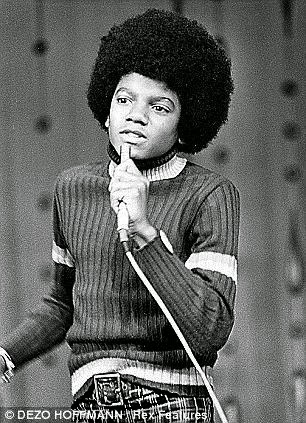
Young Michael performing 
(http://www.fanpop.com/clubs/michael-jackson-the-child/images/15625139/title/sweet-michael-photo)

Michael Jackson was a prodigy; from a very young age he was composing songs in his head using
only his voice.  This showed his great ability for mental imagery from an early age.  As a child he wrote the song “Beat It” that became one of his biggest hits.  His childhood and family were factors that contributed greatly to his creativity because his family was a family of musicians, and he was propelled to enter the music industry.  His father was a passionate orchestrator of the Jackson 5.  He is however blamed for physically and psychologically abusing his children and forcing them into a fame filled life.  When Michael described his childhood he says “I had great times with my brothers, pillow fights and things, but I was, used to always cry from loneliness…I didn’t have friends when I was little.  My brothers were my friends.”  Michael’s childhood was filled only with music and recordings, he recounts that “I would go to the recording studio and record, and I’d record for hours and hours until it’s time to go to sleep.”  Although his childhood was filled with the ability to do what he was most passionate about, it was also lacking a real childhood of friendship and fun, which impacted his later life as an adult.
The Jackson 5
(http://www.morethings.com/music/michael_jackson/michael_jackson_photo_gallery01.html)

Michael Jackson doing the Moonwalk
(http://hdwallpapervault.com/michael-jackson-dancing-moonwalk.html)

Michael Jackson was definitely a Big C creative; known all around the world for his work. His product was culture changing; one can argue a new development of pop culture by the King of Pop himself.  His uses of mental imagery lead him to create many iconic dance moves.  He would use problem solving to figure out new ways of achieving a certain move he envisioned.  His legendary moon walk and hip thrust are a few among the many moves that he created.  He choreographed the dances for his songs and spent hours teaching his dancers.  In his interview with MTV News he says,   “I want to create, you know do something that’s totally different and unusual.” His goal was to surprise people and to make people enjoy his art; the music, dancing, and overall performance working together. 
Michael Jackson doing the pelvic thrust
(http://www.glogster.com/astaudt/michael-jackson/g-6k0nnu7p2pa65fjhkq2nft0)
Michael Jackson was asked many times how he comes up with his songs and dance moves.  He says, “it just, kinda falls into your lap.” This shows his creative insight; ideas just come to him and he allowed himself to get pulled by these ideas.  Using his creative ability, his ideas just sprang into his conscious awareness as described by J. Jason van Steenburgh, Jessica I. Fleck, Mark Beeman, and John Kounios in their Chapter on Insight.  Michael Jackson sometimes just let ideas hit him on the head.  He used productive thought process that allowed him to use ideas he already learned and put them together in new and innovative ways.


He talked about how much he enjoyed creating with the people he worked with and that he never knew what to expect.  He did however have his rituals; in an interview he says, “It’s a ritual, after we run a video I throw stuff at everybody.”  He didn’t know why, but he said it just made his life interesting.  When talking about recording the music video for "Thriller" he said, “My idea was to make a short film…I never thought I’d be involved in making that sort of thing, but I am.”  This shows that he doesn’t do much planning; he just gets ideas and runs with them.  
Micheal Jackson during a show 
(http://www.billboard.com/artist/310778/michael-jackson)


 Along with all his fame and creativity, there was also problematic parts of his life.  His hectic life style led him to fall into substance abuse.  He blamed it on his loneliness and sadness throughout his life.  His life was spend in the public eye, constantly getting criticism from the whole world.  This pulled him down in many ways; however, he continued to create legendary music and dances through his life until his death in June of 2009.  His fame however continues to grow and spread even after his death.  His creative genius will be everliving in his songs and performances. 

Other useful sources:

http://www.mtv.com/videos/michael-jackson/26726

http://www.michaeljackson.com/us/

http://www.biography.com/people/michael-jackson-38211#solo-career