Wednesday, February 11, 2015

Yeezy Season Approaching: The Creative Tide of Kanye West

Kanye West, Yeezy, Ye -- whatever you'd like to call him, Kanye is an iconic and controversial figure in today's society. His name is recognizable, and whether it's love or hate, most people have an opinion about him. Mr. West is frequently making news by causing some sort of kerfuffle (most recently the Beck incident...), and the media loves to scrutinize his less-than-happy demeanor. Yet if you cast aside the media's portrayal of Kanye, you'll see that he is actually a creative genius. He is a true fine artist -- a culmination of music, fashion, visual artistry with the heart of a poet and the soul of a revolutionary.

"And you say Chi City, Chi City, Chi City..." Let's begin with a little bit of background. Though he was born in Atlanta, Ye moved to our very own Chicago at the age of 3 and is very proud to call himself a Chicagoan. His song "Homecoming" off the Graduation album is a beautiful ode to our great city. At the bottom of this post is the music video-- it's well worth a watch as it contains some very recognizable images (whuddup, Frank Gehry?). 

Kanye has always been passionate about the arts. He began writing poetry at the age of 5, and by third grade this affinity for poetry found its outlet through rap. Music was his life - everything else came second. This was apparent when Kanye dropped out of Chicago State University after the classwork became detrimental to his music. Dropping out of college? Sounds like the making of a successful future... But that's exactly what it was, and also what inspired the release of his first album in 2004: College Dropout. 

All in all, Kanye has released six albums - each charged with emotion and rooted in a personal story. The sound change that occurs throughout his entire discography directly parallels his own maturation as an artist. It's worthwhile to explore each album and follow his creative journey, but to guard against this post getting too lengthy (and also to stop me from gushing), I'm going to focus on the two albums that I deem most important: the bookends, College Dropout and Yeezus. 

A young Kanye West turned the rap game on its head with College Dropout. It was so different from the "gun-toting" 50 Cent sound that dominated the hip-hop genre at the time. The rap paradigm shifted with Kanye's socially-conscious rhymes. Songs like "All Falls Down" speak about the infatuation with material items that our society has, while "Jesus Walks" was groundbreaking at the time with its open embracement of religion in a secular rap world. In 2002, while working on the album, Kanye was in a near-fatal car accident, breaking his jaw which had to be wired shut to heal. Rather than letting this deter him, the creative genius saw it as an opportunity for a new song, "Through the Wire" which he wrote and recorded while his jaw was wired shut. 
"Without that period, there would have been so many phone calls and so many people putting pressure on me from every direction—so many people I somehow owed something to—and I would have never had the time to do what I wanted to."
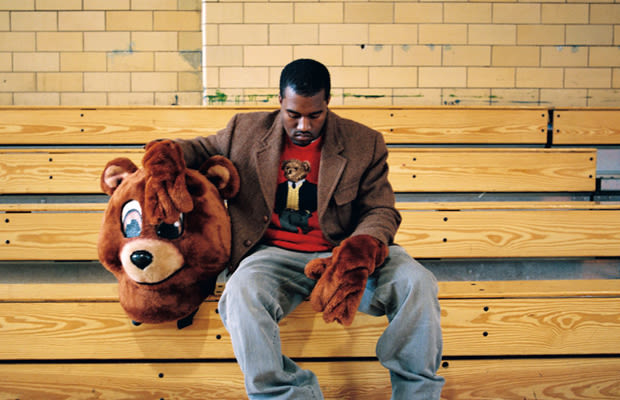


Fast forward to his latest release, the magnificent Yeezus. In my opinion, it's one of the best albums out there -- a blend of new wave, punk, and dance music. The influence of Chicago drill-music is evident throughout the album, yet it is minimalistic at the same time. It's a very dark album - nihilistic in nature - and it takes some getting used to. Initially, I wasn't sure what to make of it. It was very loud and angry, but upon further listening, I fell in love. It's everything I love about Kanye - his lyrics speak unnerving commentary on the world we live in. He isn't afraid to point out the ills of society - everything from social injustices, racism, materialism, tensions with corporate America, to conformity. His creative use of simple language is used to speak profoundly deep truths. In his song "New Slaves" he raps "you see there are leaders, and there are followers, but I'd rather be a d*** than a swallower." Inappropriate and vulgar? Analyze this line closely. Kanye is actually commenting on how society is plagued by an endless cycle of following what everyone else is doing. He doesn't care what people think of him, he is going to push boundaries and break free of the cycle. Ye is gonna' do what Ye wants to do.
"Yeezus, though, was the beginning of me as a new kind of artist. Stepping forward with what I know about architecture, about classicism, about society, about texture, about synesthesia—the ability to see sound—and the way everything is everything and all these things combine, and then starting from scratch with Yeezus."

What makes Ye so...Ye?  I believe he was born a creative. In Nancy C. Andreasen's article, she advocates that creativity and genetics are linked. She also writes that many creative people are autodidacts, preferring to teach themselves. This is true in Kanye's case -- he taught himself to rap and he was the one who took the initiative to record his first song at the age of 13. Creativity is also in his blood. His mother was a Professor of English at Chicago State University - arguably, she is where his poetic side comes from. His father was a former Black Panther and a photojournalist - I believe this is where Kanye's revolutionary spirit comes from.  When asked about what his creative process entails, Kanye said this, "I just close my eyes and act like I’m a 3-year-old. [laughs] I try to get as close to a childlike level as possible because we were all artists back then. So you just close your eyes and think back to when you were as young as you can remember and had the least barriers to your creativity." 
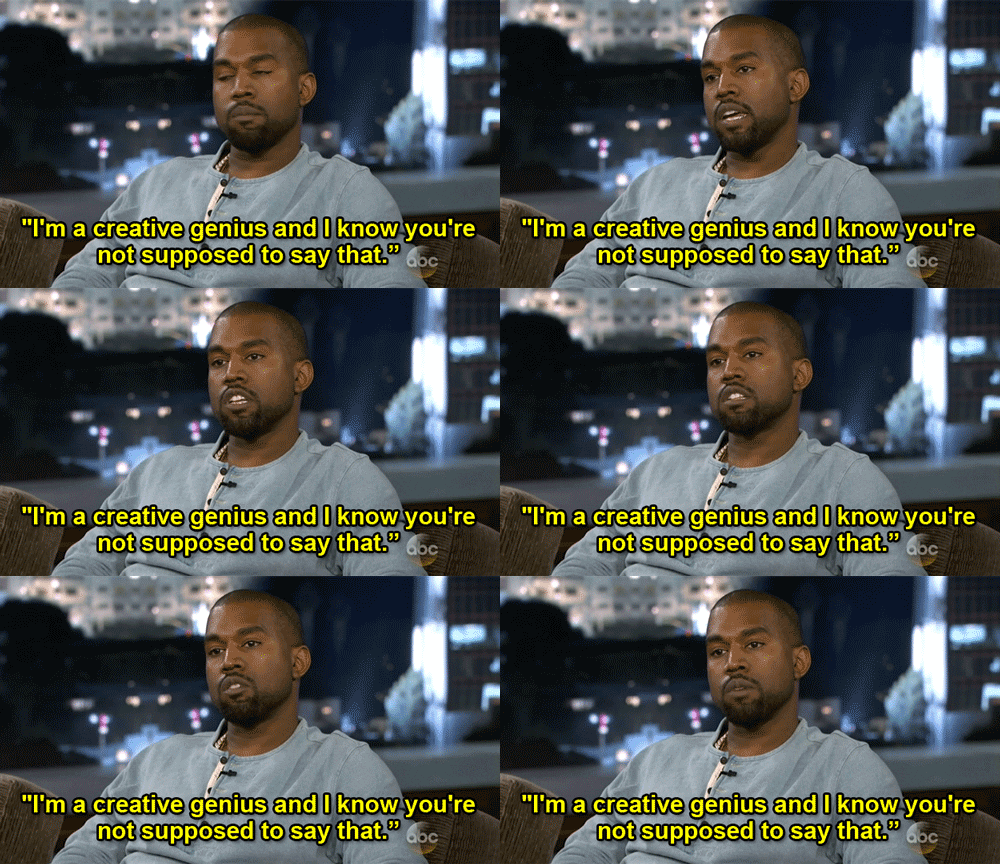

So why do I believe that he's a creative genius? Kanye has changed the genre of hip-hop forever. He has ushered in a tide of socially-conscious, artistic musicians and he has widened the genre's gates, melding middle-class values with high-fashion elements. He is ahead of his time in terms of doing what others don't dare to do -- don't even dream of doing. Kanye is the avant-gardist of our era. Most importantly, he is developing the culture that we conform to. 


Sources:
http://behindthehustle.com/2014/01/kanye-west-talks-creative-process-director-steve-mcqueen/
http://www.people.com/people/kanye_west/biography/ 
Andreasen, Nancy C. "Secrets of the Creative Brain." 2014.


Analytic Architecture

When it comes to the world of architecture, everyone is creating something, but not many are actually being creative. A truly creative architect must come up with something new; a novel design that separates them from the pack. In the case of Frank Gehry, it was the use of free-flowing shapes, unique materials, and empty space that created unique and captivating structures. Another creative architect, albeit in a totally different way, is June Grant. Grant uses data to design her buildings.


Grant approaches architecture entirely differently than Gehry; aiming for maximum functionality rather than beauty or art. Grant analyzes the plethora of information available from public databases in order to design her buildings. She looks at data such as the geographic surroundings, weather patterns, and average traffic flow in order to assess the environment of the proposed building. Then, she creates a design, using 3D printing and models, that best fits this environment. Specifically, she aims to create 'net-zero buildings', or buildings that do not impact their surroundings. By looking at numbers, Grant can create structures with certain shapes and materials that harness natural energy and cut back on emissions; thereby creating maintainable, useful, and completely environmentally friendly buildings.


Laird D. McLean describes creativity as both creation and innovation. Explaining that creation is coming up with the idea, and innovation is actually figuring out how to implement it. Grant's approach to architecture clearly falls into this definition of creativity, as she uses regional data to generate designs and models for buildings. McLean also discusses the role culture and climate play in creativity; or rather how a person's beliefs and corresponding actions lead them to creativity. For Grant, this was her desire to live in tune with nature through the help of technology; ultimately accomplished through her buildings.


Thus, through her use of modern technology, Grant creates buildings that are ideally adapted to their surroundings. Grant is pioneering a new style of architecture; one that not only accentuates peoples' lives, but preserves the environment at the same time.


The mastery of How It Should Have Ended


Imagine watching a movie you really love. It’s a great movie in many respects, but then there’s that one part that leaves you wondering, “What? That shouldn’t have happened. That doesn’t even make sense!” And sometimes you may end up thinking, “The movie would have made a lot more sense if it happened this way…” Many of us get these little strokes of creativity, but imagine taking your idea further, and building a whole scenario for how the movie would end differently based on that one little change you came up with in your head. Then imagine writing this scenario down, making it into a script, animating the whole scene, hiring voice actors and doing some of the acting yourself, and making a whole video out of your little idea. Sounds crazy, right? Well, that is exactly what Daniel Baxter did, and how he ended up blessing us with his series of videos, titled How It Should Have Ended.

Daniel Baxter, with Tina Alexander, launched their first video on March 6, 2007, which was “How Star Wars Episode IV Should Have Ended.” They capitalized on a major plothole, namely that Princess Leia returned to the rebel base even though she knew she could be followed, thus allowing the Death Star to blow up the rebel base. They reenact this new telling of the story with animation and perfectly executed sarcasm and wit. They continued this trend over the next eight years, creating over 100 videos that expose even more plotholes of movies, TV series, and even video games.You can check out their first video by clicking the link below.
https://www.youtube.com/watch?v=zzoeEdW-EDQ
Daniel Baxter fits Lubart and Sternberg’s idea of a creative who employs the investment strategy. He “buys low” by taking a popular movie and twisting the well-accepted ending up on its head, and “sells high” by writing and animating his next idea within a month (Lubart & Sternberg, 271). He uses all six resources of creativity that Lubart and Sternberg list, especially redefinition and insightful thinking. He uses redefinition and insightful thinking by “selectively encod[ing] information others do not see as relevant” when he finds plotholes in entertainment pieces and by “synthesiz[ing] the implications of this information to make the best investment decisions” when he decides which plotholes to use in his videos based on which would produce the funniest or most entertaining results (Lubart & Sternberg, 273).

Daniel Baxter even released a small series of videos explaining how HISHE makes their cartoons. They use a combination of programs such as Coral Painter and Adobe© Photoshop to draw, color, and animate their characters and backgrounds.

After they finish creating the characters, he describes the rest of the process as “digital puppet shows,” where instead of drawing each scene they move the characters through Adobe© After Effects software, which allows them to program the characters’ joints like limbs so they can move without redrawing the entire character. 

The videos that Daniel Baxter and his team make with How It Should Have Ended would not be possible if the creators did not have a combination of quirky wits to write the scripts, artistic talent, and knowledge of computer programs in order to implement and design each video. Here’s to hoping that he and his team stay creative.


Work Cited
Lubart & Sternberg: Lubart, T.I., & Sternberg, R.J. (1995). An investment approach to creativity: theory and data. In S.M. Smith, T.B. Ward, & R.A. Finke (Eds.) The Creative Cognition Approach (pp.271–302). Cambridge, MA: MIT Press.
 

Microsoft Paint in 3D?


Most of us have probably heard something along the lines  that virtual reality is going to be the next big thing in technology. Up until a couple of months ago, this statement was taken with a grain of salt due to its seemingly limited applications involving mainly gaming. The Oculus Rift's development, indeed, was geared more towards the gaming industry but this all changed after Facebook saw the potential of this new technology and bought the rights to the Oculus Rift from Oculus VR. Strapping a huge pair of goggles on allows for the user to experience a fabricated reality in which one may or may not be able to interact with, depending on what the device is being used for. Down in San Francisco, Drew Skillman and Patriack Hackett took the idea of being able to interact with the environment and developed a software for the VR called Tilt Brush.
 

With Tilt Brush, you can create your own kinds of brushes. They can have all kinds of textures and strokes as well. Some examples include metallic, light, patterns, even music reactive brushes and this will allow you to paint. This medium of art was created by little c and pro c and once released to the general public, will help countless others with expressing their own little c and possibly (and most likely) big C.


Hackett was the co-head of Future Tech before he left to co-found Skillman and Hackett with his partner. Both are long time game developers and have been working with creating software for years. They realized the potential that VR had and from a game developers point of view and realized that a means of design would be needed for this alternate reality. Their goal in creating Tilt Brush is to "promote an ecosystem by showing the world what's possible with virtual reality." When new forms of technology come out, a new means of expression comes along with it and both men are enjoying seeing the program grow and develop. They already had experience with motion control and VR as they have worked with the PS4 Camera, Kinect, Leap Motion Controller, Oculus, and smartphones like Android and iPhone. They have a well rounded background that no doubt prepared them in making a compatible and functioning program.


Skillman and Hackett designed Tilt Brush with the angle that it will be used as a means of expression, not precision. It's meant to be used to make quick, rough sketches to easily be shared with others using the VR. The developers believe that the program and its usage should make sense and flow to allow users unrestrained access to create their art, but also just as easily allow others to experience it, too. There is a built in auto-GIF option that will make it easy for the creator to display their 3D creation with movement.


Skillman and Hackett have creative drive in them and they are using it in order to allow others realize their potential as well. Their program is free to use in order to gain feedback from it in its still rather early stages. They have thought ahead and formed something that will undoubtedly in the future of VR. This forward thinking is what is bringing them much success. They are thinking about what will help othes in their creations in the future - not only now. Tilt Brush is as much for Skillman and Hackett as much as it is to the general public. They  were nominated for three Proto Awards for this program including Most Innovative and Best Interaction Design. They are the winners of the Best GUI Proto Award. They have created technology that will help this new technology be even more accessible to all - to make VR a little less foreign. We can expect to see much more from these guys as they shape the future of VR and all the possibilities this new medium can unfold.

To learn more: http://www.tiltbrush.com/


The Mind Behind the Man of Steel

Superman standing on an eagle gargoyle, with the Metropolis skyline behind him.It has been said that superheroes are the modern incarnation of mythological deities. So who is one of the most iconic and recognizable superheroes to exist in the past century? Superman, of course. The Man of Steel was introduced to readers on April 18, 1938 and has gone on to influence the entire comic-book industry as a whole. Before Superman came into comics, people were familiar with comic strips that were found in the newspaper. However, if it were not for the creative mind behind Jerry Siegel, and his friend Joe Shuster, we would never have experienced the journey of the Man of Tomorrow.

As a young man, Siegel was a fan of movies, comic strips, and science fiction pulp magazines. He would start writing his own stories and characters, becoming involved in what would become known as "fandom". Siegel would publish the first SF "fanzine", Cosmic Stories at the age of 15. At the age of 16, Siegel would meet his longtime collaborator, Joe Shuster. It was around 1934 that Siegel would come up with the idea of Superman and immediately set out on a four-year quest to publish a book about this character. Interestingly enough, Siegel and Shuster originally created a character called "the Superman", who was a bald telepathic villain bent on dominating the world.

Something unique about Siegel is that his father was killed when Siegel was a young man during a robbery. Some say this influenced him to create Superman as a bulletproof man who never breaks the law. To this day, Superman refuses to kill his enemies and tries to avoid it if at all possible, but there are exceptions. In the comic Superman: Whatever Happened to the Man of Tomorrow?, he is forced to kill one of his enemies and reluctantly strips himself of his powers through the use of Gold Kryptonite.

Superman was created in a period of incubation as described by Ritter in the article "Creativity: The role of unconscious processes in idea generation and idea selection". Siegel was sleeping one night, and the idea of Superman came to him and he got up and started writing everything he could remember. The article says that sociocultural theories say that having an idea is easy, but it is difficult to develop your idea so that your audience accepts it. Siegel came up with the idea of Superman while he was sleeping in 1934 and it didn't get published until 1938. It took Siegel and Shuster 4 years to get their idea out to the people.

Superheroes remain an integral part of the comic book industry. The stories that are weaved by authors are fascinating and since then, the industry has developed to the point that superheroes are not as abundant as they were, but the fact remains that nothing we have know could exist without Siegel and Shuster's original brain-child, Superman. Siegel and Shuster both passed away in the 1990s, but I have faith there will be another creative who will dare to push the boundaries of comic books like Siegel and Shuster did.

I highly recommend watching the documentary Superheroes: A Never-Ending Battle for an interesting retrospective on the industry and the creation of iconic superheroes.

Some interesting articles about Superman himself:
http://www.comicvine.com/articles/superman-why-he-isnt-a-boring-powerhouse/1100-149932/
http://www.npr.org/2012/06/18/155278330/its-a-bird-its-a-plane-its-a-new-superman-bio
https://www.youtube.com/watch?v=eTUrFYU2e_I - Part 1 in a series of interviews with Siegel and Shuster


evolutionofsuperman

http://www.thecomicbooks.com/old/super.html
S. Ritter (2011). Creativity: the role of unconscious processes in idea generation and idea selection


Alex G: Pop-rock, Bedroom DIY, Indie-downer Rock, Creative Expression, Etc...


     Alex Giannascoli is a 21 year old English student from Philadelphia, Pennsylvania who is on break from school at Temple University. Although he has the profile of a typical 20-something, he has been featured in multiple music outlets as a prolific wunderkind and “the internet’s best kept secret.” Giannascoli has been self-releasing music under the name Alex G for almost 5 years, now having 12 releases out. Since he publishes his own music, all of his releases can be found on his Bandcamp page: http://sandy.bandcamp.com His music is described as a lot of things: alternative rock, rock, classic indie, downer indie rock, pop-rock, pop, bedroom pop, bedroom DIY, and bummer pop. These various strings of closely related genres contribute to the overall perception of his music. His music is intrinsically appealing with hints of familiar qualities from other sounds; however the big-picture is nothing like you have heard before.

     Sticky melodies and catchy lyrics are produced by this genuine kid who takes his art seriously, with real investment in everything he puts out for the world. With his devotion and authenticity to his music, he has managed to humbly gain an army of loyal supporters.
     How does someone who began with Garage Band at age 13 end up being dubbed a prolific songwriter and musician roughly 9 years later? I will be delving into Alex Giannascoli’s creative process and how it relates to various determinants of creativity.
     Creativity has been studied intensely in recent history: what qualities does a creative person have? Is there a pattern that they all share? What is their creative process and is it similar to other great creative minds? This leads to bigger questions such as being able to identify a creative mind before they make their influential contribution. I suggest that Alex Giannascoli is projected for creative greatness due to the similarities he shares in work ethic and personality.
     His music is his passion. It is his primary creative outlet, something that he spends most of his free time doing. Growing up, homework and schoolwork were always easy for him. Therefore, he would breeze through assignments by doing whatever needed to land on the honor roll, and then spend the rest of his day making music on GarageBand. Frequently with creative people, they begin showing signs of intense creativity by producing impressive work at a young age. Although Giannascoli made countless songs, experimenting with combining different genres together like techno-goth, he claims it wasn’t good music. So how does the 21 year old now hold twelve quality releases under his belt? One reason can be attributed to the many hours he spends working on his music. Fostering creativity requires inputting hours thinking and making connections. Giannascoli has been doing this non-stop for nine years. Those are countless hours devoted to his passion.

     A common trait with gifted persons that usually coincides with the immense time investment is the never-ending tunnel of their creative vision. Nancy Andreasen, a leading neuroscientist, states in Secrets of the Creative Brain published in The Atlantic: “preparation, incubation, inspiration, and production” are an “iterative process” that help foster creative products. This is a process Alex Giannascoli goes through the motions of daily. Nothing is ever perfect or complete. In an interview with Laurence Day from The Line of Best Fit music blog, Giannascoli admits that even his most recent and popular release DSU is not perfect in his eyes. Even though he spent time making it “as perfect as possible” it still is not exactly everything he dreamed of. He does have a more realistic grip on low long it takes to work on producing content. He can recognize when the vital components necessary for the music to still be an accurate representation of his thoughts and emotions are present, but he is always looking to improve and reach a closer idea of a perfect product. However, from the outside looking in, his songs feel like he has reached a thoughtful perfection.

Alex G. prefers to work alone. He works inside his own mind, expanding and developing his own ideas and making his own creative connections. A lot of his songs contain traces of other sounds of music: with a rawness that is reminiscent of folk music, twisted sounds hinting towards crunchy techno, and funky beats that sound like they could be part of a 90’s TV show theme song (listen: first 60 seconds of the song Promise from DSU.) DSU is a dreamy sound, pairing nicely to the bedroom style recording, which elicits an intimate feel to the entire LP. Giannascoli turns inward for creative inspiration, making connections based off of experiences and previous failures, such as his stint with techno-goth. These connections on different levels, including the sound, lyrics, and quality, are carefully made to produce the feelings and emotions that he intends. It is this thoughtful dedication to forging connections musically that identifies Giannascoli as a creative artist.


     Giannascoli holds his music to a high standard of integrity: it is his passion regardless of its success. In a quote provided by Lochness Management, “personal obstacles have shaped [his] music but [none that he] would like to share.” He is satisfying the problem of trouble expressing himself therefore it must continue to be honest and true to who he is musically, otherwise it is no longer serving its purpose. In an interview with Dan DeLuca, an Inquirer Music Critic, Alex states that making music is how he defines himself. “If [he] didn’t do it, [he’d] probably be really lost.” This is another reason Alex chooses to work alone. He believes his decisions are more fluid that way and wants to be able to follow his own ideas, labeling himself a “passive control freak.” Although researcher Kevin Dunbar explains in Accept Defeat: The Neuroscience of Screwing Up published in WIRED magazine, collaboration and discussion can open up opportunity for more creative ideas. However, the method used by Giannascoli of creating a product solo is not unusual for creative minds. Andreasen points out that because creative people usually think differently, “the standard ways of learning and teaching are not always helpful and may even be distracting, and that they prefer to learn on their own.” This is certainly the case for Giannascoli, as he finds working collaboratively frequently slow and distracting, taking away from his own ideas and mental connections. He also is uninterested in copying other sounds or finding inspiration from other musicians or peers. His music comes from his own mind, after spending most of his time experimenting and creating. He pulls inspiration from his own experiences and feelings. In Fader Magazine, he relates his creative method to the way Hemingway writes, all-the while-humbly pointing out that he is no Hemingway. Giannascoli: “[Hemingway's] method [is] giving you this thin strip of the iceberg, and hopefully the listener can pick up that there is something under the surface – they don’t know what it is, but they know it’s really scary.” This is also common with other creative minds, not just Hemingway and Giannascoli. Andreasen also points out that many creatives are mentally distressed and suffer from various illnesses such as depression or anxiety disorder. This is in no way meant to jump to conclusions and label Giannascoli as one suffering from a mental illness, as it is an extremely personal, private, and nun-ya-business illness. This is just more to connect that mental distress is frequently associated to creativity, even if the it is the less extreme distress that is associated to experiences of growing up. Frequently, creative connections and products are made as being an outlet for emotions that might be difficult to handle, something that does apply to Giannascoli. In Fader magazine, Giannascoli confesses that sometimes he is “really really high strung” and he uses his music as a way to “deal with the way reality is,” a way to match his feelings to his music. It is this honesty that makes Giannascoli a genuine and endearing creative subject; especially in a digital age where it is easy to be something you are not. This is extremely appealing and relatable to his listeners, who he mostly relies on to pass along his music.

Sonny Malhotra

     So far, this method has been extremely successful, as he is about to embark on a tour through Europe. Alex Giannascoli is an authentic creative, who still carries much potential in his music. With his creative characteristics, I have no doubt that this musician will continue to grow and develop musically and ultimately creatively.