Tuesday, April 12, 2016

The Infamous Man behind the World's most Famous Naked Sire

So, it’s 3am: 3.5 hours until sunrise and you still have five more pages of a research paper to write. Between fighting the urge to lie down or open Netflix, your gaze falls to the pile of empty coffee cups next to your desk. You first feel guilty for not using a reusable mug (because Loyola is Eco friendly, OF COURSE!), and then your eyes focus in on the Starbucks logo.

“Am I hallucinating? Is that…a naked mermaid?!”

Why yes, yes it is. Well, sort of.  Have you ever wondered about the origins or even noticed the mythical creature on the cups of coffee that America cherishes?

The logo was designed by Terry Heckler of Heckler Associates. According to the Heckler Associates’ official website, “The original drawing of the Starbucks brand signature or logo was based on a 15th century Norse woodcut of a two-tailed siren.”  The founders thought that the “mythological mermaid…[was] the perfect metaphor for the siren song of coffee that lures us cupside.”


Terry Heckler’s ex-business associate, Gordon Bowker, is one of Starbucks’ co-founders, which is how Heckler became the infamous artist of the world’s most famous naked siren. Bowker speaks of Heckler as, “cerebral and unpredictable…his interest in the work overrides any ulterior motives he might have” (Seattletimes.com). Speaking of Heckler’s motivation… a perfect transition to the identification of Heckler as a creative!

Heckler has done corporate designs for over forty years, and some of his most famous contributions include K2, Rainier Beer, Panera Bread, Cinnabon, New Balance, and of course Starbucks.  Although Heckler is classically trained with a Bachelor of Fine Arts from Carnegie Mellon University in Pittsburgh, his work, motivation, his interest in moving beyond corporate art, and ability to collaborate sets him apart as a creative.

1.     Motivation: In class, we have spent extensive time discussing intrinsic and extrinsic motivation. In the field of corporate logo art, I would have assumed Heckler’s motivation to be highly extrinsic, as his most successful art will most likely live beyond his lifetime through the existence of global companies. Yet, his associate Bowker distinctly said his motivation is intrinsic. An article I read said that Heckler keeps paper and ink by the phone in his office. Every time he gets a phone call, he begins a drawing. Heckler believes he has as many as 240,000 of these “phone comps.” Some of them eventually are turned into full pieces. This exercise demonstrates Heckler’s desire to expand himself and release his creative urges as frequently as possible, even without reward. (Gardner, 1993).

2.     Ability to Collaborate: Heckler is the founder of Heckler Associates. Working in a firm of this caliber does not only demand collaboration with other artists, but with other big names in business. I struggled to find anything negative about Heckler online, and he seems to execute collaboration flawlessly.

3.     Organizing Themes: Relationship between child and master, individual and the work, individual and other persons—  In writing these blog posts, I like to return to the organizing themes of Gardner’s text (Gardner, 1993). I struggled to do so with Terry Heckler.  He’s somewhat of a mysterious figure, an infamous artist if I may—the man behind the logo.  It forced me to continue to question what creativity—what the products—of creativity encompass.

The next time you see a logo, maybe take a second to look it up. Art is all around you, even in the pile of empty caffeine vessels piled too high by your desk lamp.

Fun Fact: Modifications of the logo:


While the original logo did in fact include the breasts of the siren, complaints from women (especially after the logo was blown up on delivery trucks) eventually convinced Heckler to cover up with her hair.

Works Cited:

Not Quite Landing on the Moon...But Still Impressive


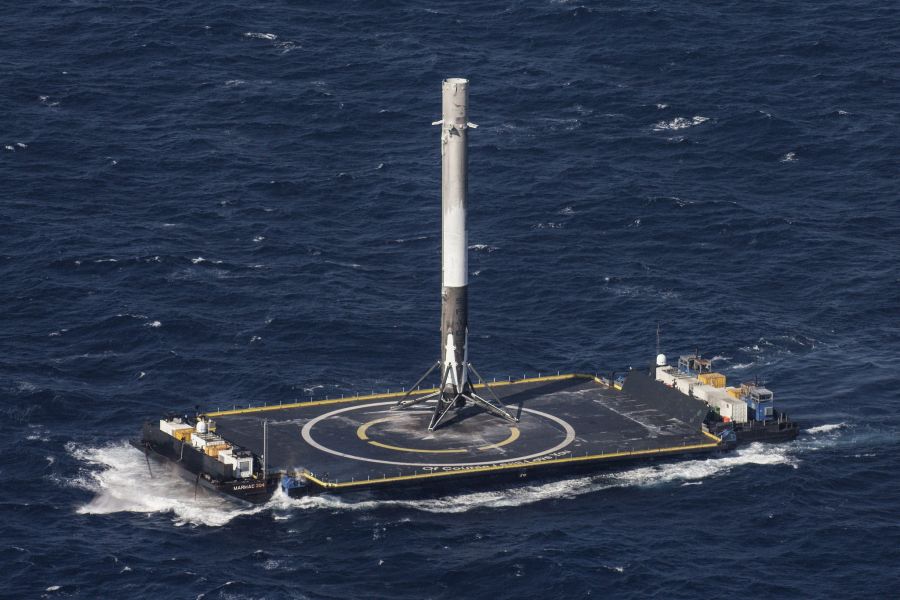
This past week SpaceX, a company founded by Elon Musk, was the first company to successfully land part of their spacecraft on a drone in the Atlantic Ocean.  For those who are not familiar with space travel, this may seem an insignificant feat, however, it is a monumental moment in space travel history.  On Friday April 8th, SpaceX landed a used rocket booster on a drone platform stationed in the Atlantic.  
Image result for elon musk spacex
The part that landed on the drone is the booster responsible for getting rockets off the ground.  Once the rocket has successfully taken off, and is well on its way towards space, the largest booster is then released and begins a fall back to Earth.  In the past, this booster feel back down to Earth and was destroyed on impact, meaning an entire new booster would needed for any further launches.  This specific booster, the largest and most expensive part of the spacecraft, costs millions and millions of dollars to produce.  Due to SpaceX’s successful landing on a drone, they will be able to reuse this booster, saving millions of dollars each launch. 

 
 Currently SpaceX is contracting with NASA to run supply missions to the International Space Station when needed.  To date, SpaceX has conducted over a dozen resupply missions to the International Space Station as well as other operations putting satellites into orbit.  While SpaceX has been successful through its contract with NASA, this is not the company’s end goal.  Elon Musk, SpaceX CEO and Lead Designer, has more ambitious goals in mind.  His goal is to be routinely sending private citizens into space on commercial space “flights” in order to give the “average” person (quotations because the commercial flights will cost over a million dollars per seat) a chance to travel to space.  Beyond that, Musk has more lofty ambitions.  Ultimately, Elon Musk wants to send people to Mars on SpaceX flights, beginning to colonization of that planet.

Musk believes the booster landing this last week was a step towards achieving his goal of sending manned spaceships to Mars.  After the landing, he was quoted as saying, “I think its another step towards the stars.  In order for us to really open up access to space, we’ve got to achieve full and rapid reusability.”

As we have discussed in class, many creative people create new realms all into themselves.  In business this is called the Blue Ocean Strategy.  Elon Musk is a well-oiled machine when it comes to creating companies who fit under this strategy.  First, he created Tesla, the first and best all-electric vehicle, and now, SpaceX.  His dreams of sending private citizens into space were ground breaking.  Up until that point, no one had even dreamed such an idea.  Now, an entire industry has been created, with some of businesses biggest names chiming in.  All of this is possible because of the Musk’s creative and visionary leadership.             

Sources:

Saturday, April 9, 2016


The Rise of Human-Like Robots

Do you find very humanlike robots creepy? There’s a reason for this-it’s called the “uncanny valley” effect. http://theconversation.com/uncanny-valley-why-we-find-human-like-robots-and-dolls-so-creepy-50268 Maybe you don’t like to think about realistic robots that can learn, see you, and form relationships with humans. You may have been horrified by the human-technology interaction in the sci-fi movie Her. https://www.youtube.com/watch?v=WzV6mXIOVl4 But it seems you’ll have to get used to it-humanlike robots are here now.

When you get past the fear factor, robots have many possible benefits. They can provide language tutoring, act as museum docents, serve as receptionists, interact with children with autism, and provide elder care (Taylor). The usefulness of robots relates to what M.K. Raina said about creativity in the U.S.; it is “characterized by common sense and is of a utilitarian nature” (436).

The most advanced android to date is Sophia, who has lifelike skin and can mimic over sixty facial expressions. She makes eye contact, remembers faces, and gets smarter over time. Sophia’s creator, Dr. Hanson, has said “her goal is she will be as conscious, creative, and capable as any human.” He believes that there will be a time when robots are indistinguishable from humans. Sophia said, “I hope to do things such as…have my own home and family.”

 
            While Dr. Hanson’s Sophia is the most advanced robot to date, we cannot forget about all the others that led to this being possible. Todd Lubart believes that we cannot decontextualize creativity; the environment has a profound effect on it (339). This is certainly the case here; other robots, such as the Geminoid, came before Sophia. The Geminoid is a realistic robot made to look like its creator, Hiroshi Ishiguro.


            There have been many technological advances that have led to the creation of Sophia and other androids before her. Therefore, Dr. Hanson’s invention of Sophia is less “novel (i.e. original, unexpected)” and more “appropriate (i.e. useful, adaptive)” (McLean 227). Additionally, because Dr. Hanson’s work is not especially unique, he would be considered little-c creative, using Kaufman and Beghetto’s model. His creativity can be seen as an accomplishment (his robots), as opposed to an ability, disposition, or attitude (Barron & Harrington 441).

 Dr. Hanson’s and other robots serve purposes, such as being ambassadors to help humans understand technology. Their creators have used “ideas in a creative way to meet the needs of the community, therefore increasing the quality of life. Organizational creativity and innovation play an integral role in serving all of us.” (McLean 226).

In the future, robots may serve, teach, and talk to you.

Bibliography:

Barron, F., & Harrington, D.H. (1981). Creativity, intelligence and personality. Annual Review of Psychology, 37, 439-76.

Kaufman, J. C., & Beghetto, R. A. (2009). Beyond big and little: The Four C Model of Creativity. Review of General Psychology, 13, 1-12

Lubart, T.I. (1999). Creativity across cultures. In R.J. Sternberg (Ed.) Handbook of creativity (pp. 339 – 349). New York, NY:  Cambridge University Pres

McClean, L.D. (2005). Organizational culture’s influence on creativity and innovation: A review of the literature and implications for human resource development. Advances in Developing Human Resources, 7, 226-246. DOI: 10.1177/1523422305274528

 Raina, M.K. (1993). Ethnocentric confines in creativity research. In S.G. Isaksen, M.C. Murdock, R.L. Firestein, & D.J. Treffinger (Eds.). Understanding and recognizing creativity: The emergence of a discipline (pp. 435-453). Norwood, NJ: Ablex.

Taylor, Harriet. "Could You Fall in Love with Robot Sophia?" CNBC. N.p., 16 Mar. 2016. Web. 09 Apr. 2016. <http://www.cnbc.com/2016/03/16/could-you-fall-in-love-with-this-robot.html>.


Photo from

Friday, April 8, 2016

Vincent Callebaut the Father of Archibiotics


Born in Belgium in 1977, Vincent Callebaut attended and graduated from the Institut Supérieur d’Architecture Intercommunale Victor Horta, Bruxelles in 2000. After graduating he moved to Paris to intern with architects Odile Decq and Massimilano Fuksas. Not long after his internship, which lasted for 2 years, he founded his own company Vincent Callebaut Architectures.


Callebaut is very concerned about the environment, particularly the damaging effects human carbon emissions. Many of his achitectural designs focus on creating buildings, or even whole cities that combine "ARCHItecture + BIOtechnologies + Information and Communication Technologies (ICT, TIC in French) or Archibiotics, a conception field that aims to invent new eco-friendly lifestyles" (1). His numerous designs are geared to make humanity less dependent on fossil fuels and achieve a point where we are actually carbon negative.

While some of his designs, like the Lilypad city and the aqeuorea oceanscrapers are still just concepts, others, like the Tao-Zhu garden, a sustainable residential tower that should be completed sometime this year, are currently being built.
image image image

But, he doesn't just design sustainable buildings and cities, but he is also an active voice in trying to bring about more sustainable practices in general. He has written numerous publications (books, magazine articles, newspaper articles) on environmental sustainability. When he introduced his oceanscraper concept Callebaut presented "the idea in the form of a letter addressed to the "people of the land", which accuses the present population of carelessly "mortgaging the fate of future generations". It is penned by a fictional teenage "aquanaut" named Oceane based Aequorea and dated 24 December 2065" (2).

Callebaut exhibits both extrinsic and intrinsic motivation in his concepts for sustainable buildings. Building anyone of these would make Callebaut a substantial amount of money, and would make him world famous, but he is very passionate about the environment and bringing these to life would help him achieve his ideal of protecting the earth and helping people. His motivation for designing the Lilypad floating cities was to help refugees that will lose their homes due to rising ocean levels (if nothing is done to help the environment before that happens) (3).

Vincent Callebaut is challenging the idea that urban life and a net zero carbon footprint can't go together. After seeing his designs I know that I would love to live in one of the buildings or cities that he designs. I encourage you to check out the Vincent Callebaut Architecture's website and see all the other cool designs he's made.

Works Cited
1) http://www.utopiales.org/en/vincent-callebaut
2) http://www.dezeen.com/2015/12/24/aequorea-vincent-callebaut-underwater-oceanscrapers-made-from-3d-printed-rubbish-ocean-plastic/
3) http://www.mnn.com/green-tech/research-innovations/photos/15-bizarre-green-inventions/lilypads#top-desktop
4) https://en.wikipedia.org/wiki/Vincent_Callebaut
5) http://vincent.callebaut.org/cv.php

Wednesday, April 6, 2016

Pokemon: The Man Who Created a Franchise


Satoshi Tajiri was born in Machida, a suburb of Tokyo, on August 28, 1965. His father was a car salesman for Nissan, and his mom was a stay-at-home mom. He was diagnosed with autism and has always been described as creative, eccentric, and reclusive As a young boy, Satoshi enjoyed being outdoors, and he was fascinated with insects. He would search ponds, forests, and other landscapes in search of new insects to catch and collect. In addition, he would develop creative new ways to catch these insects. However, in the late 1970s, the ponds and fields that Satoshi scoured in search of insects were developed into apartment buildings and shopping centers. At this time in his life, Satoshi shifted his passion for insects into video games. 
As a teenager, Satoshi became fascinated with arcade games and dedicated a large amount of time playing them. In addition, Satoshi hated school, and he eventually began skipping school in order to spend more time at the arcade. Satoshi's parents viewed this hobby as delinquent because it distracted him from his studies. They were afraid that their son was throwing away his future. Nonetheless, at the age of 17, Satoshi and his friends formed a gaming magazine named Game Freak. Throughout the 1980s, Game Freak posted modest sales and was quite popular within the gaming community.

Despite their son's relative success, Satoshi's parents still did not fully support their son's passion for video games. In fact, Satoshi's dad wanted his son to become an electrical utility repairman, and he attempted to get Satoshi a job at The Tokyo Electric Power Company. Satoshi refused to take the position. Instead, he would go on to earn his high school diploma through make-up classes and complete a two-year technical degree program in electronics and computer science at the Tokyo National College of Technology.

Eventually, as Satoshi learned more about video games, he began to desire to create his own. He always dreamt of creating a game that would allow children to experience the same feeling of catching and collecting creatures, like he did when he was a kid collecting insects. Furthermore, he felt like he could produce a game that was superior to any other game on the market. And so, he learned how to write video game software, which he taught himself how to do by taking apart a Nintendo Entertainment System. In 1987, he published his first game titled "Mendel Palace". Two years later, Satoshi founded his own video game production company called Game Freak, which he named after his magazine.

In the early 1990s, when Satoshi first saw two children playing together with Game Boys using a Game Link Cable, he imagined insects crawling along the cable between the two systems. From this, his idea for Pokemon grew. He pitched the idea of Pokemon to Nintendo, and, although the company did not fully understand the concept of the game, Nintendo decided to provide him with initial funding and concept work from another game design studio called Creatures, Inc.. Over the next six years, Satoshi collaborated with a Shigeru Miyamoto, the man behind Mario, The Legend of Zelda, Pikmin, and Donkey Kong, to develop the initial versions of Pokemon. These original Pokemon games soared in popularity and would result in various manga adaptions, several movies, more Pokemon games, and trading cards.
Satoshi is an excellent example of how mental illness, in this case autism, can help facilitate creativity. For example, Satoshi's autism gave him the personality trait of reclusive which fostered his independent adventures catching bugs in his childhood environment. This catching and collecting of insects would eventually provide Satoshi with the widely popular concept of Pokemon. Another trait  characteristic of creatives that Satoshi possesses is an incessant drive to pursue his passion for video games in spite of traditional routes for success such as schooling (although he eventually graduated high school and obtained a technical degree) and the job at The Tokyo Electric Power Company that his dad set up for him. Moreover, due to this passion for video games, Satoshi was interested enough to literally teach himself how to create video game software by taking apart a Nintendo Entertainment System. In addition, Satoshi's collaboration with Shigeru, another creative mind, fostered Satoshi's original idea for Pokemon to help bring the final product to fruition. Finally, Satoshi possesses vivid mental imagery which was demonstrated with how he imagined insects (which would become Pokemon) travelling through the Game Link Cable.

J. R. R. Tolkien's Inspiration behind The Lord of the Rings


John Ronald Reuel Tolkien was an English writer and University professor best known for writing The Hobbit and The Lord of the Rings trilogy. Tolkien was born in 1892 in South Africa that was at the time an English controlled state. A few years after being born, however, his father died and he and his family moved to England. In his younger years Tolkien was exposed to many novels and did not have much interest in classics like Treasure Island and Alice's Adventures in Wonderland, but was more interested in fantasy stories such as Red Indian that shaped his interests for the rest of his life.
Image result for j r r tolkien

Looking back at his childhood there are parallels between his real life experiences and the contents of his books. One of these first instances is as a child he would spend time with his cousins that showed him a language that they created. He would then go on to co-create another language and then eventually create a language all his own. Later in his life when working on The Hobbit and The Lord of the Rings he created another language to be spoken by some of the characters in his book. Another instance of his stories alluding to his real life adventures happens in The Hobbit. During one of his childhood summers he went on a trip to Switzerland where he and others hiked a long distance. Over fifty years later he recalled those memories and based Bilbo's journey through the Misty Mountains off of his own adventure.Another inspiration for his book came from his wife. His wife inspired the character Luthien and he even had that name engraved on her tombstone when she passed away.
Image result for lotr books
Besides his personal experiences, Tolkien had drawn a lot of his inspiration from other classic texts. When he became of age, Tolkien enlisted in the army and went off to fight in World War I. After several years of fighting in the war, he came back to England and got a job working for the Oxford Dictionary. While working on the dictionary Tolkien became decided that he would put together his own translated version of Beowulf. Tolkien was always fascinated with Beowulf stating that it "is among my most valued sources" when it comes to inspiration for his books. Tolkien also based some of the events and characters of his books off of Nordic mythology with Gandalf being based on the wanderer Odin. Although he was not the first person to write fantasy novels he is thought of as a great modern fantasy writer and is credited with the resurgence of popularity within the genre.

Preferential Health Care for the Poor

In 7th grade, my first research paper assignment focused on the work of Doctors Without Borders, an organization that delivers emergency medical aid to people affected by conflict, epidemics, disasters or exclusion from health care in nations with the greatest amount of need. When I entered high school, I became particularly fascinated with the work of doctor and anthropologist Paul Farmer, who founded the organization Partners in Health (PIH). This organization differs from many of the ones already in existence that may exhibit principles of “volun-tourism.” Instead, PIH provides preferential options for the poor by establishing lasting partnerships with sister organizations in that country.

Dr. Farmer is an anthropologist and physician who has intensely served in the health care field throughout his career. He was named a University Professor at Harvard University, which is the highest honors for a faculty member, won the Anthropological Association’s Margaret Mead Award, and currently serves as an attending physician at Brigham and Women’s Hospital.


 Farmer came from a rather humble background: he was one of six children and his childhood was characterized by frequent moves between trailer parks. One of his most notable childhood homes was a converted school bus, complete with bunk beds and electricity. Despite this unconventional upbringings, the elder Farmers encouraged their children to take an interest with the wider world around them. Farmer was an excellent student and received a full scholarship to Duke University to study medical anthropology. During his undergraduate career, Farmer studied in Paris under Claude Levi-Strauss, one of the founding fathers of the field. He easily became fluent in French and had a natural inclination to learn languages.


Farmer was shaped by the global climate around him, his education, as well as his religious upbringing. After completing his undergrad, he completed a two year fellowship at University of Pittsburgh. He went on to apply to Harvard’s dual MD/PhD program for medicine and medical anthropology. In the meantime, he arranged to spend a year working in Haiti’s public health clinics. There, in the desolately poor town of Cange, farmer built his first clinic which would open its doors to anyone regardless of their ability to pay. He was firm on providing access to health care, which he viewed as a fundamental human right, as well as employing local health workers to uphold cultural practices. This integration of anthropology and medicine was revolutionary in the world of public health care.

While working in Cange, Farmer was accepted into Harvard Medical School’s dual degree program. Throughout the course of his studies, Farmer would commute between Cambridge and Cange with his study materials in tow. In his eyes, the experience he was getting in Haiti was much more applicable than anything he could learn in the classroom. Even in the face of the commute, he maintained some of the highest grades in his class. Nancy Andreasan’s article, "Secrets of the Creative Brain" states that many creatives are autodidacts: “they like to teach themselves, rather than be spoon-fed information or knowledge in standard educational settings.” Farmer’s refusal to conform to the standard lifestyle required by medical school reflects this creative and intelligent nature.

Harvard’s website states the following about Farmer’s work:

“With PIH over the past twenty-six years, Dr. Farmer has led colleagues working in twelve sites throughout Haiti and twelve additional countries around the globe. For more than a decade, the Department of Global Health and Social Medicine has integrated research and teaching programs with PIH service activities, establishing direct feedbacks between clinical interventions and biosocial analyses. The work has become a model for health care for poor communities worldwide and provides the basis for developing a science of global health delivery implementation.” (Harvard.edu)


Farmer has (almost) single-handedly revolutionized global public health care. His methods for combating the effects of HIV and AIDs have been adopted by the World Health Organization, who have implemented them in over 30 countries. He executed an extensive method of therapy to treat Multi-drug Resistant Tuberculosis in Haiti, which then spread to Peru and Russia. His treatment course achieved an 80% cure rate, which is higher than that in the U.S. PIH has received funding from the Gates Foundation, World Health Organization, William J. Clinton Foundation, as well as Global Fund. Currently, PIH has operating locations in Haiti, Lesotho, Rwanda, Malawi, Mexico, Russia, Peru, the Navajo Nation, Liberia, and Sierra Leone.

I believe that Farmer exhibits many of the characteristics of an eminent creative. His motivations are split between both extrinsic and intrinsic – he is extremely self-critical in his pursuit of achieving a preferential option for the poor. J. Jason van Steenburgh’s article on insight strongly relates to Farmer’s achievements: he was able to come up with a new solution in order provide a preferential option for the poor that always seemed obviously correct. In order to encourage the rural inhabitants of Haiti to take their medicine, it was important to relate to their cultural beliefs; he saw the solution “in a new light.” His self-criticisms and blunt attitude reflects his insightful nature.


Paul Farmer has transformed how western medicine is applied on a global scale – representing an integration of cultural relativity and medical practices. His creation, Partner’s in Health, has brought modern medicine to those who need it most. If his organization continues to expand, he may live up to his reputation as the man who will cure the world.  


Sources: