Sunday, February 12, 2023

Hirohiko Araki: Combining Classical Art, Dad Music, And A Generational Curse

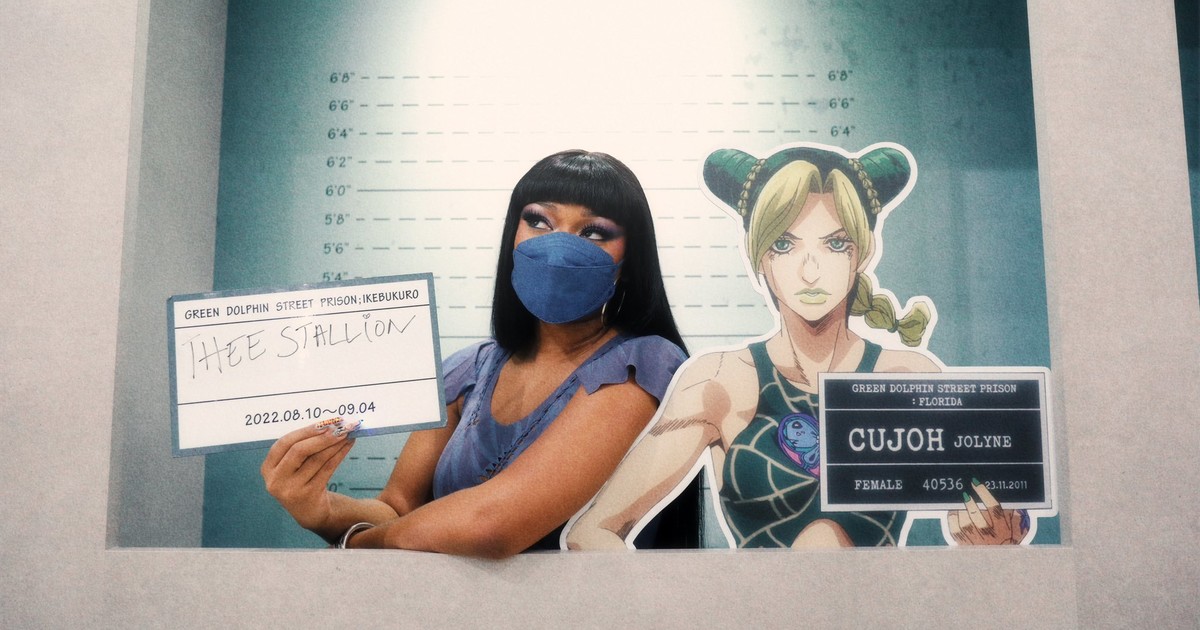
Hirohiko Araki is an infamous manga artist that has been the creator of one of the longest-drawn-out universes within manga and anime, his magnum opus: Jojo's Bizzare Adventure. His work has inspired countless others. His iconic style often has style and composition references in multiple forms of media, and even inspires many award-winning artists like Megan Thee Stallion. (Instagram post seen below)


Megan Thee Stallion Tours JoJo's Bizarre Adventure Exhibit in Tokyo -  Interest - Anime News Network


Even western shows like American Horror Story, take elements of the show and incorporate them into their own genre. It has also been woven both consciously and unconsciously into pop culture, affecting how masculinity is portrayed, showing strong female protagonists, and having very similar storylines copied into movies, shows, and even novels. 
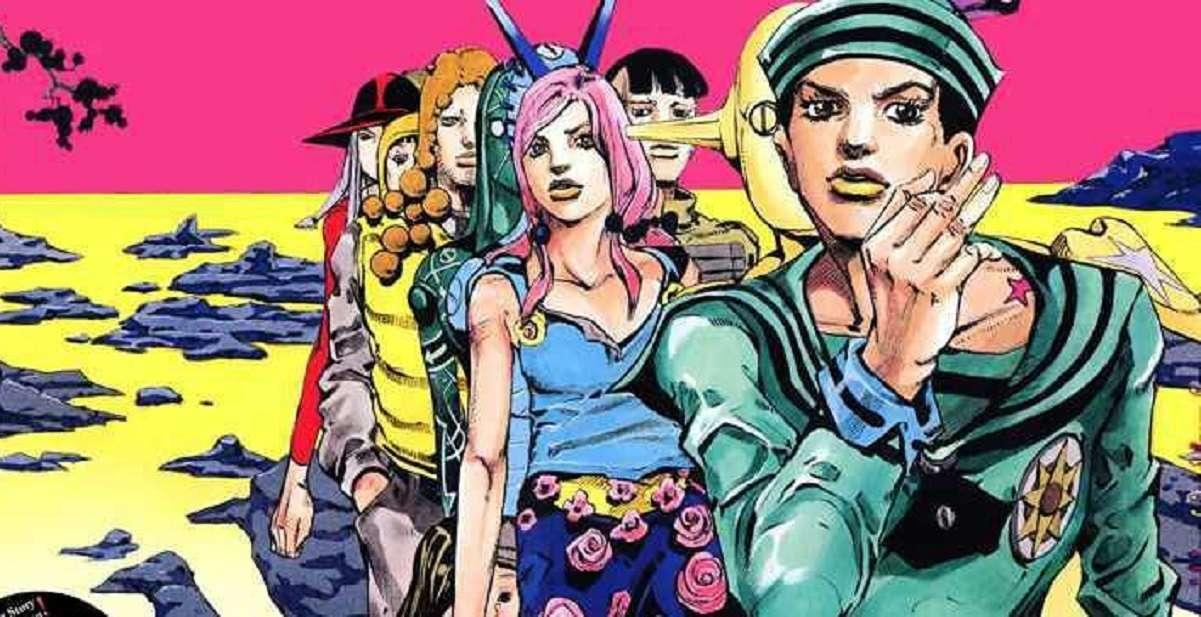
Viz Media Realeased JoJo Part 5 | Yūjin Japanese Anime News – Yūjin Clothing


   Araki's motivation for creating his art is to take all of what makes humanity good (art, music, fashion, motivation, friendship, etc.), and combine it so that it can be celebrated by his readers and watchers. He incorporates high-fashion poses, ingenious outfits, names and traits of his favorite musical artists, and complex characters in each chapter, making it clear that Araki is not just publishing what sells, but having fun with it in his own way. 
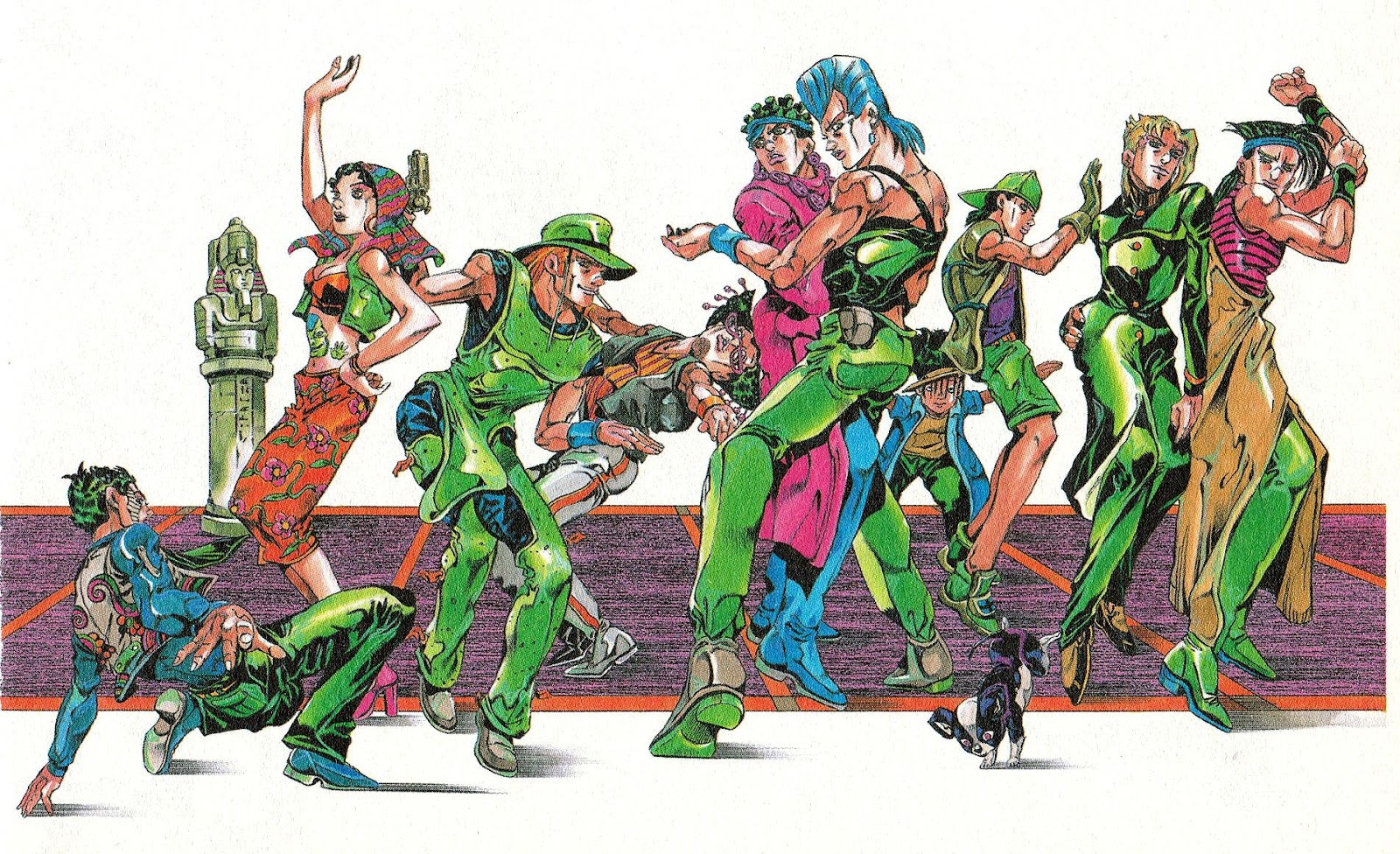
JoJo's Bizarre Adventure: Stardust Crusaders - Noriaki Kakyoin Minecraft  Skin

    So while the series has been going on for 35 years, Araki always strives to keep things fresh and creative, often warping the color scheme and adding eccentric poses to have fun with his characters. Each part is vastly different from the next, to show this, below is the part number and a one-line description of the plot: 

Part 1: Vampires In 1800's England

 Part One, anime, dio, jojo, jojo bizarre adventures, jojos bizarre  adventures, HD phone wallpaper | Peakpx

Part 2: Classic Hero Saves the World (From Wham!, ACDC, and Cars)
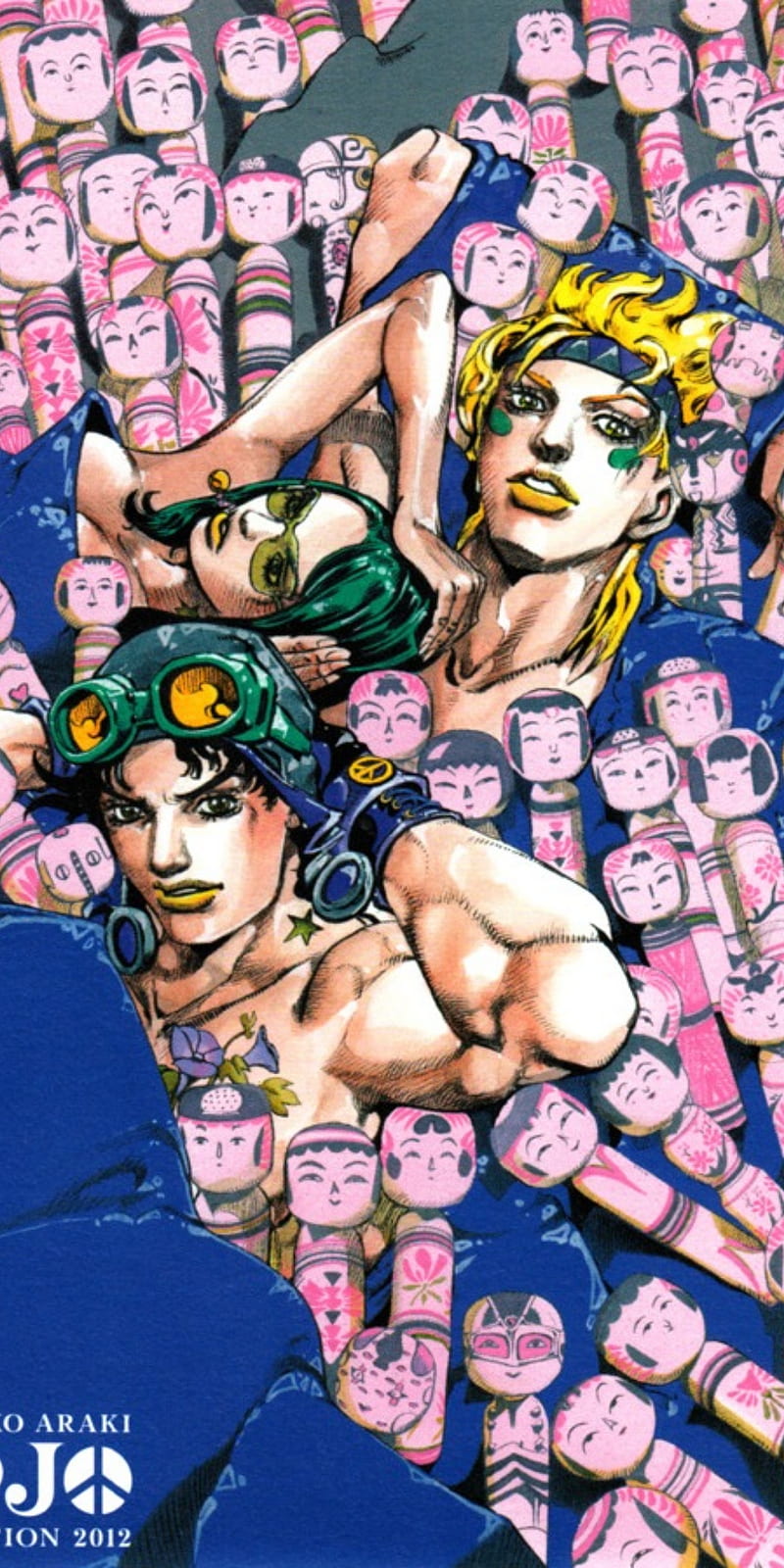
Battle Tendency, jojo, manga, parte 2, HD phone wallpaper | Peakpx

Part 3: Classic Hero Journeys to Egypt to Save the World

 JoJo's Bizarre Adventure Part 3 Stardust Crusaders by Kiralawliet33 on  DeviantArt


Part 4: Small-Town Murder Mystery 

 JoJo's Bizarre Adventure: Part 4--Diamond Is Unbreakable, Vol. 4 | Book by  Hirohiko Araki | Official Publisher Page | Simon & Schuster

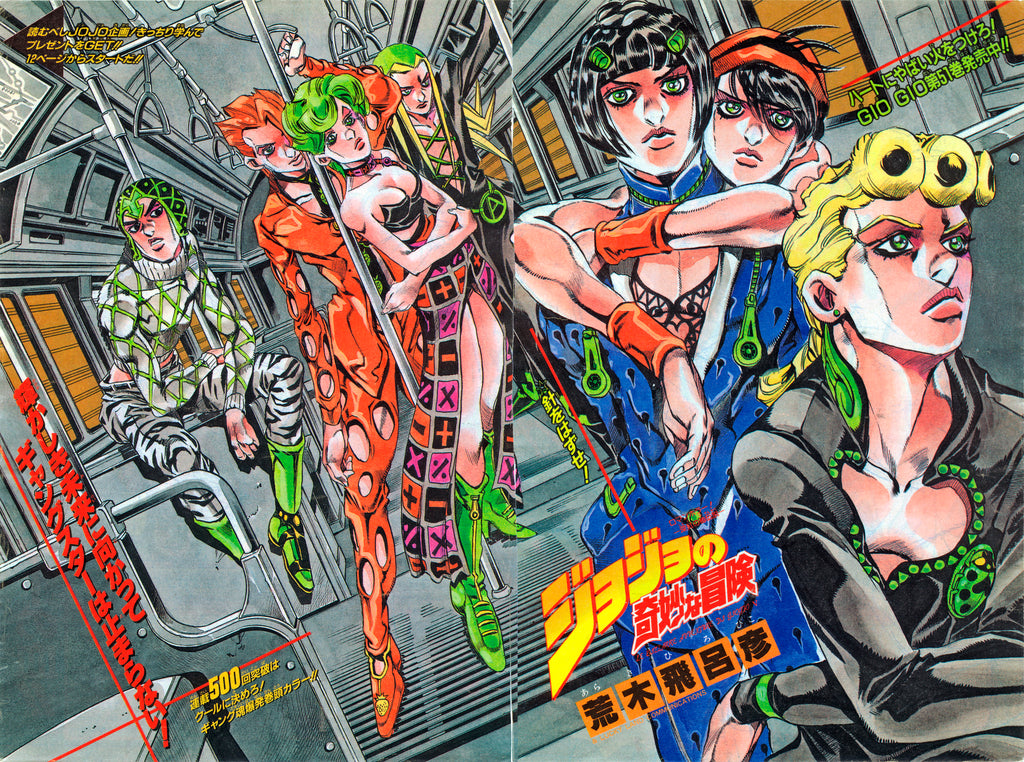
Part 5: Following the Rise of an Italian Mafioso

 VIZ on Twitter: "Which Golden Wind character are you today? via JoJo's  Bizarre Adventure: Part 5--Golden Wind https://t.co/qxgAzcNX4q" / Twitter

Part 6: American Prison Break 

JoJo's Bizarre Adventure part 6 Stone Ocean - art by Hirohiko Araki | Jojo's  bizarre adventure, La extraña aventura de jojo, Diseño de personajes

Part 7: Cowboys Horse Race across America in the 1800s

 Is a 13-year-old kid who has read attack on Titan and Jojo part 1-6 mature  enough to read JoJo part 7? - Quora

Part 8: Amnesiac Gains back his MemoryJoJo's Bizarre Adventure Reportedly Locks Down Finale for Jojolion

As you can see from the limited descriptions and art style, each volume is wildly different, but still coincides with the same family (the story is about a generational curse) and overarching story. Araki also actively uses changes in color and distinctly wild styles to make every panel enjoyable compositionally. This ability to think out of the box, which has become a staple of his works, helps to distinguish the manga from other works with the same general audience. His style incorporates the line work from earlier American comics, and classical elements in terms of displaying characters and proportions. He makes something unique: where the characters do not have the same morals, ambitions, and characteristics but still strive for a goal, showing the uniqueness of humanity that Araki values very deeply. 

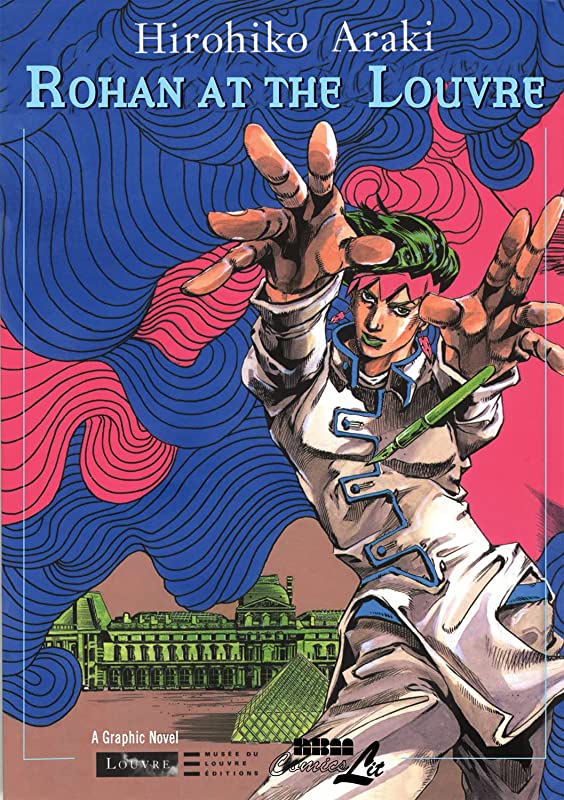
Colosseum - JoJo's Bizarre Encyclopedia | JoJo Wiki Rohan at the Louvre (Louvre Collection): Araki, Hirohiko: 9781561636150:  Amazon.com: Books


Araki also is known for loving to travel. In all of his volumes/parts there are different locations the characters see that pay homage to the great iconic architecture throughout the world.  One particular character, Rohan, who is meant to be an avatar of Araki's, goes to the Louvre. This allowed him to recreate great iconic works in his style like my favorite art piece: Nike of Samothrace. (pictured below)

This specific volume was actually sold in the Louvre while Araki hosted a gallery there. When asked about why he felt the need to have galleries, Araki stated that he wanted his art and characters to be appreciated, and he felt that often his work was consumed too quickly, he wanted his work to be more thoroughly celebrated. I think this displays Araki’s unique drive of creativity to interweave the lines often created between the culture, the artist, and the viewer, by explicitly wanting to engage with readers of his art and being obvious with his inspirations. This bleeds through as his playlist of inspiration can often be seen through character names, and you can very easily see this engagement by looking up "jojos" on a Spotify account. This playlist will be littered with themes and "Dad Music": Queen, Van Halen, Deep Purple, Dio, etc. Some fans even speculate that the show is based on "Get Back" by the Beatles.
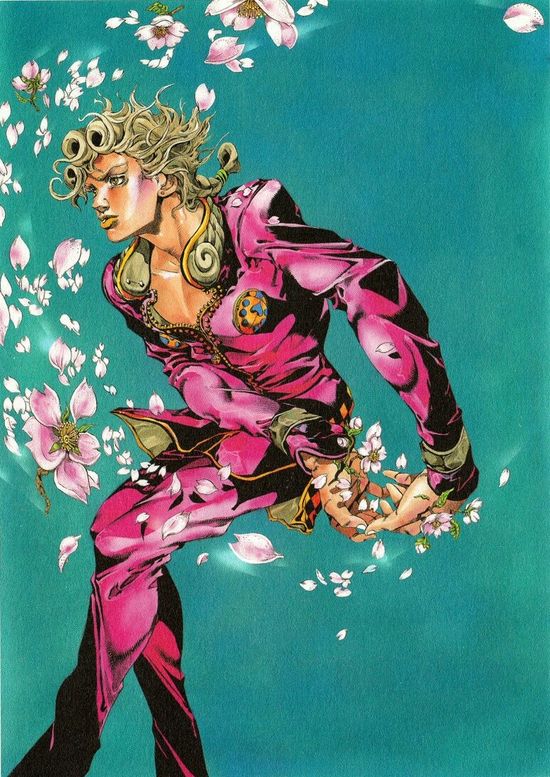
 46 JoJo's Art ideas in 2023

    Araki also is heavily inspired by social issues, often taking his work to have political messages. In his Part 6: Stone Ocean Araki has his main character framed and put into a maximum security prison, where she sees the injustice inside and actively has to fight against it in order to save her father. This same part even goes as far to show racism and brutality in the United States. Discussing the modern impacts of slavery through both subtle and unsubtle storylines. 

*Japanese manga is read from right to left

  • My Drawings are Trash but I Love Them — Cut Moments in JJBA: Stone Ocean  anime

  • Overall, Araki has significantly contributed to the culture by producing his art, but he also is not ashamed to be explicit about displaying and talking about his inspirations and creative process in his works, often dropping real names of brands and other creative artists to not only inspire readers through the themes of his stories, but also use everything that makes him happy within his culture to hopefully fulfill his readers.

  •   ไอเดีย Hirohiko Araki 130 รายการ | อะนิเมะ, ชายชุดดำ, สาวนักสเก็ตStephanie Seymour e Marcus Schenkenberg in pose di danza per Versace //  J.Lo Zeppeli e Johnny Joestar in Steel Ball Run di Hirohiko Ar… | Рисунки,  Художники, АнимеJojo's Bizarre Adventure Cultural and Art Inspirations | Jojo fashion, Jojo  bizarre, Jojo's bizarre adventure

  • Lastly, here is a video of his anniversary video where he explains very briefly his hopes for viewers and reflects on his life's work: https://www.youtube.com/watch?v=4s7wpoal1dI


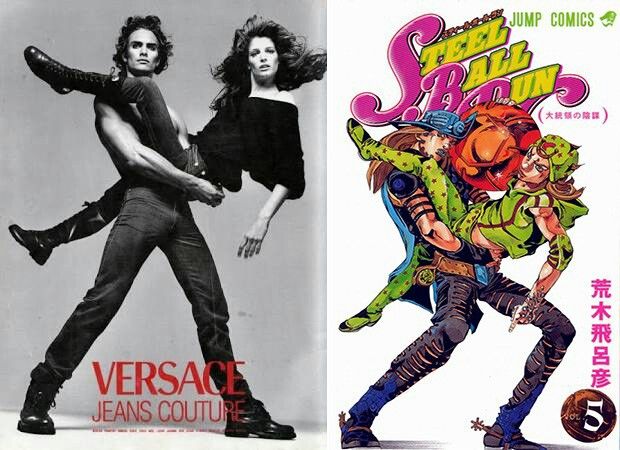
*All Scans were taken from the official artwork, meaning there are often page breaks that warp the images. All other images belong to @theestallion on Instagram and Versace’s magazine archive


Saturday, February 11, 2023

Looking into the vocabulary of Bronze Age Pervert

I want to make it clear before I start that in writing this post, I am by no means endorsing the ideology of who I am discussing.  I bring this subject to your attention purely because of the amount of success and increasing prevalence he has received.

The ‘creative’ at hand is the internet po(a)ster, author, bodybuilder, and podcaster known as Bronze Age Pervert, or simply BAP.  This man remains anonymous under that title (there are speculations about his real-life but this post is focusing on his virtual persona), and goes so far as to talk in a caricatured, sleazy Slavic accent on his podcast, Caribbean Rhythms.  He has made himself immensely popular in specific areas of the online right.  His manner of posting, or as it is considered in the communities he infiltrates, poasting, is erratic, filled with purposeful misspellings and words only known to his followers or affiliates.  He follows suit with this type of verbiage all throughout the self-published book he sells over Amazon titled Bronze Age Mindset.  This book is a jarring attempt at internet age philosophy merging archaic ideals with 19th century German philosophy and a distaste for modernity.  The book, littered with invocations of “frens” and “frogs” and questions of “wat mean”, ranges from sensible realizations about the world through uncited recollections of history to full on advocacy for white supremacy, eugenics, and subjugation of female counterparts, especially through the use of prostitutes.

Ever true to form, a trademark post of his includes a post-coital shot of an escort facelessly holding his book for the camera with a caption calling her a “prostie”.  Yet despite the shoving of chauvinistic heterosexuality down the throats of followers, BAP seems to also endorse the pederastic tradition of the ancient Greeks.  It is commonplace nowadays to say “the Greeks were gay”, but that isn’t really the right word, they had institutions in place for the formulaic rape of young boys.  And this understanding of that tradition is lauded by BAP.  Calling him gay for this attitude is a favorite among his most steadfast haters.  These haters are many, as could be imagined, but include people of all sides.  For one, with the obsession with pre-antiquity, BAP is not Christian, which alienates a lot of the hyper-online right-wing sphere.  It is hard to effectively hate on him, however, at least to his vigilant followers, as the views he actually holds are so convoluted and muddied by both the way he expresses himself and the way he is interpreted.  A lot of what he posts is unserious.  He weekly hashtags #hentaifridays where he posts the only “women” he is attracted to: bizarrely proportionate baby-faced anime “waifus”.   Further, he has claimed that women’s bodies cannot be beautiful so far as they are functional; aesthetic beauty only exists for beauty’s sake.  This explains his affinity for bodybilt young studs, who he posts and perhaps thirsts over more than any woman or waifu.  He cares very much about building a sculpted Grecco-Roman “fizeek” and encourages followers to work towards one themselves.

Redundant to even say out loud, but much of his fans are incels.  Incel culture is notorious for originating trends that go on to permeate less radical, more mainstream internet avenues.  That process seems to be happening with BAP talking points and original words.  Many of these words have been in his circulation for years, but their recent prevalence is the very thing that inspired me to write this.  One that I have seen an uptick in lately is “longhouse” which makes reference to nomadic history and refers to, generally, the verbal abuse husbands face from their ugly and old wives, and more broadly the constraints felt by living in current society, which BAP considers matriarchal.  To combat a woman who has longhoused him, he might call her a “roastie”.  This definition is going to sound so vulgar and obnoxious so forgive me, but it is a term for a woman who has participated in so much casual sex with multiple partners that her genitals are mutilated to the point of looking like, well, roast beef.  This concept is popular over the internet but the use of this term converts it from a concept to something you can reduce a woman to.  Of course that is not how vaginas work, but he’s a humanities devotee, not a scientist.

The coining and use of these terms is the creative endeavor for which I have included him in the conversation on this site.  While I personally hold that academically categorizing creativity is itself a perverse way to understand human nature, that is the subject matter of this class and I must abide.  I think, based on the Smith and Ward reading, BAP exhibits remote association habits.  He can take stories of ancient heroes and relate it to how man should be functioning in contemporary society.  His thought process is far from what one could expect from average classicism and relies solely on what is conjured in the head, rather than peer-reviewed sources.  Further, the article mentioned how this method of creativity was first observed in schizophrenic patients, and it is no secret that many of BAP’s readers are themselves schizophrenic.  Perhaps they, instinctually, recognize this mutual thought process, causing such affinity.

Friday, February 10, 2023

Think Differently: Steve Jobs

When thinking on who to start my blog with, the answer was instantaneous. A man I grew up idolizing and unfortunately never got a chance to meet. The man altered the course of history through his big C creativity, allowing others to do little c creativity. That man is Steven Paul Jobs.

Jobs was one of two members to found Apple, an upstart computer company that took the world by storm in the 1970s and 80s. His computers were often out of budget for money of the working class people of that day who wanted to own their own computer, they often opted for Microsoft Windows platform which was significantly cheaper but did not have all the bells and whistles of Apple. The breakthrough came in 1984 with the debut of the original Apple Macintosh. This was a lower cost computer that had all the bells and whistles and gave Apple the edge in the cold war of computers at the time.


However, the part of Jobs' career I want to focus on is not so well known. Just a year after Apple Macintosh was released, Steve Jobs resigned from Apple, the company he helped build. He left with his $7 million net worth and found a new computer company called NeXT Inc. This computer company focused more on the interface and creative portion of the systems itself. After nearly going bankrupt with its first computer, Steve shifted towards solely developing software, which was later used to create the World Wide Web. In fact the company did so well that by 1996, NeXT was acquired by Apple, bringing Steve Jobs full circle back to the company that he helped create. This is a clear cut case of divergent thinking. He took something that was already in circulation, the original Apple Macintosh, improved upon the design that he built himself and solve the problem of expensive software. He again used this divergent thinking when he founded Pixar in 1986, utilizing NeXT Technology and systems in this digital design studio. Pixar as we know, it was acquired by Disney for $7.4 billion, and is the driving force behind so many of our childhood stories.

In closing, Steve Jobs used both types of creativity to his advantage, along with drastic divergent thinking which cemented his place as an icon for the history of time.

Lizzy McAlpine

 Due to Spotify’s generation of random playlists, I often find myself listening to music I might never have found on my own but that I enjoy nonetheless. Recently, one of those artists I discovered through a personalized Spotify playlist was Lizzy McAlpine; more specifically, I heard her song “doomsday.” I listened to “doomsday” on repeat for a while before deciding to explore the rest of her discography, which was exactly my taste in music. She climbed the list of my favorite artists quickly. 

          McAlpine gained fame during the pandemic, due to popular artists such as Phoebe Bridgers sharing her music, both covers and originals, and clips of her songs going viral on TikTok. She attended Berklee College of Music for two years before dropping out to pursue creating her own music; however, she has said, “The main thing I think I got out of Berklee was the people that I met, and the people I surrounded myself with who definitely influenced my music.” She’s released two albums so far, Give Me a Minute and Five Seconds Flat, with Five Seconds Flat being the more recent of the two. She wrote Five Seconds Flat while in London, and said that she “didn’t really have a goal in mind” and she “wasn’t really focused on the next album quite yet,” which suggests that her creative process is outside her control. 

            McAlpine’s songs are mostly inspired by her own life and events that have happened to her, which adds an element of vulnerability and relatability to her songs. For example, she has said that the song “Apple Pie” is about feeling at home in a relationship and about never really having a permanent, physical home due to moving around a lot in her childhood. On the creative process of this song, she said that once she wrote the line in the chorus, “Me oh my / I found you under an April sky / And you feel like / City life, apple pie baked just right” sort of unlocked the rest of the song for her. This would be an example of convergent thinking that she then built upon with divergent thinking in order to write the rest of the song. 

            When describing her creative process, McAlpine says that she goes through phases where she writes a lot and then nothing at all. She always waits for inspiration to hit her before attempting to write while in a creative rut. She specifically says that she “can never force it.” Her creative process seems similar to the idea that creativity comes from an outside source. She also makes her own music videos; on that process, she says that she doesn’t know where the idea for using specific motifs comes from, she just wanted to “find a metaphor” to “show the feelings more visually.” She shows more than just relationships in these videos, showing things that may be “out of the ordinary, to drive the point home.” For example, in the “doomsday” music video, McAlpine dresses up as a skeleton towards the end, and she shows up to her own wedding in funeral attire. This shows that she feels heartbreak “is like a small death, especially when it’s your first love.” 


            In terms of creative classification, I would argue that Lizzy McAlpine is a pro-c creative. She is a professional making music that has 7.5 million monthly listeners on Spotify, but she has not revolutionized her genre as a Big-C Creative would. I personally think she has the potential to become a Big-C Creative, but time will only tell on that front.

Sources: https://www.emmiemusic.com/interviews/15-minutes-with-lizzy-mcalpine 
https://www.youtube.com/watch?v=S_K2Vvs26i0 
https://www.spin.com/2022/05/lizzy-mcalpine-give-me-a-minute-interview/
https://whynow.co.uk/read/lizzy-mcalpine-it-hurts-my-heart-when-people-say-i-started-on-tiktok 

Thursday, February 9, 2023

JVKE's "Golden Hour" of Creativity

As I reflect on the creativity and who I find to be creative, I kept ending back up on one name, JVKE. At first, I was hesitant to write about him because he has become extremely popular recently and I thought it might be interesting to highlight someone less popular, but I ended up back on him every time. 

JVKE is a 21-year-old musician, singer, and producer who blew up on social media in 2020. I quickly began following him as I believed he embodied a modern creative in my generation, always offering unique takes on music and video production. One of my favorite songs of his is titled “this is what falling in love feels like” which combines a beautiful violin solo into a beat drop and then an intense drumbeat. The song has 6 different tempos and over time, gets faster and faster to make the listener more and more excited. The music video is below:


In a video where JVKE is discussing how he came up with the song, he discusses how one day he just heard the violin solo in his head and recorded it on his phone, and then forgot about it. After a 3-month incubation period, it came back to him and he decided that he had to make a song with it. He created each different part and let them marinate and simmer together until they became a cohesive piece, reminiscent of Daniel Smith whom we talked about in class. I also believe his creative process could be one that could be considered a process of collecting. He grew up with a music teacher as a mother and a pastor as a father. With this, he learned piano, drums, and many other instruments at an early age. Years later, he began learning how to make beats and produce music. All of this combined in a mash-up that made him famous on TikTok. When asked about his creative process, he said he always starts with an amazing idea whether it be lyrics, a beat, or a violin solo, and builds from there not knowing where it will go. This very much reminds me of the concept of the geneplore model where one comes up with an initial idea without a concept of what will come next and then just builds on it.

JVKE in his music video "golden hour"

JVKE continuously collaborates with other groundbreaking artists and producers from a variety of genres, meaning that there are many different versions of every song he releases. I believe this stems from his realization that, as Marcus Gladwell discussed in our third lecture, there is not always one answer to every problem because people all prefer different things. This pertains to music as well and JVKE has done an incredible job of recognizing that. Overall, JVKE is an incredible creative of my generation and I cannot see what he does in the future with how interesting his songs and videos have been thus far. I do not know what to expect other than to be surprised and enamored with what route he chooses to go next with his music.

Sources:

how i made ‘this is what falling in love feels like’ - YouTube

Getting to Know JVKE: The Mastermind Behind Viral Hit “Upside Down” That’s Dominating TikTok – Celeb Secrets

Jvke Bio, Age, TikTok, Single, Height, Body Measurement, Instagram, Wiki : Biography Celeb


Wednesday, February 8, 2023

Storytelling Through Space: Theatrical Set Designer Beowulf Boritt

"If you love theatre, you've likely seen a set designed by Tony Award-winner Beowulf Boritt," claims an article from WNYC. And if you browse his website, you can easily see why. He's best known for his stellar list of Broadway productions such as Act One, Come From Away, Be More Chill, and Bernhardt/Hamlet, just to name a few, and his off-Broadway and international credits are extensive as well. It would perhaps be more difficult to find a theatre-lover who hasn't seen one of Boritt's innovative designs. But what exactly is it that makes Boritt's work so enticing? And more importantly, how does he do it?

To understand how Boritt does his work, one must first understand what exactly the theatrical set design process is. Depending on the timeline of a show, designers might have anywhere from a few years to a few months to create an entire world for the play to live in, all the while bowing to the whims and requirements of the producers, directors, show budget, and theatre space. Designers begin by collecting research for the specific show before moving on to drawings and models. Here the work begins to look very similar to that of an architect, but engineering comes into play here as well. Designers must determine how to make something beautiful and functional. Then, designs often have to go through multiple revision processes, especially when designing for new works, which Boritt often does. For example, a designer might perfect the set for a certain scene, only to have that scene cut in the next rehearsal. It's a tedious, demanding process with very little immediate payoff. Actors often don't begin to work in the space until the last few weeks before opening, and that time can be make-or-break for a particular show. It's easy to see why many productions look so similar. For many designers, the urge to play it safe and stick with what works overwhelms the desire to experiment and explore. Often, the risk of failure is simply too great. 

But Boritt's designs are known for taking risks. His design for an adaptation of Zola's Thérèse Raquin involved replicating part of Paris' River Seine onstage--complete with real water the actors could be drenched in. His design for award-winning musical Come from Away involved using the trunks of real trees to create his sparse Newfoundland forest--trees which were kept in a raw enough state that they began sprouting leaves on the Broadway stage! Although accidental, this was a fitting happenstance for a show about creating hope and new life from the most tragic of circumstances. 

The set for Come From Away on Broadway uses real trees harvested from the Adirondacks. 

Real leaves growing from the real trees of Boritt's set for the Broadway production of Come From Away.

 
A time lapse of the set build for Act One.
 
Perhaps Boritt's most notable work is his three-story tall rotating set for James Lapine's Act One, the set that won him his first Tony Award and catapulted him to Broadway fame. In an article with Theatre Mania, Boritt details how he came up with the idea for the convention-defying set--and how he was able to pull it off. The budget for the set was half a million dollars--a lot of money even for Broadway, but certainly not enough to create this set, at least not under normal circumstances. But Boritt explains:

"Almost always for Broadway shows, you find out your theater two or three months out. The set build has to be really fast. Since we knew our theater nine months out, we could spend time sourcing materials and finding the cheapest options." 

But this still doesn't explain how Boritt created the idea, only how he was able to execute it. Fortunately, the article delves further: 

"I knew from the beginning the play had a lot of locations and scenes that needed to move really fast. Since it was a play about the theater, I thought, Let's do an empty theater set. The actors could bring in props for each scene: a desk, a chair, whatever...But frankly, I've done that set a lot of times, and we've all seen it. It works, but it's not so different."

This perhaps is the core of Boritt's work: the desire to be different, to do different, whatever the risks. This divergent method of thinking--taking the conventional and running the other way--is the core of the work of many great artists, but it's not something seen as often in theatre, at least with set design. Typically those imaginative ideas run into constraints such a time, budget, or shop capability, and designs must be simplified down to the way things have always been done. But Boritt chooses to look beyond those constraints for new solutions to old problems. For example, all of the backdrops in Act One were digitally printed onto large pieces of canvas from scans of Boritt's model miniatures. Previously, all backdrops had been hand-painted by professional scenic artists, but this was a lengthy and costly process. Printing was a fantastic innovation, and allowed for much more budget flexibility. But it did bring with it some unfortunate side effects.

Boritt's innovations in response to the constraints of theatre work removed the collaboration that is so essential to many good creative works, and he is aware of that fact. "I love having a scenic painter add their level of artistry to a set, but it costs more money...When they come back, I'm always a little jarred because I'm used to someone else's hand being part of it. A really good scene shop will add a level of artistic flair to something that will make your design better. It's like a symphony." So in one way, the choice to print backdrops is more creative, but in another way, it isn't. This is the fine line that so many artists must walk, the balance between two different types of creativity and innovation.

Another one of Boritt's designs also came with unexpected consequences, but these were more interesting than disappointing. The show Hand to God is set in a typical church basement, and Boritt worked to make the set as realistic as possible. "We did a lot of research as to what church basements look like. You look around a real room and there are electrical outlets, fire extinguishers, things like that.” But this realism took an unexpected turn when an audience member climbed onstage before a show and attempted to charge his phone in the set's outlet--a fake outlet, but nonetheless real enough to convince an inexperienced theatregoer. Although the audience member's actions are a sound example of bad theatre etiquette, they are a good testament to Boritt's skill as a designer. “It’s certainly the first time anyone has gone onto one of my sets and tried to use it as a real space.” But this is often the purpose of good set design: to convince the audience that this is in fact a real space. And Boritt succeeded, yet another mark of his talent. 

Ultimately, Boritt's innovation is not about what is considered good or bad set design. There are some fantastic traditional sets out there, as well as some horrible new ones. For Boritt, his talent comes from knowing when to innovate and when to play by the rules. Hand to God was a brilliantly innovative set--built using traditional techniques. And Act One contained one of the most commonplace techniques--fabric backdrops--but it was the production method that was innovative. This balance is what makes Boritt's designs so successful, and his imagination, spurred by a desire to do differently, is what makes them so compelling.

Sources: 

https://www.wnyc.org/story/2022-theater-you-can-still-see-set-design-beowulf-boritt/

https://www.beowulfborittdesign.com/home

https://www.theatermania.com/broadway/news/review-beowulf-boritt-transforming-space-over-time_94258.html

https://www.theatermania.com/broadway/news/a-tree-grows-on-broadway-come-from-away-and-the-cu_80967.html

https://www.theatermania.com/broadway/news/tony-nominated-set-designer-beowulf-boritt-returns_77162.html

https://www.theatermania.com/new-york-city-theater/news/turning-turning-beowulf-boritt-on-act-one-and-the-_68608.html

https://www.vanityfair.com/culture/2015/07/hand-to-god-audience-member-tried-to-plug-in-phone-beowulf-boritt

Saturday, February 4, 2023

Jayce Hall -- Drawing with words

https://www.jaycehallart.com/ 


I was scrolling through TikTok when I saw a video of an artist from North Dakota drawing realistic portraits using a technique called micrography. His name is Jayce Hall (@jaycehallart on TikTok). He draws by writing the same words or phrases over and over again, overlapping them with each other to create shading and value. For example, Hall’s portrait of J Cole consists of J Cole’s name written over and over again. Another one of his drawings features a moon made out of the word ‘moon’ written in different languages. This is an extremely tedious process–many of his drawings take more than eight hours to complete, and I saw one piece that took him almost two months to finish.


I have never heard of micrography prior to seeing his videos, and I thought it was a really cool concept because it combines writing and art. I think many people enjoy his art because it is made in such a unique way, and I definitely think developing this style required Hall to think outside the box. In his website he writes that he was looking for a way to become recognizable as an artist, and he heard of the micrography style. He did some research and discovered that while many people drew using micrography, there were few who strived for very realistic pieces. Hall chose to invest time in this style in order to push his own limits and see how realistic he could make his pieces. It took him three years of practicing to get to where he is now with this style. Hall also mentions being inspired by a class called “The Foundations of Drawing” at North Dakota State University, in which his professor advised him to find his niche “but not stop there”. Essentially, what Hall took away from this class is similar to what we learned in class–creative ideas arise from the generation of lots of different possibilities. Hall hopes that his work will inspire people to try new styles of art and not give up when it doesn’t turn out right the first time, as he says it took him almost five years of trying new styles to finally find his niche and become an expert at it.